
Home › Forums › SE England › Kent Mills A to F › Aylesford Paper Mills
Tagged: Case-making, Closed, MG machines, Newsprint
- This topic has 173 replies, 5 voices, and was last updated 1 year, 9 months ago by
Chris Bennett.
-
AuthorPosts
-
24th May 2021 at 15:15 #1259
Artless Bodger
Participant49. General view, from the north west.
Taken from near the site of the future New Hythe Halt, with the photographer’s back to the railway line, the site of the future no 6 loading dock. Notable in this photo is the temporary embankment and standard gauge railway siding laid up to the opening in the side of the annexe / machine house, this will be used to bring in the paper machine parts and will be visible in interior shots later in the series.
Cast in situ concrete wall panels in most parts of the machine house and annexe framework, concrete block walls built where windows, doors etc are required.
The purpose of the large tent like structure (seen in part in other views) is not clear but may be cover for bagged or more likely barrels of cement. Any ideas?
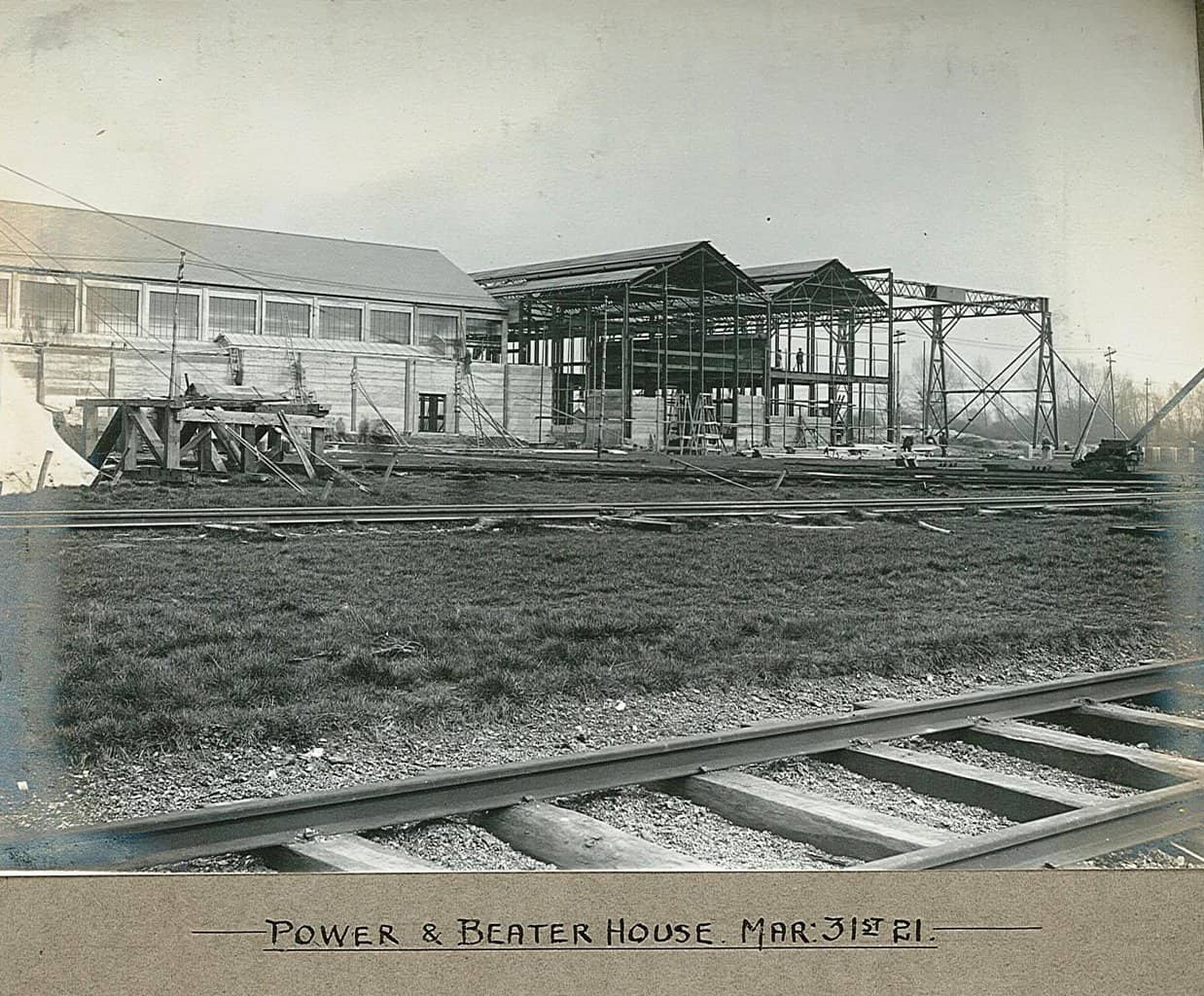
24th May 2021 at 15:22 #1261Participant50. Power and beater house.
Taken from a more southerly point than the last picture, in the foreground is the main siding parallel to the SECR mainline – pretty well on the same alignment of the main mill reception sidings which ran under the kraft beater floor and no 6 machine, one terminating in no 6 loading dock and the other continuing along outside the loading dock, ending just short of New Hythe lane.
Beyond the siding is the start of the temporary track which curves from north to east to enter the machine house at the dry end. there is no sign yet of the temporary siding laid into the end of the power house, see later photos.
Attachments:
24th May 2021 at 15:40 #1263Participant50A. Dockside roof prior to demolition, early 2000’s?
This shows the inset railway track mentioned above, the end of the mill reception siding, a parallel track ran along originally inside the loading dock to the right. The visible track was breached twice, once when no 6 was rebuilt, the transformer and switchgear buildings were constructed on the trace, leaving just the parallel road open – later known as the machine services corridor (or smelly alley as it was often floored with rotting overflowed pulp), the other breach is just visible in the foreground the concrete top of new hythe sump, dug to intercept an outfall to the river and divert the water to the effluent plant, the pump house was tucked almost under the platform of New Hythe station to the left of this photo. The stainless steel pipe crossing the roadway and running along the dock sidewall was installed to re-route the effluent from NHS to the new effluent plant built on the boiler house site when no 6 machine was restarted along with major redevelopment of the pulp yard and kraft beaterfloor areas for a new prep plant (Island site prep plant was then closed).
-
This reply was modified 5 years, 4 months ago by
Artless Bodger. Reason: Dont know my right from my left !
Attachments:
24th May 2021 at 16:01 #1267Participant51. Coal bunkers.
A wonderful photo, I’ve not got a good idea of the perspective here, the men are standing where what became the entrance over the effluent wet pit into the boilerhouse. The excavation under the standard gauge seen earlier seems to have been back filled by now though the pipe under the track just beyond is still visible. From this aspect, I’m more convinced that excavation was for the condenser cooling water intakes, as the wide extent of the river bank seen here was later cut back a lot. The steam crane and the track diverging to the right from the point just in front of it are in what will later be the river.
The wide shallow excavation beyond the concrete block is being dug for the clay bunker basement – there were below ground passages here used originally to barrow clay from the bunkers to the blungers. The concrete block I think is a base for one of the pylons of no 1 conveyor.
As a railway enthusiast I find this full of ‘prototype for anything’ interest, not least the way the NG track crosses over the SG track, and the SG point is part buried.
Attachments:
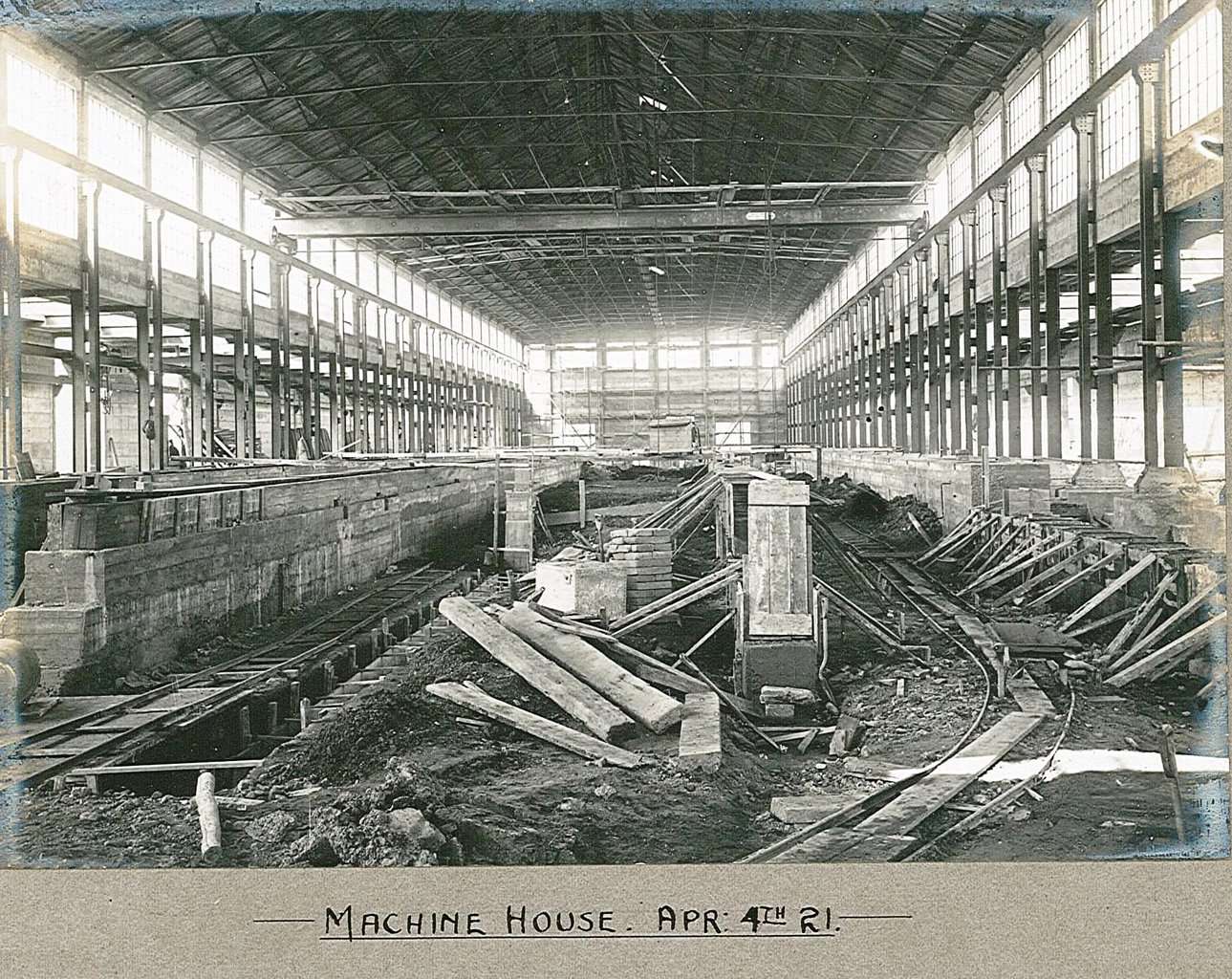
24th May 2021 at 16:12 #1269Participant52. Inside the machine house.
Standing down in roughly the basement floor level, from left to right are the concrete wall to support no 2 front side sole plates, the services tunnel, the area later infilled to floor level between the machines and no 1 machine dryer pit. Shuttering in place for the poured concrete along the backside of no 1. In the roof it appears that the walkway down the centre of the roof is being installed, presumably from the rather precarious planking mounted on outriggers on top of the manual crane bridge. The plank walkways and the length of the outriggers appears to be set to the distance between trusses, essential to be able to manipulate materials into place for the longitudinal gangway in the roof. Other temporary planking is in evidence across the roof trusses. Notably the electric machine house bridge crane has not yet been installed.
Attachments:
24th May 2021 at 16:17 #1271Participant53. Beater house, facing west.
Attachments:
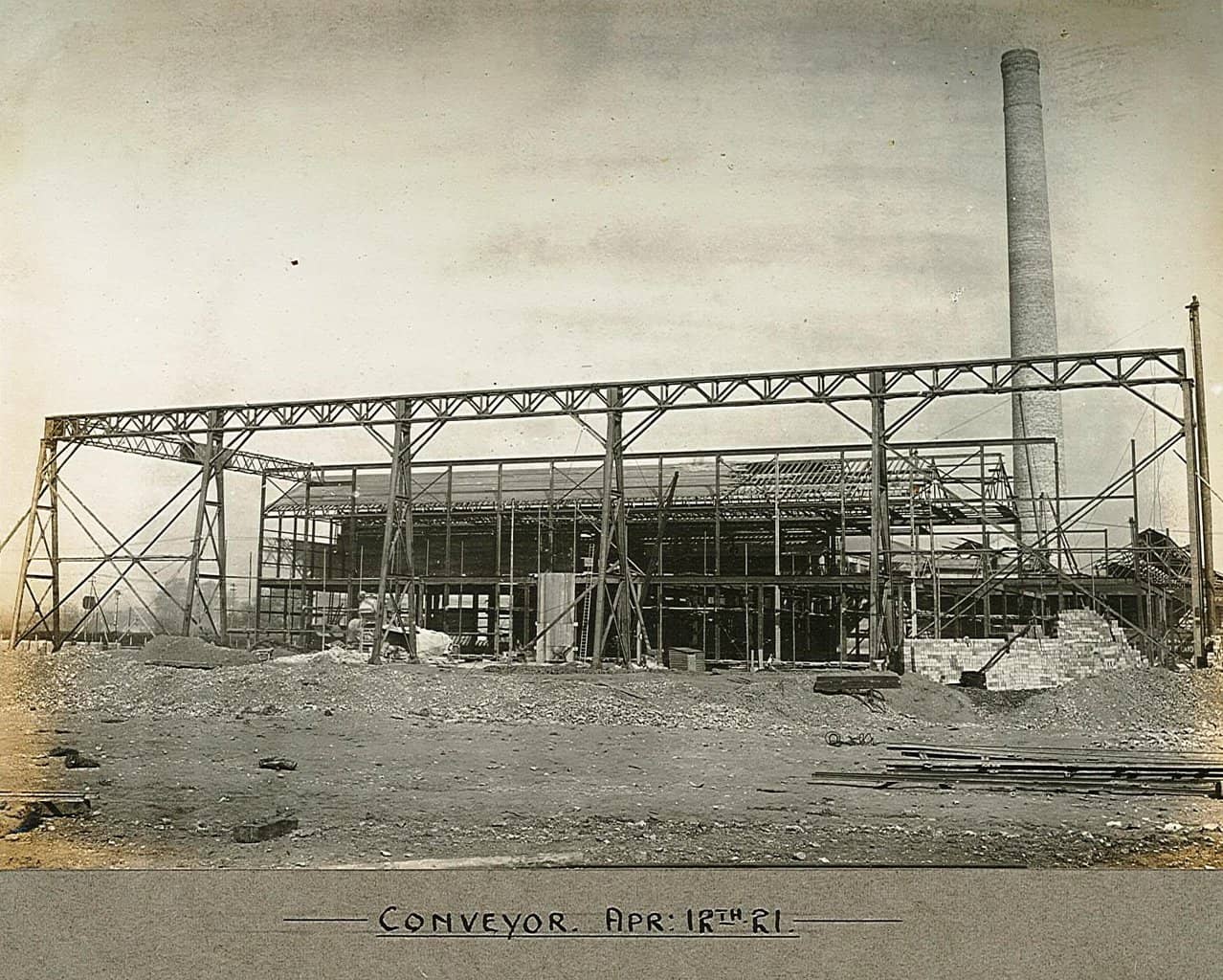
24th May 2021 at 16:19 #1273Participant54. Conveyor.
Attachments:
24th May 2021 at 16:27 #1275Participant55. Salle Foundations.
Looking roughly north of west, the pale fence posts of the mainline boundary and the dark line of the railway embankment run across the centre of the view. Some of the ex-army huts of WW1 vintage are visible, some to become the admin and management offices for the next 70 years or so. Just above the roof of one hut, to the right of the electricity pole can be seen the signal protecting New Hythe Lane level crossing.
Attachments:
24th May 2021 at 16:31 #1277Participant56. Beater floor.
A view of the upper floor facing away from the river, with the end of 1 & 2 mc house open still on the right. Some of the concrete floor has been poured on the hi-rib but holes remain, it’s at least a 16′ drop into the basement below.
The bay on the right distance with the bridge crane in it is the end of the turbine house, over 1 and 2 turbines.
-
This reply was modified 5 years, 4 months ago by
Attachments:
1st June 2021 at 16:03 #1280Participant57. Bed of no 2 machine.
Sole plates are in place on the machine support walls, the service tunnel is about half roofed and the abutments for the arching are being poured. Excavation of soil from the tunnel is being placed to infill the machine house floor. The ceiling is already being installed at the n0rth end from the bridge crane, the central walkway appears to be complete through the roof trusses.
Attachments:
1st June 2021 at 16:05 #1282Participant58. Clay and coal bunkers.
Brickwork enclosing the boilers in progress.
Attachments:
1st June 2021 at 16:08 #1284Participant59. Conveyor.
Attachments:
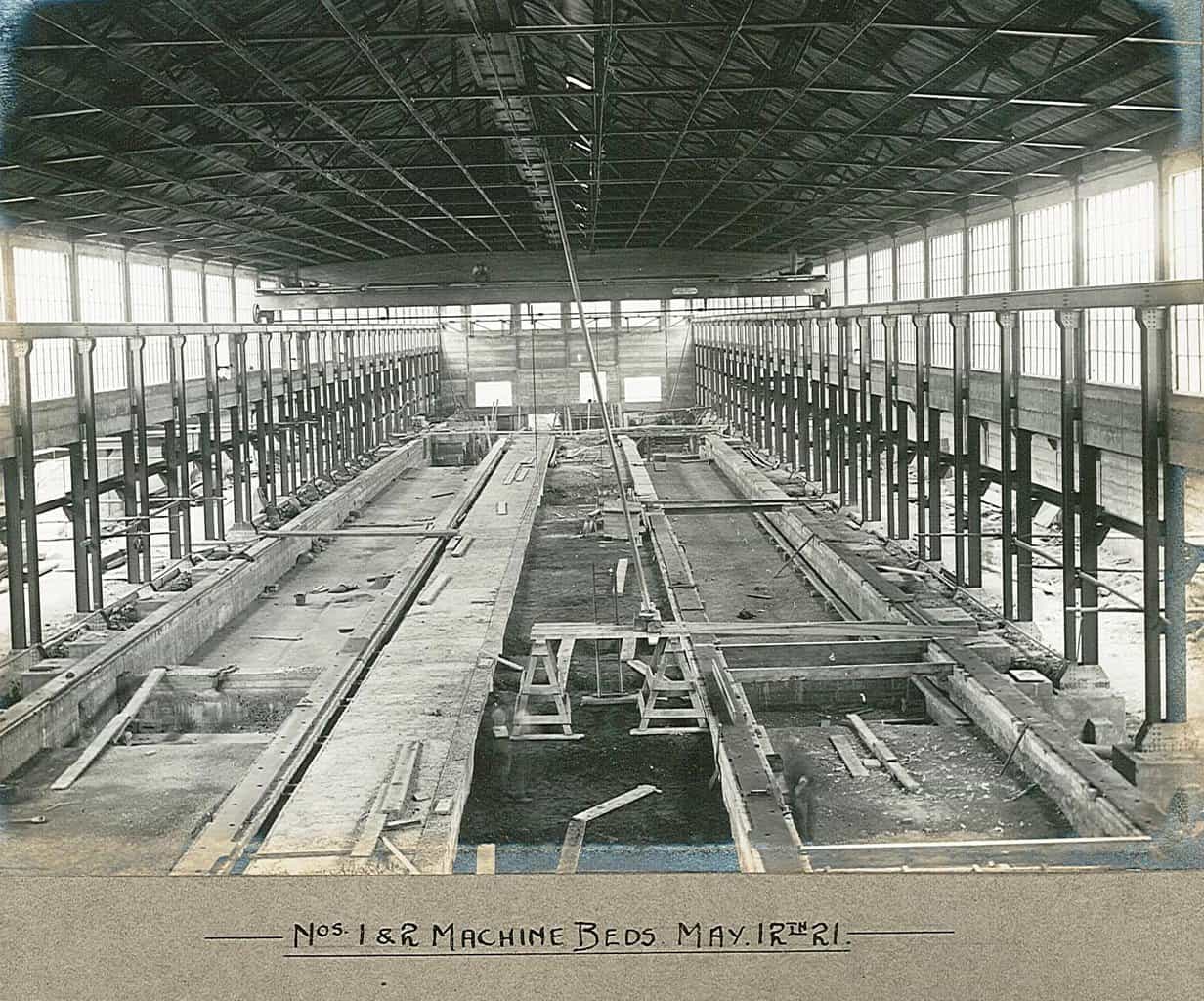
1st June 2021 at 16:15 #1286Participant60. No 1 and 2 machine beds.
Taken from the beater floor door / top of the machine chests. No 2 sole plates in place, no 1 sole plates partly laid out but not yet aligned or fixed down. The ceiling has progressed, men working in a recumbent position from a staging on top of the crane bridge. Access via the ladder looks very precarious, though the foot of the ladder appears to be secured by battens fore and aft on the baulks.
Services tunnel completed, drain gulley along front side of no 2 cast, infill between the machines in progress.
Attachments:
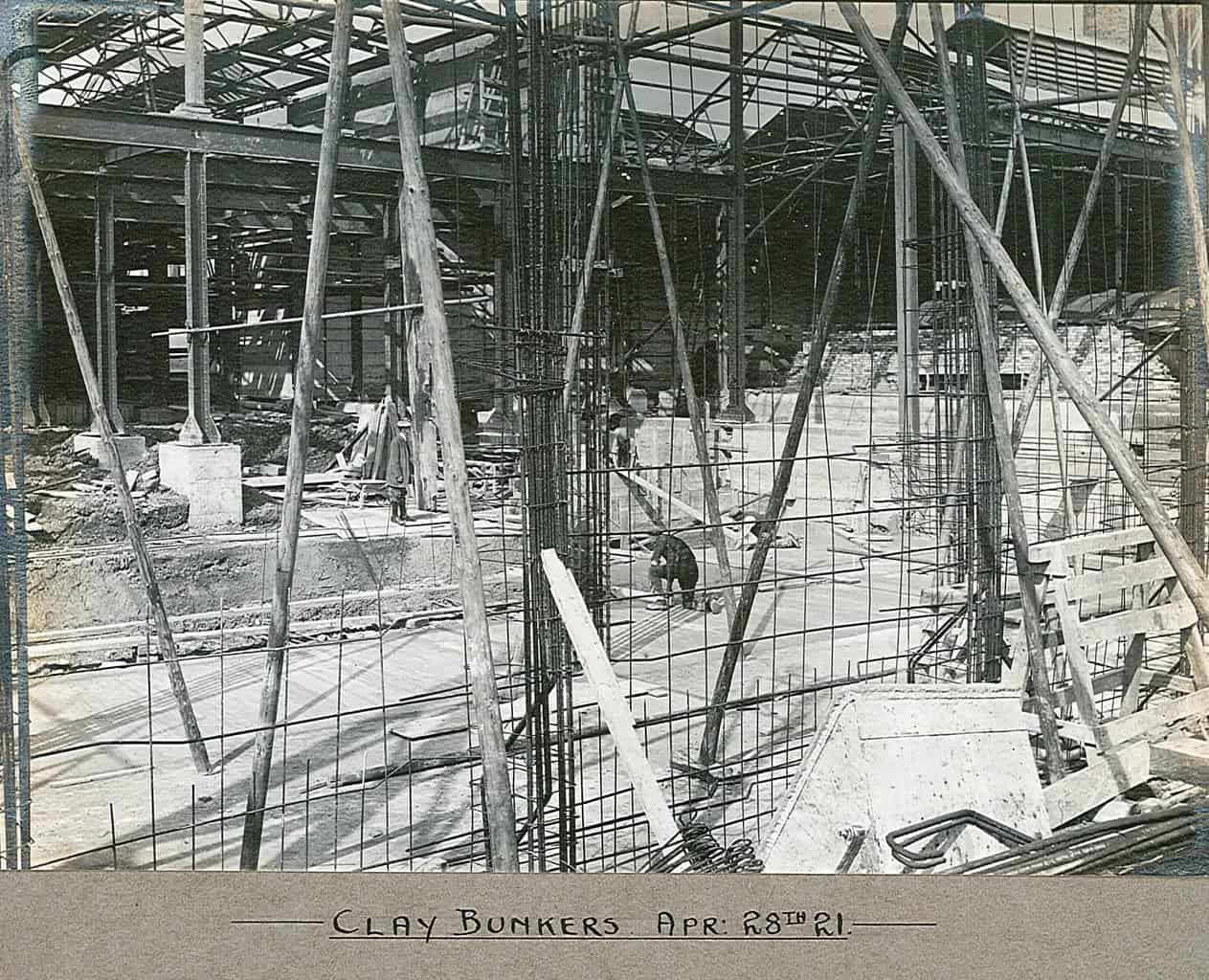
1st June 2021 at 17:36 #1288Participant61. Clay bunkers.
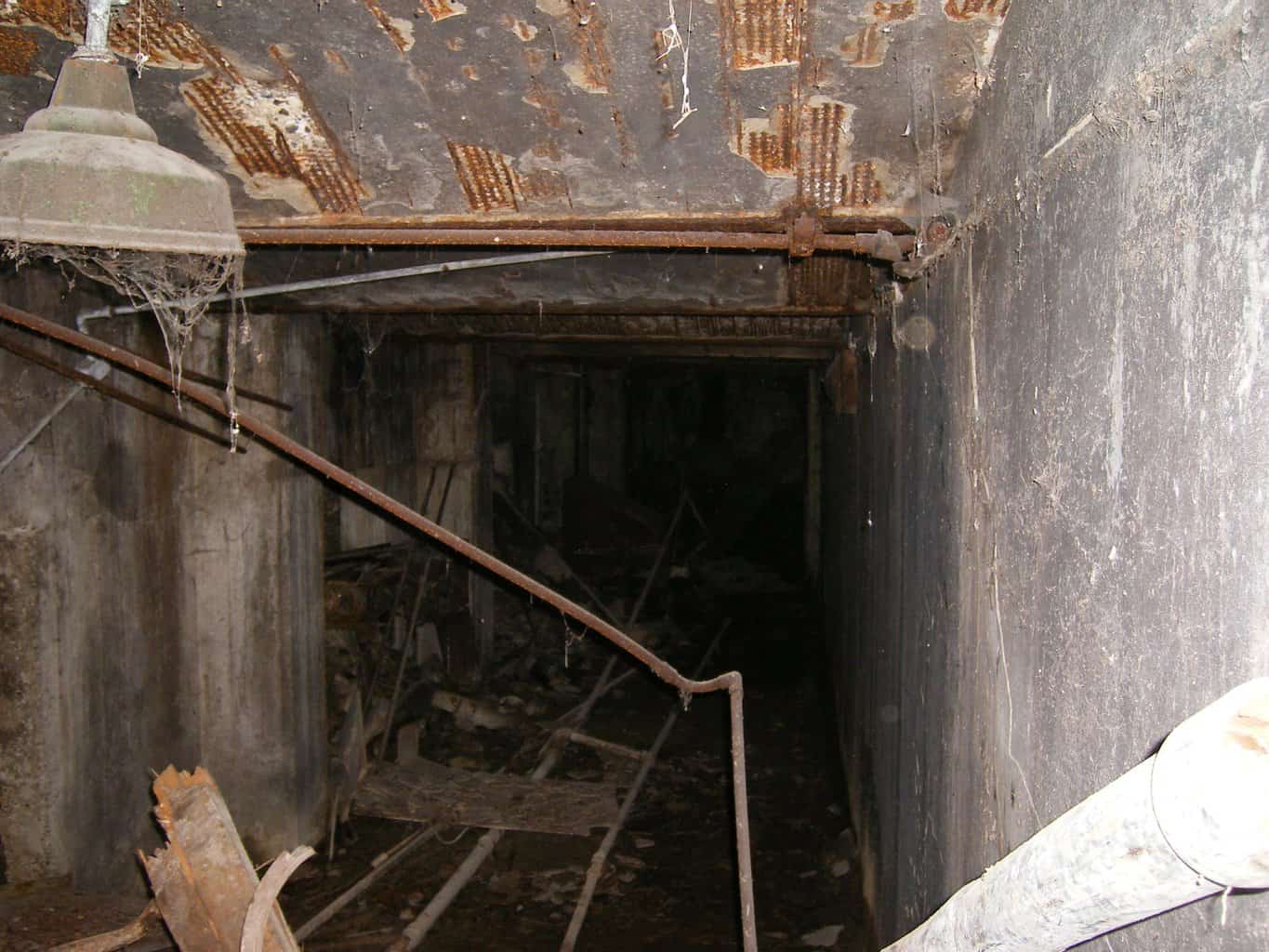
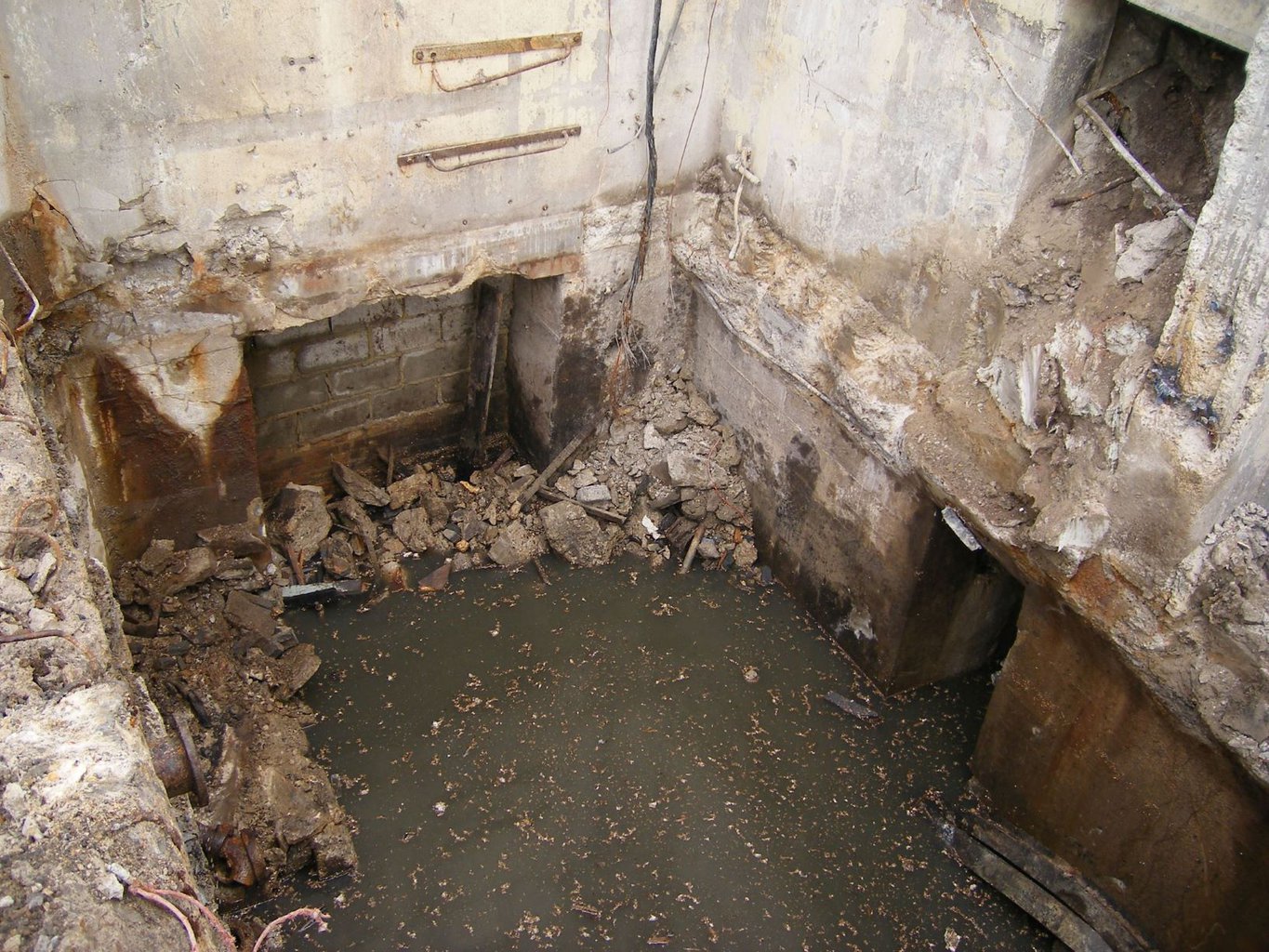
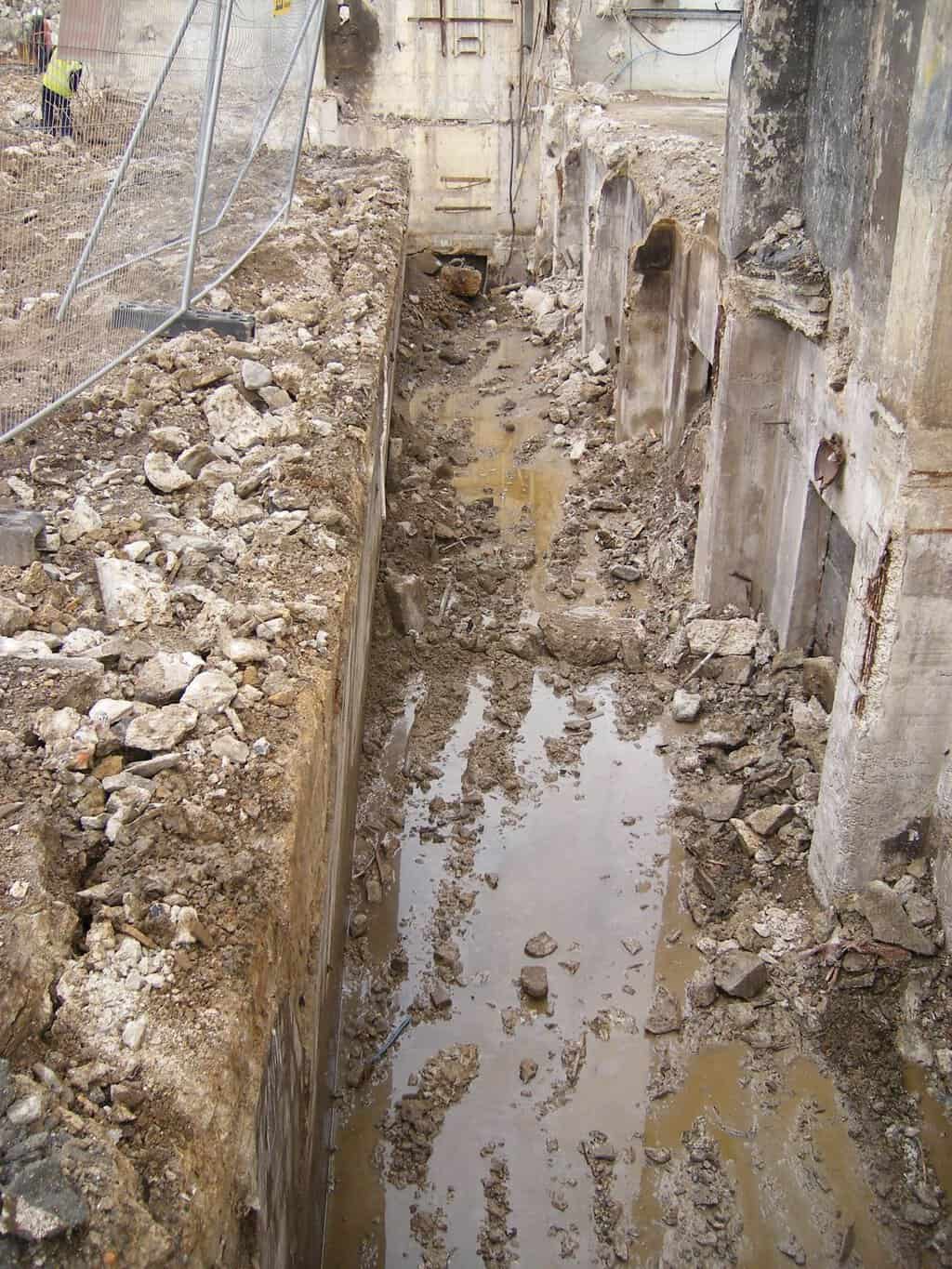
The bunker floor has been laid, this is at 8′ OD, below the machine house floor level (16′ OD), and behind can be seen the excavation for the tunnel where the draw off hatches were and the passage to the blungers which were to the right and lower at )’ OD, next to the boiler house wet pit / pump pit.
Some photos from the demolition, firstly in the under floor passage, for barrowing clay from the draw off hatches to the left (deep shadow) to the blungers behind the camera. Secondly two views of the passage from ground level after the roof (beaterfloor ground floor) had been removed, showing the draw off hatches, and behind the breezeblock wall closing the opening, is the wet pit pump pit. In the room next to the bunkers and above the blungers (upper opening in 733) if my memory serves, was the clay consistency regulator, a sort of see-saw of a horizontal U shaped pipe through which the slurry flowed via flexible connections, as the density increased the see-saw would tilt to the closed end of the U and so actuate an air servo to increase the dilution water, and vice versa. By the 70s clay was no longer man handled in barrows but washed down by a water jet from a platform inside the upper reaches of the clay bunker. One operator was an Italian by the name of Esposito.
Attachments:
1st June 2021 at 17:38 #1290Participant61a.
Photos of demolition of clay bunkers not uploaded in item 60.
-
AuthorPosts






- You must be logged in to reply to this topic.