
Home › Forums › SE England › Kent Mills A to F › Aylesford Paper Mills
Tagged: Case-making, Closed, MG machines, Newsprint
- This topic has 173 replies, 5 voices, and was last updated 1 year, 9 months ago by
Chris Bennett.
-
AuthorPosts
-
20th April 2021 at 17:10 #1124
Artless Bodger
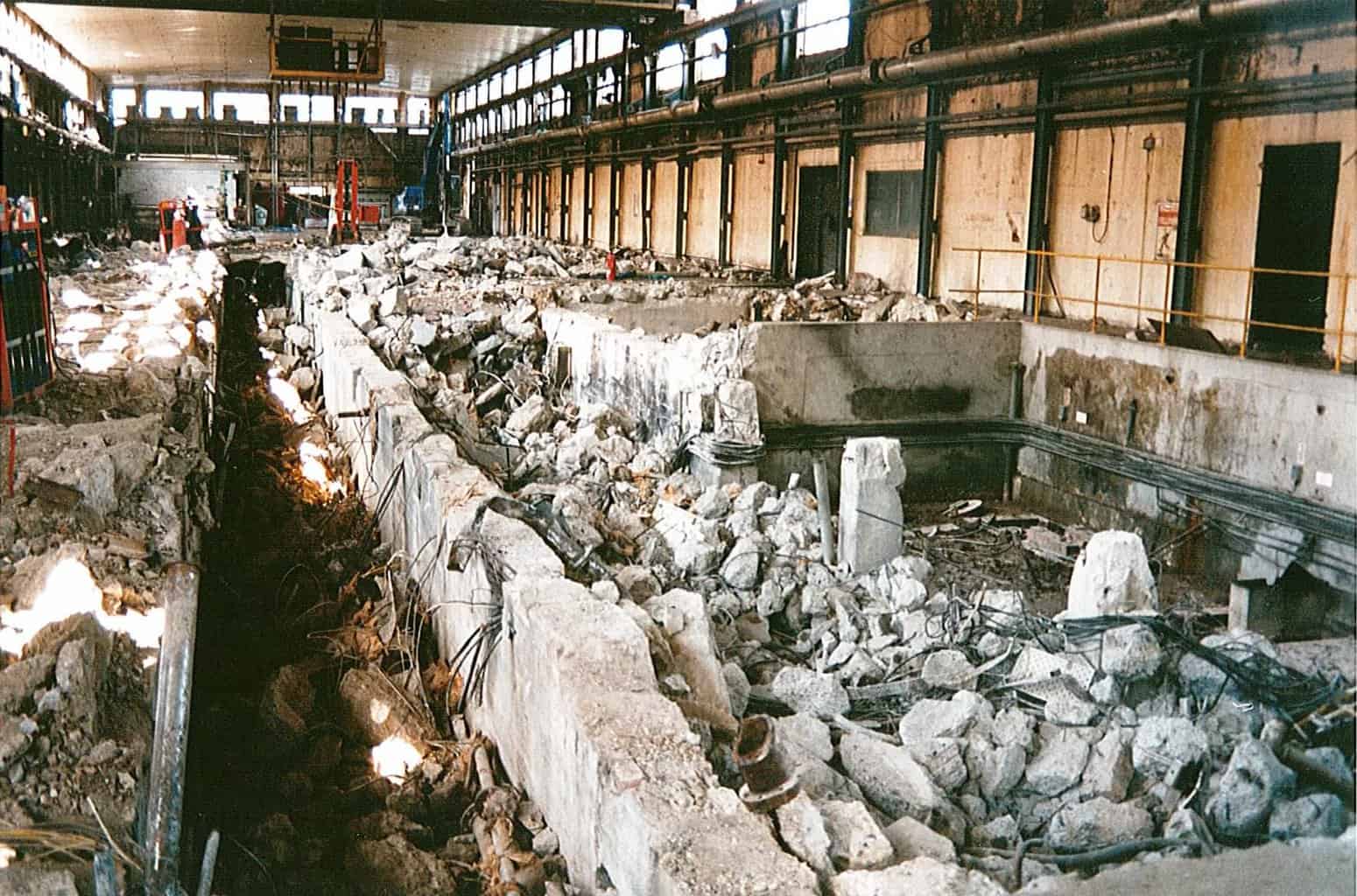
ParticipantPhoto 5. A closer view of the roofless tunnel and the no 2 machine vacuum pump pit (ex no 1 mc press area).
Attachments:
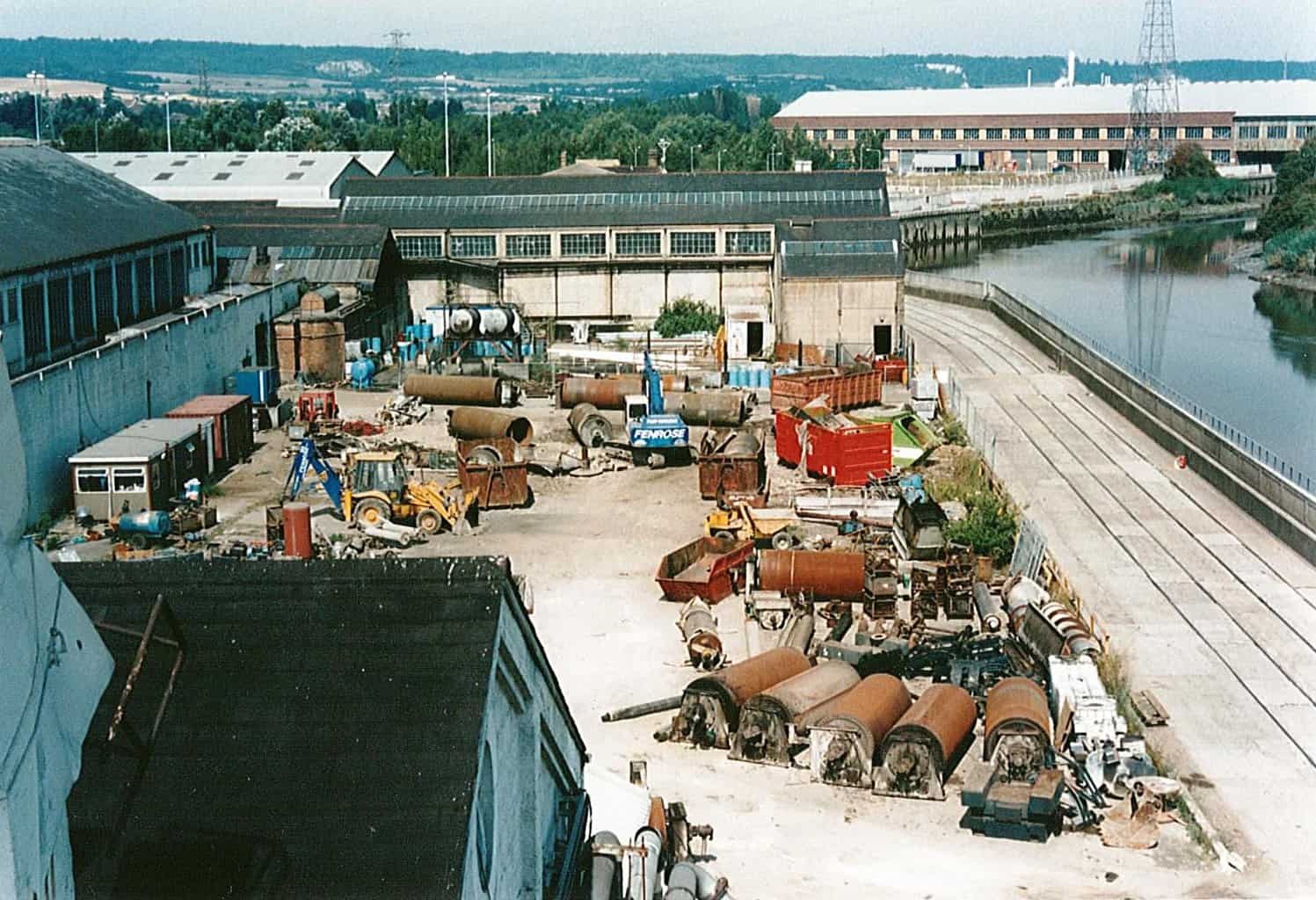
20th April 2021 at 17:18 #1126ParticipantPhoto 6. Showing parts of no 2 machine taken out into the old Stirling boilerhouse area for scrapping. Photo apparently taken from the end of the island site bridge with the end of the white beaterfloor / clay plant in the bottom left. The coal bunkers had been demolished and parts of the old salle rebuilt as a warehouse.
Also seen here is the 2 metre high flood wall constructed along the river bank, this was done to mitigate against flooding in the event of a high spring tide, high preceding rainfall, strong north east wind and closure of the Woolwich barrier forcing water up the Medway. Before the wall was raised we had had some close calls with water and effluent staff monitoring the rise of water backing up in no 1 and 2 east mill clarifier launders, ready to shut down the mill water supply to prevent the drains from backing up especially along Perimeter Road.
Attachments:
20th April 2021 at 21:18 #1128ParticipantPM2 general arrangement 8tph 1975 (original pdf file >6MB)
Attachments:
20th April 2021 at 21:19 #1130ParticipantPM2 general arrangement 8tph basements (original pdf file >4MB)
Attachments:
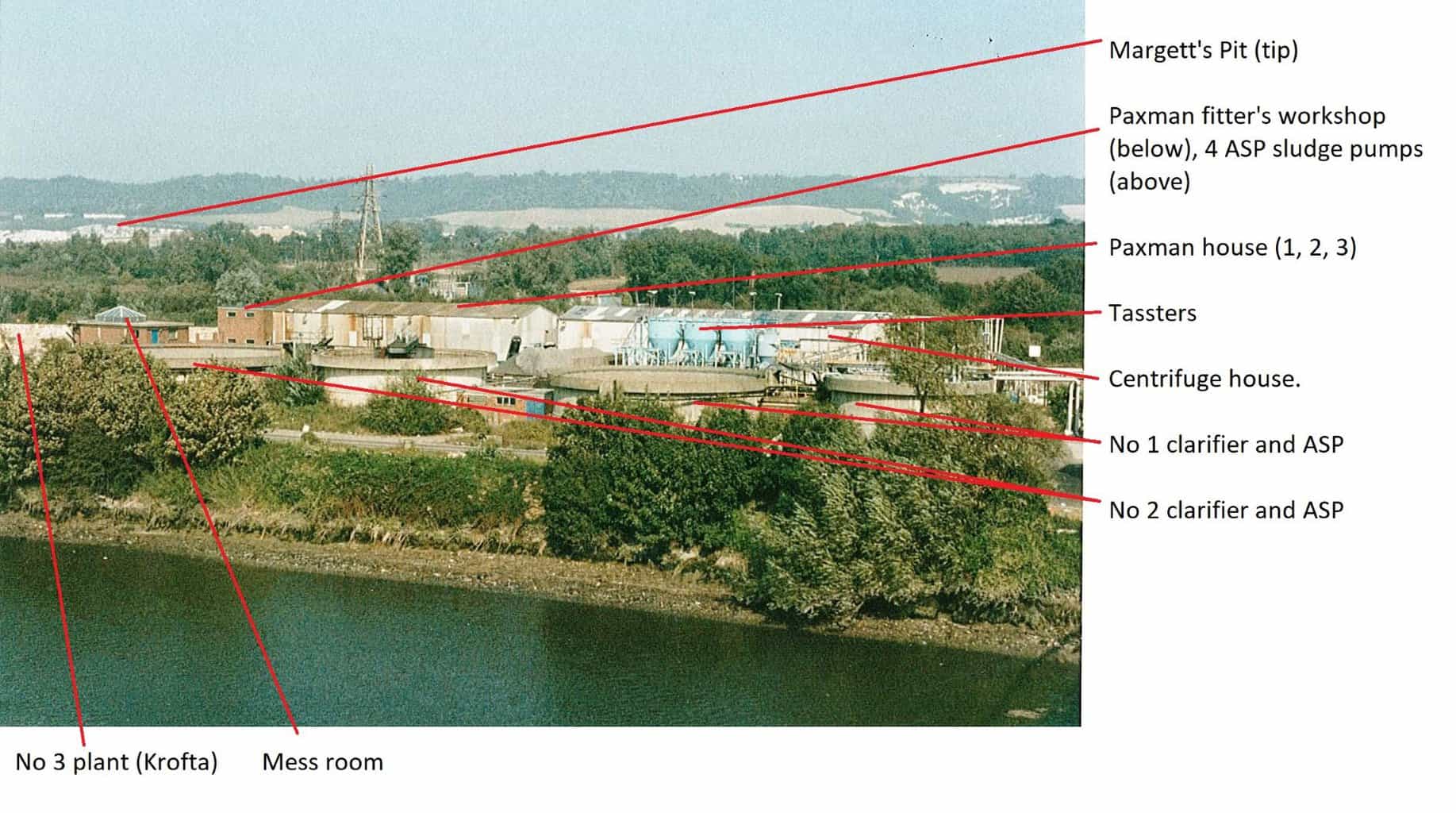
20th April 2021 at 21:20 #1132ParticipantIsland site c.1985 or later, after installation of Tasster sludge dewatering plant, annotated.
Attachments:
20th April 2021 at 21:45 #1134ParticipantPM2 refiners. The front 2 are the Claflins installed around 1982? Previously PM2 used the rear two of which the wide angle is visible, the Jordan is out of view behind the wide angle. The Claflins ran in parallel at around 4tph each, my recollection is that the wide angle and Jordan ran in series at 8tph – not bad for refiners said to be rated for 2tph.
The entry to the machine house is in the dark beyond, at the top of the steps down to the chest tops and machine floor.
Taking samples from the Claflins was a fraught exercise, the samples were taken from the 2″ gate valve visible at the lower rim of the refiner. The stub pipe leading to the valve would plug up under pressure so the gate had to be opened wide to clear it, then shut quickly before your feet were immersed in very hot stock – bearing in mind the stock had already passed through the hot dispersion unit on the island site, further heated by friction in the refiner, it was often 50 deg C or more.
To the left of the top of the ladder, you can see the bottom of 2mc backwater tank, and to the right the second tank. 1mc backwater tanks had been reused for storing rosin emulsion size – Hercules T-size 22/30P mainly. This replaced the BR45 saponified rosin supplied via ring main from the size plant beyond the end of the kraft beater floor range.
Attachments:
21st April 2021 at 13:35 #1136Michael Presneill
ParticipantDeep Joy tinged with some sadness. Because of these photographs I now know how No 2 machine ended her long working life having been built in the early 1920’s. I would like to have imagined she would still be producing paper somewhere in the World. However, we all have to go at some point in time. Hopefully, sometime this year, I should be able to commend my memories of working on No 2 from 1965-1971 to this site.!!
21st April 2021 at 14:12 #1137ParticipantWell Artless Bodger what can I say,, Seeing Her, No2, In the final days of production really makes me sad. I was 18 years of age when I first went into that machine house 1965 and left in 1971. I’m now 74 years of age and being able to look back at the photograph of No 2 in operation gives me immense pleasure knowing I worked on her. THANK YOU.!!!
Mike Presneill. PS. Be nice to have a chat at some point in time.!!??
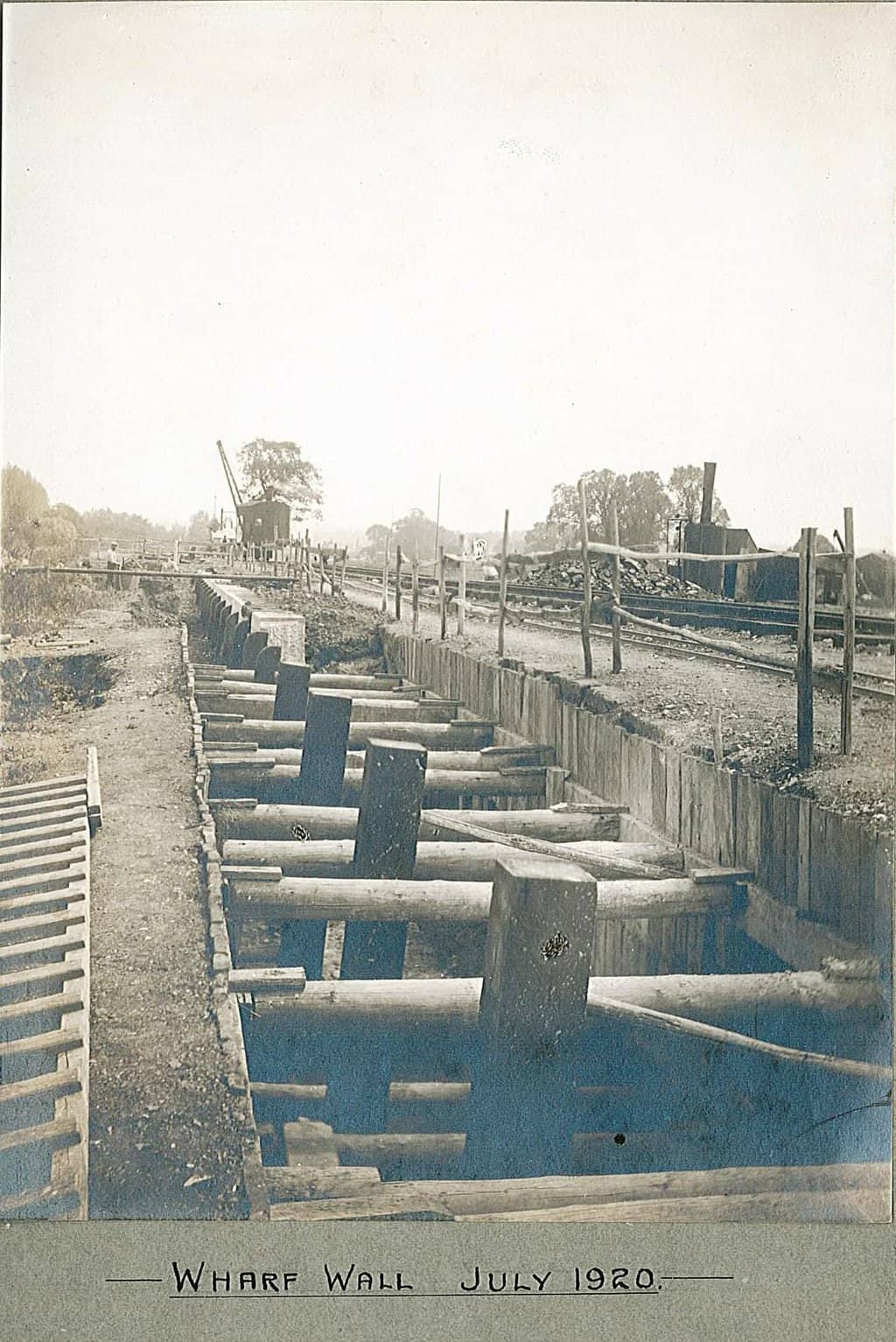
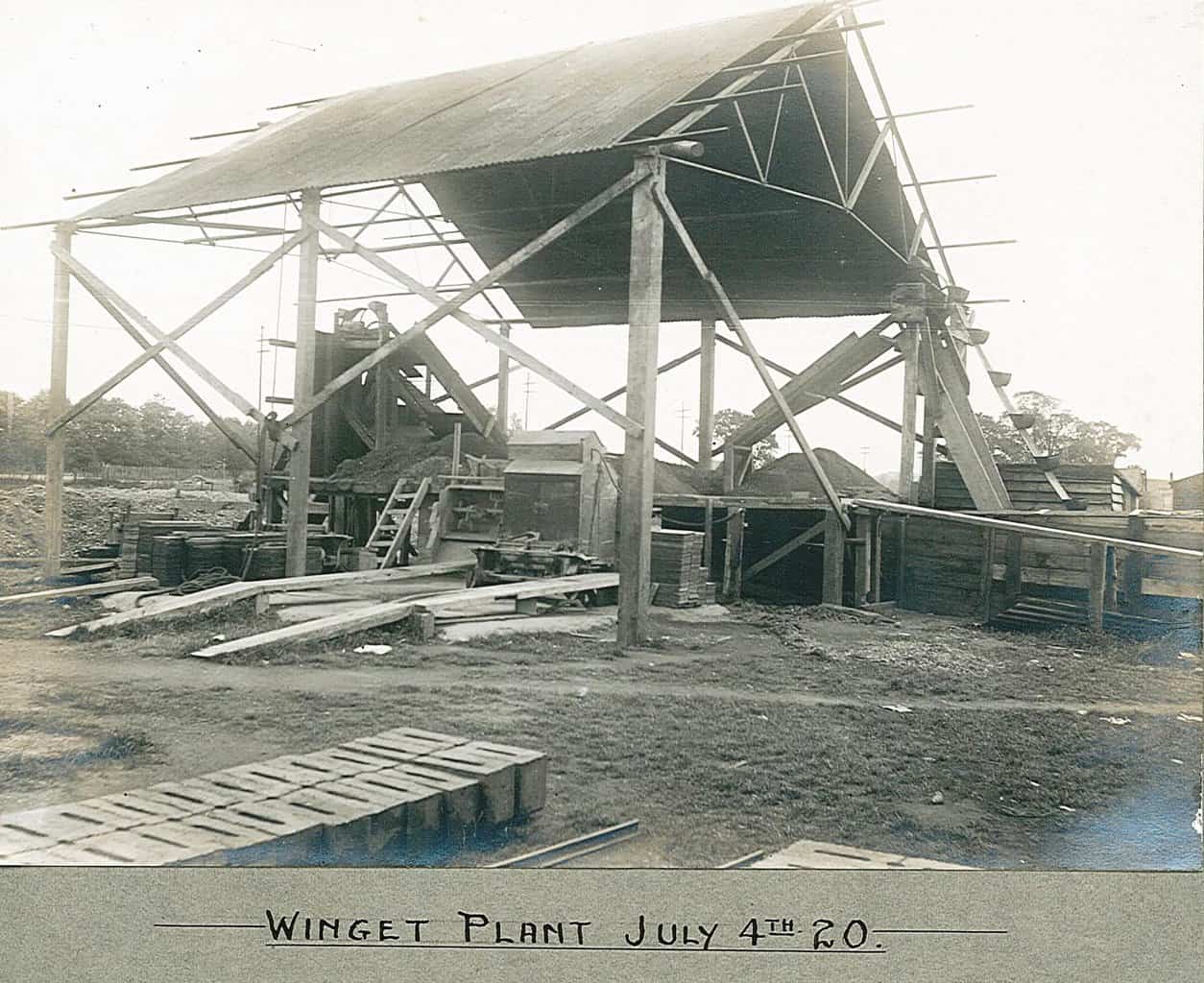
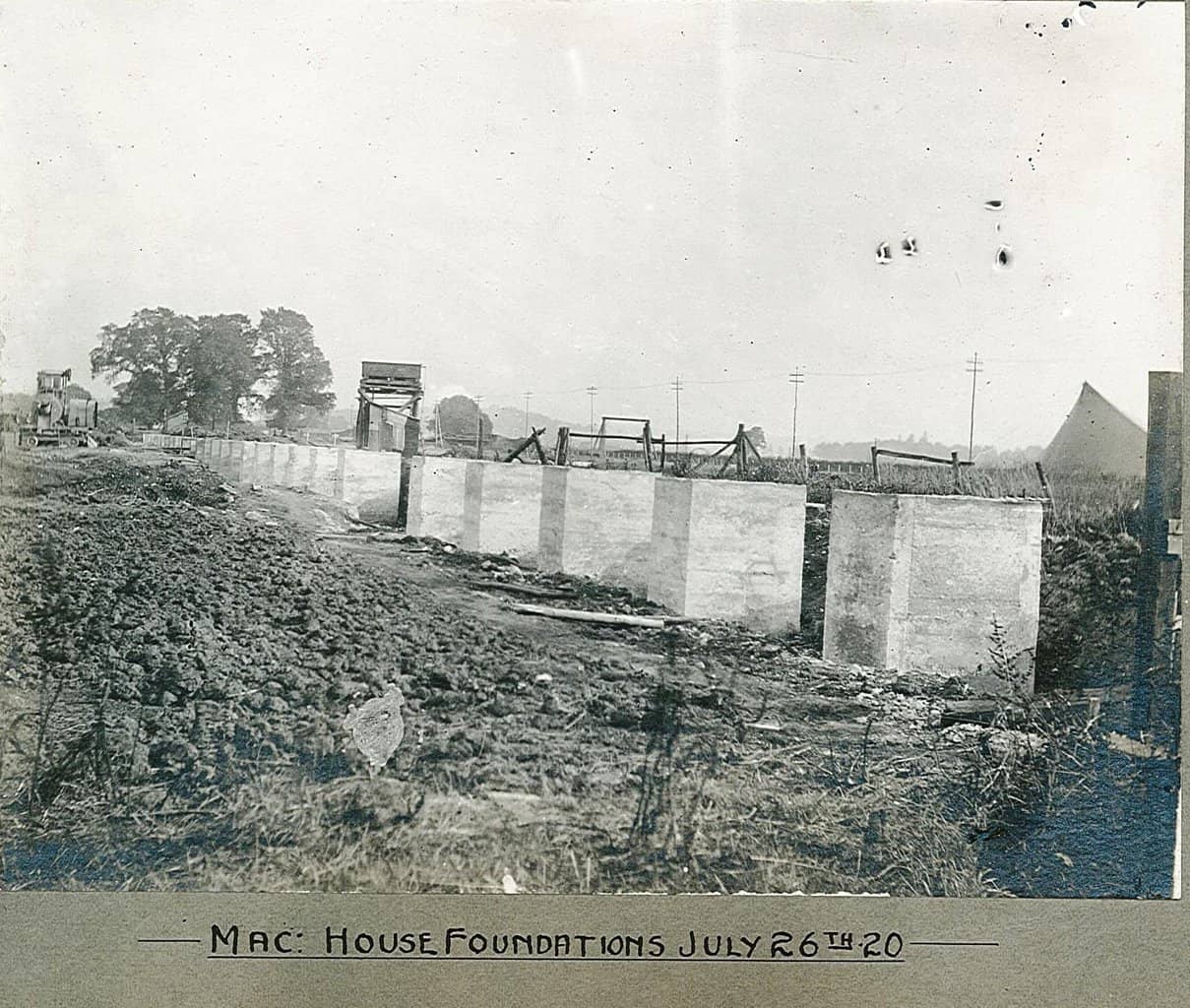
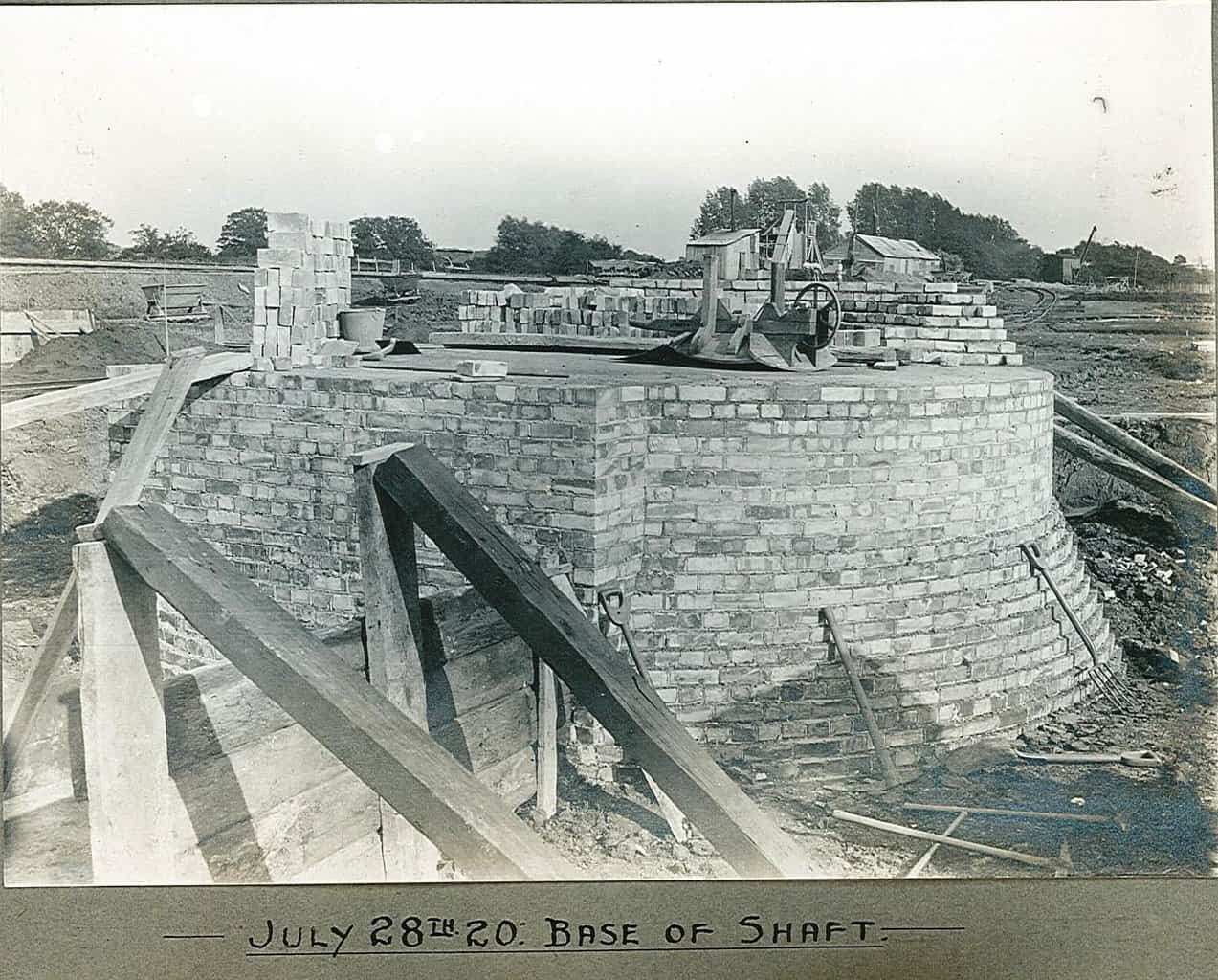
23rd April 2021 at 10:32 #1138ParticipantI have decided to post the early construction photographs on here, as there are 125 of them it will take a bit of time. I don’t know who holds the copyright to these and post them only for interest. Several have already been posted on this site, and others are to be found on other websites, thus there will be some duplication, the intention is to provide them in full.
Attachments:
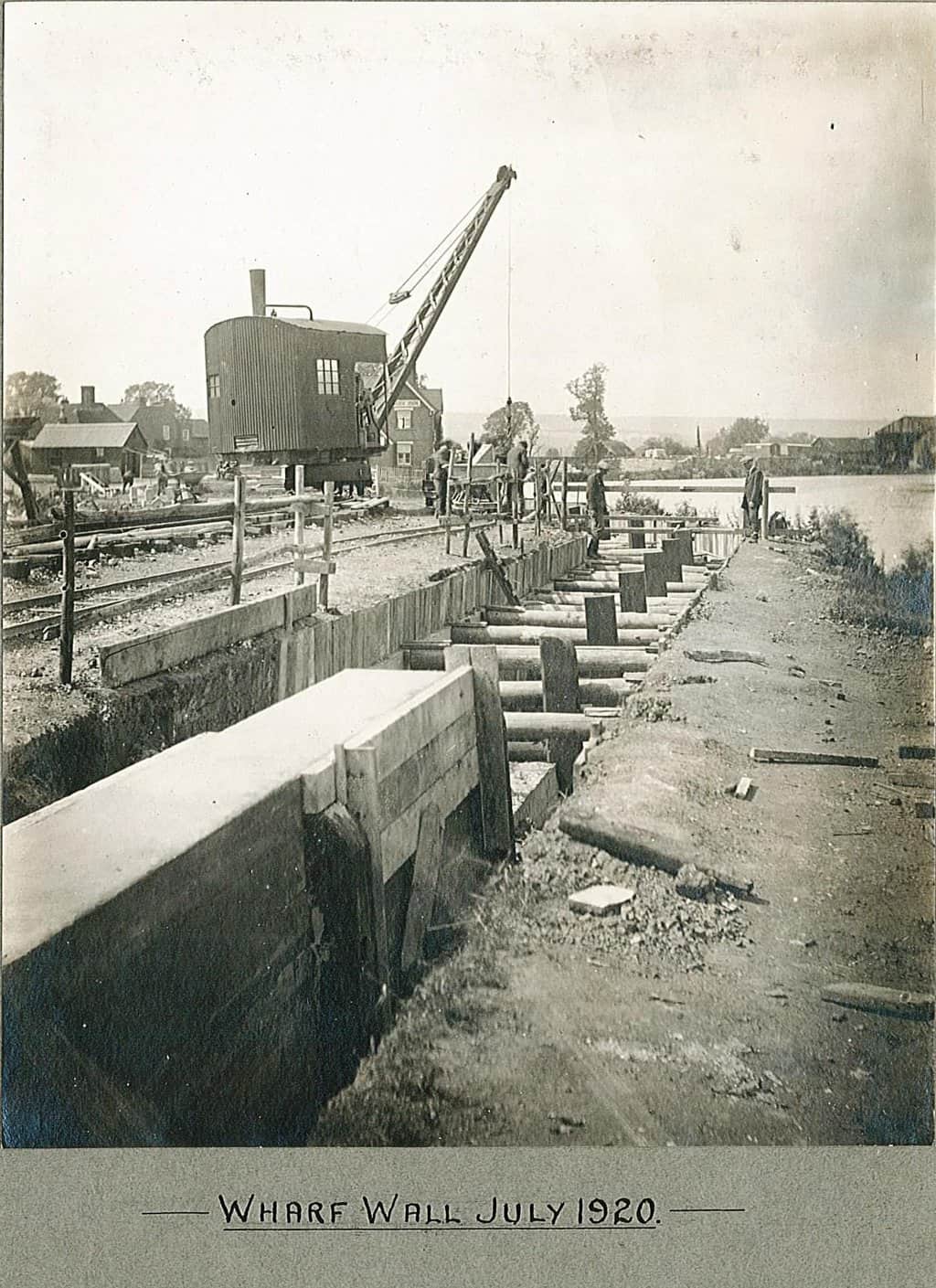
23rd April 2021 at 10:38 #1140ParticipantPhotos 1 and 2 depict the commencement of building the wharf along the Medway middle cut, where the banks on the west side were cut back and the spoil used to fill in around the Ferry House Inn visible just beyond the crane. Standard gauge steam crane, narrow gauge tracks and V skip wagons used to move materials around the site – much as dumper trucks are used today.
Attachments:
23rd April 2021 at 10:40 #1142Participant3. The Winget concrete mixing plant. Ballast was excavated on site, the pit became the main process water reservoir, known as ‘the ballast pit’.
Attachments:
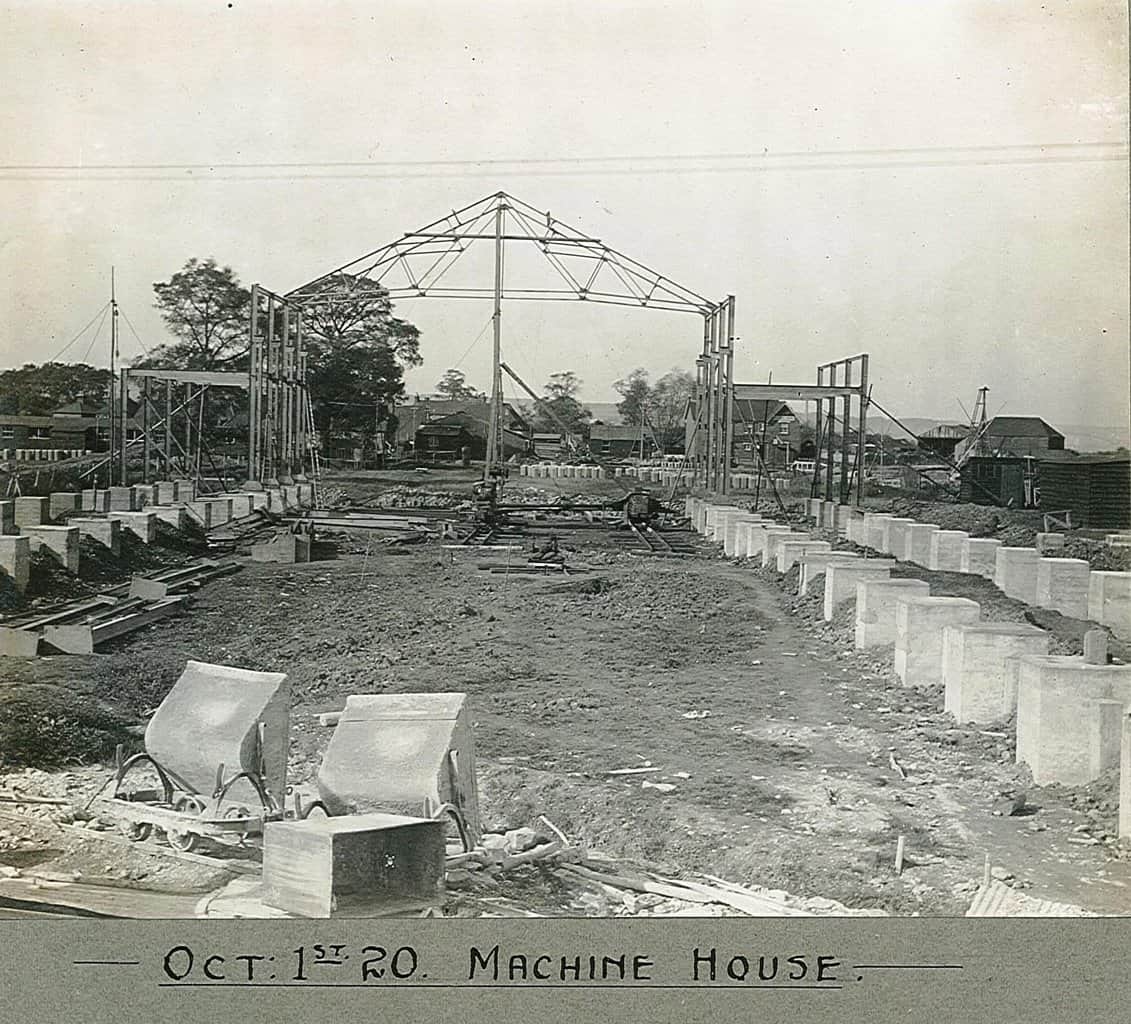
23rd April 2021 at 11:01 #1147Participant4. 1/2 Machine house foundations, looking roughly south west.
Attachments:
23rd April 2021 at 11:05 #1149Participant5. Another view of the foundations, river bank in the background, the trees are on the far side of the river. A crane is working on the wharf wall.
Attachments:
23rd April 2021 at 11:15 #1151Participant6. Base of the chimney shaft, this will be part of the remains found by Kevin Harrild when preparing for the new East Mill effluent plant in the 1980s. V skips on the wharf wall in the background.
Attachments:
23rd April 2021 at 11:21 #1153Participant7. Machine house frame steel work being erected. The pole derrick to lift the roof trusses is mounted on narrow gauge wagon chassis so it can be moved from frame to frame, it is ballasted with piles of bricks. The Ferry is visible through the frame of no 1 mc annexe. That may be a pile driver beyond, putting in piles for the wharf beyond the Ferry, which will be filled in later with spoil from the pulp yard wharf.
Attachments:
-
AuthorPosts




- You must be logged in to reply to this topic.