
Home › Forums › SE England › Kent Mills A to F › Aylesford Paper Mills
Tagged: Case-making, Closed, MG machines, Newsprint
- This topic has 173 replies, 5 voices, and was last updated 1 year, 9 months ago by
Chris Bennett.
-
AuthorPosts
-
24th May 2021 at 10:27 #1229
Artless Bodger
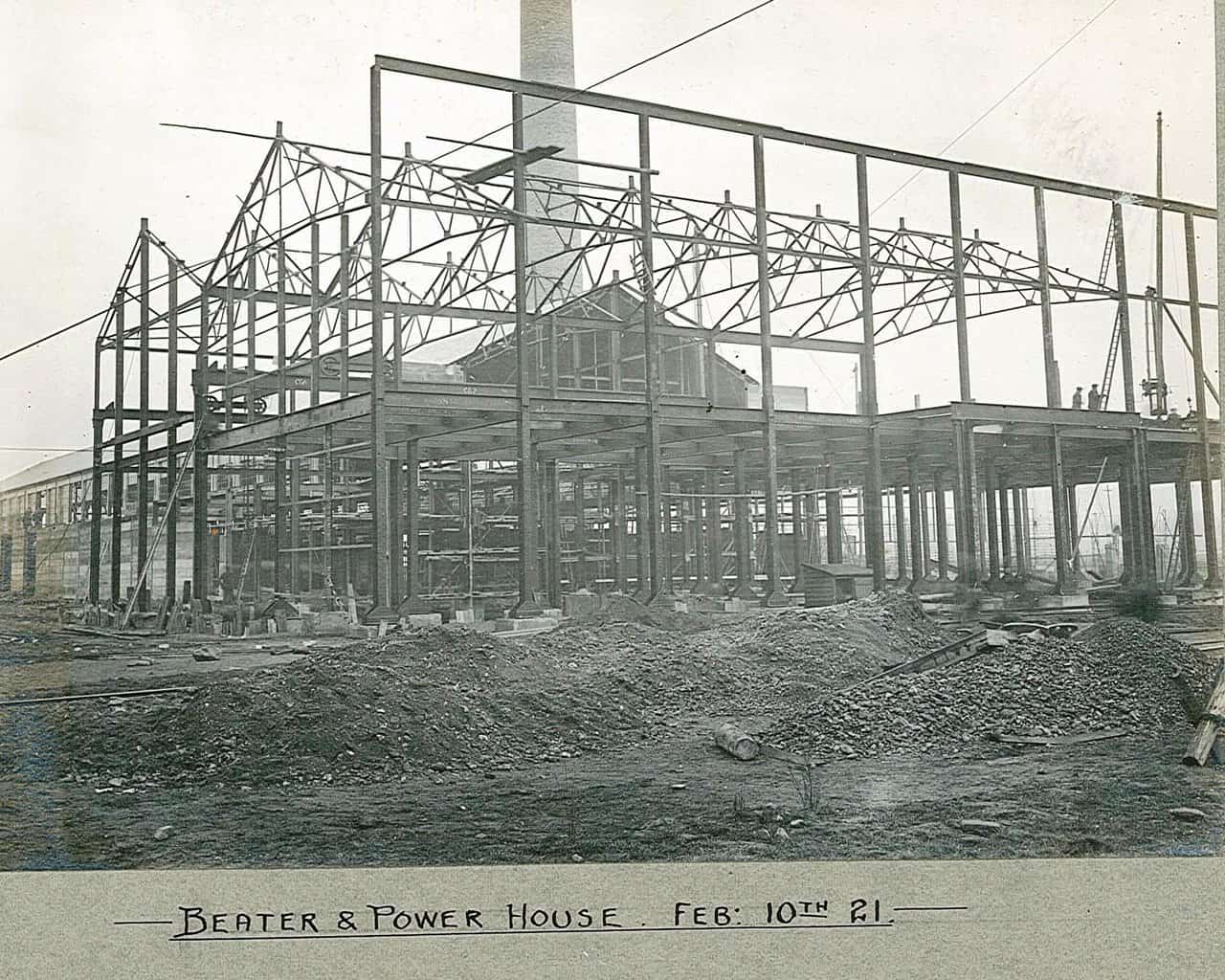
Participant36. Beater and Power House.
The overhead crane is already in place over the bay for nos 1 & 2 turbines.
Attachments:
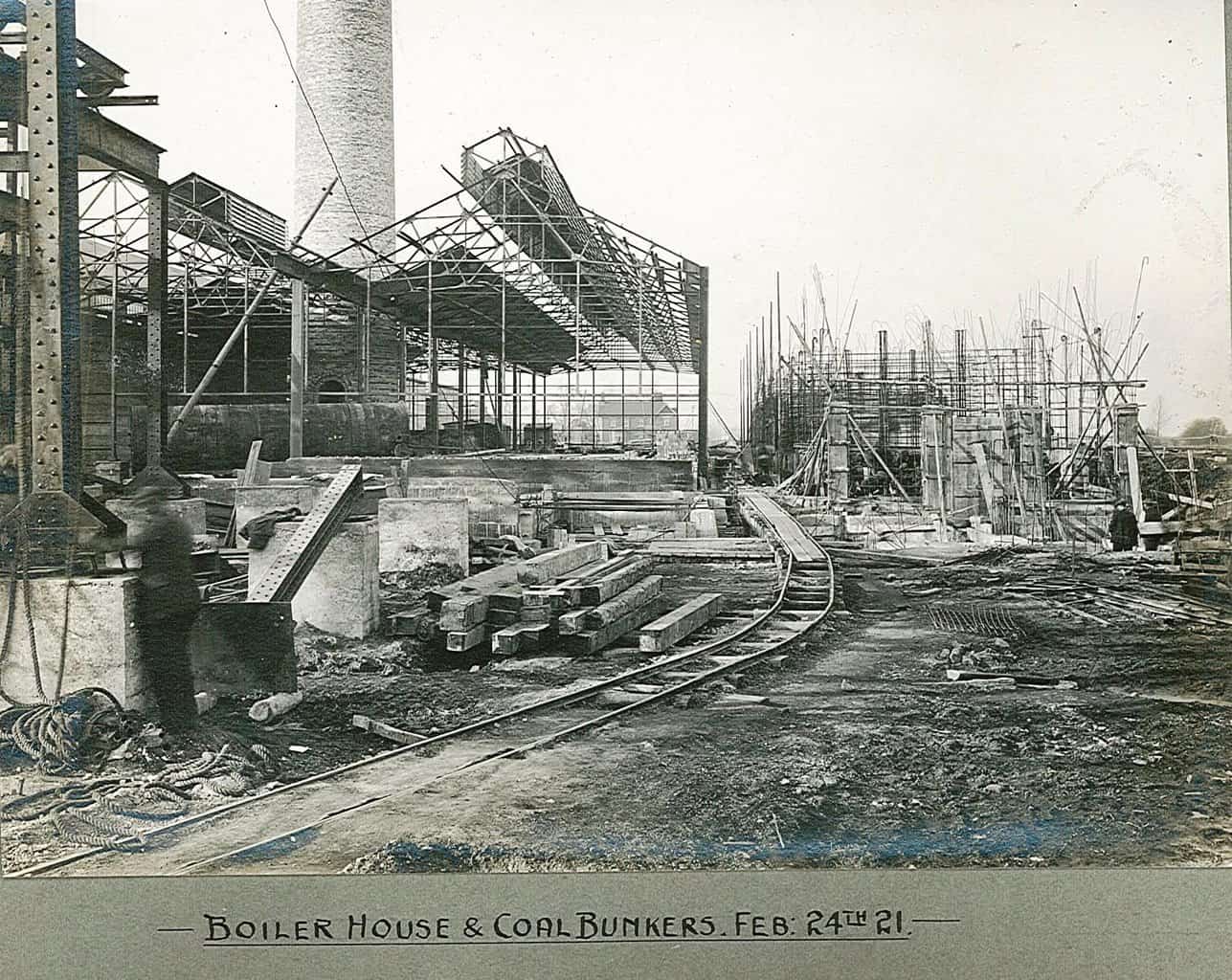
24th May 2021 at 10:38 #1231Participant37. Boiler House and Coal Bunker.
Plenty of interest in this photo. On the left hand side, one of the beater floor support columns is being hoisted into place, the ropes for operating the hoist are just visible, the man is guiding the column into place, the securing bolts can be seen under the base plate, leaning at an angle. The column is if riveted construction (much of the other steel work was bolted, e.g. the roof trusses). There is a rather scruffy looking Lancashire boiler laying roughly in position in the boiler house – this maybe a second hand one as it shows no makers name (others do). ‘Throopn’y bit’ curves of the narrow gauge track work in evidence.
Attachments:
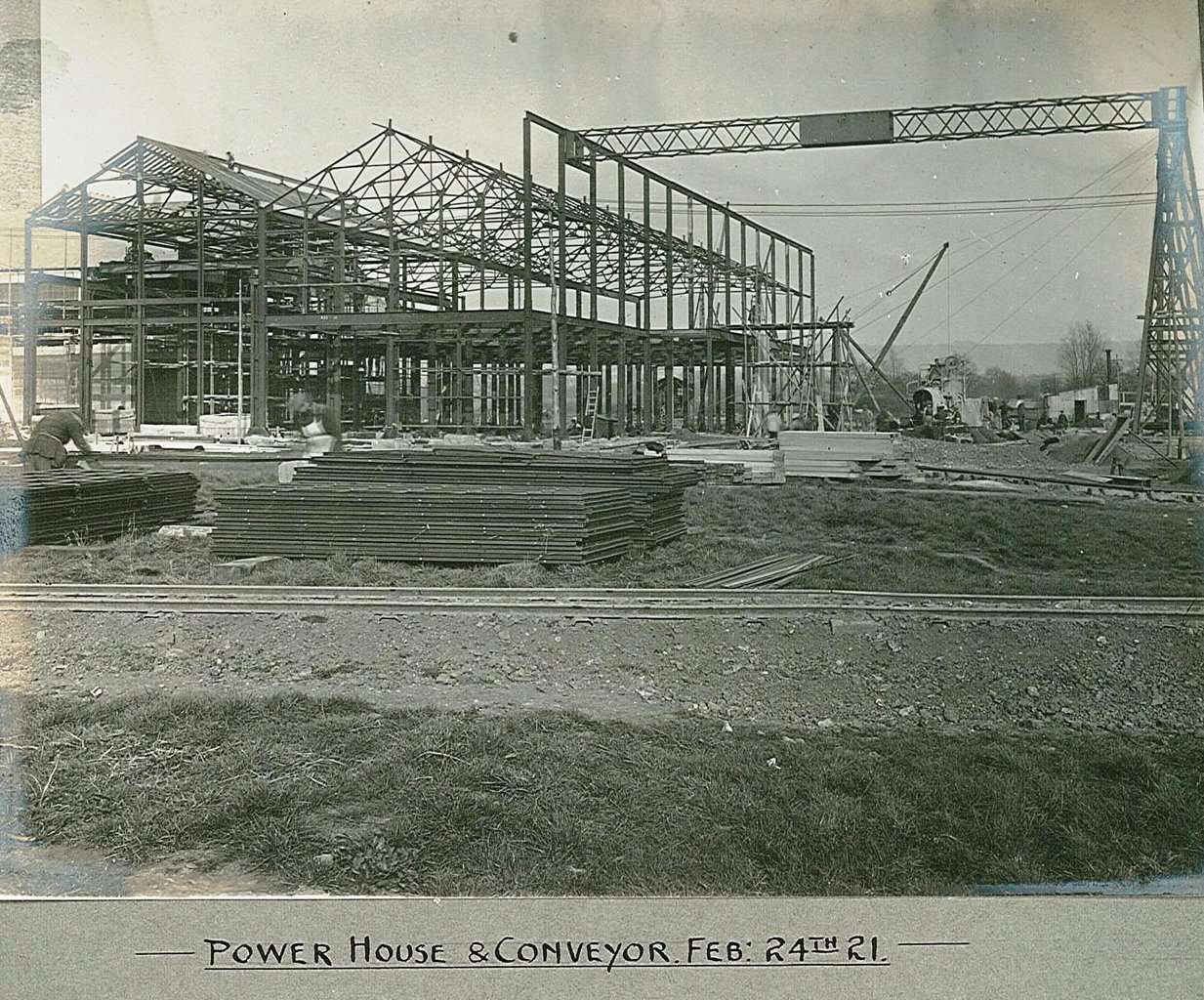
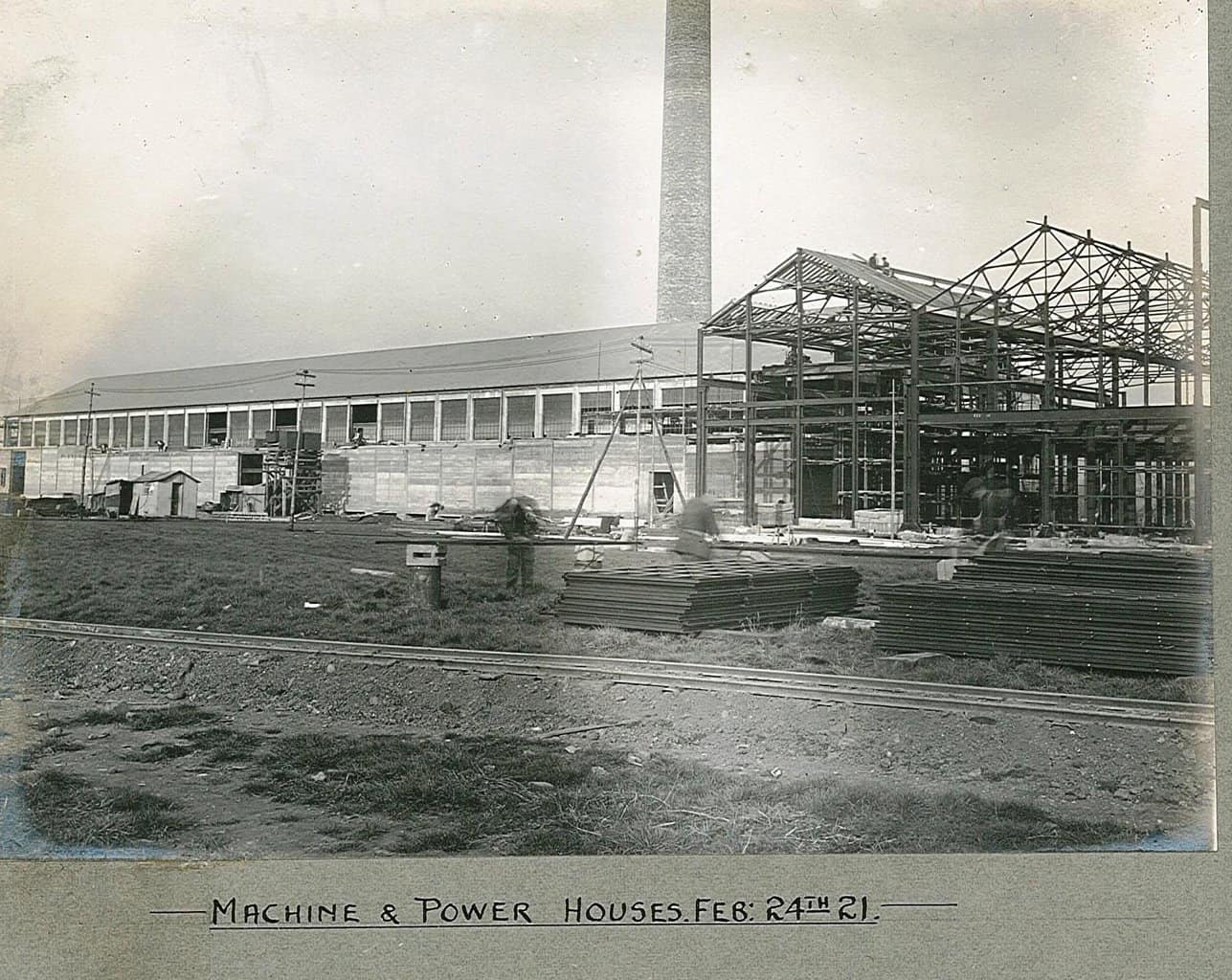
24th May 2021 at 10:46 #1233Participant38. Power house and conveyor.
Steelwork for no 1 conveyor well advanced. Stacks of window frames in the foreground adjacent to what appears to be a standard gauge siding.
Attachments:
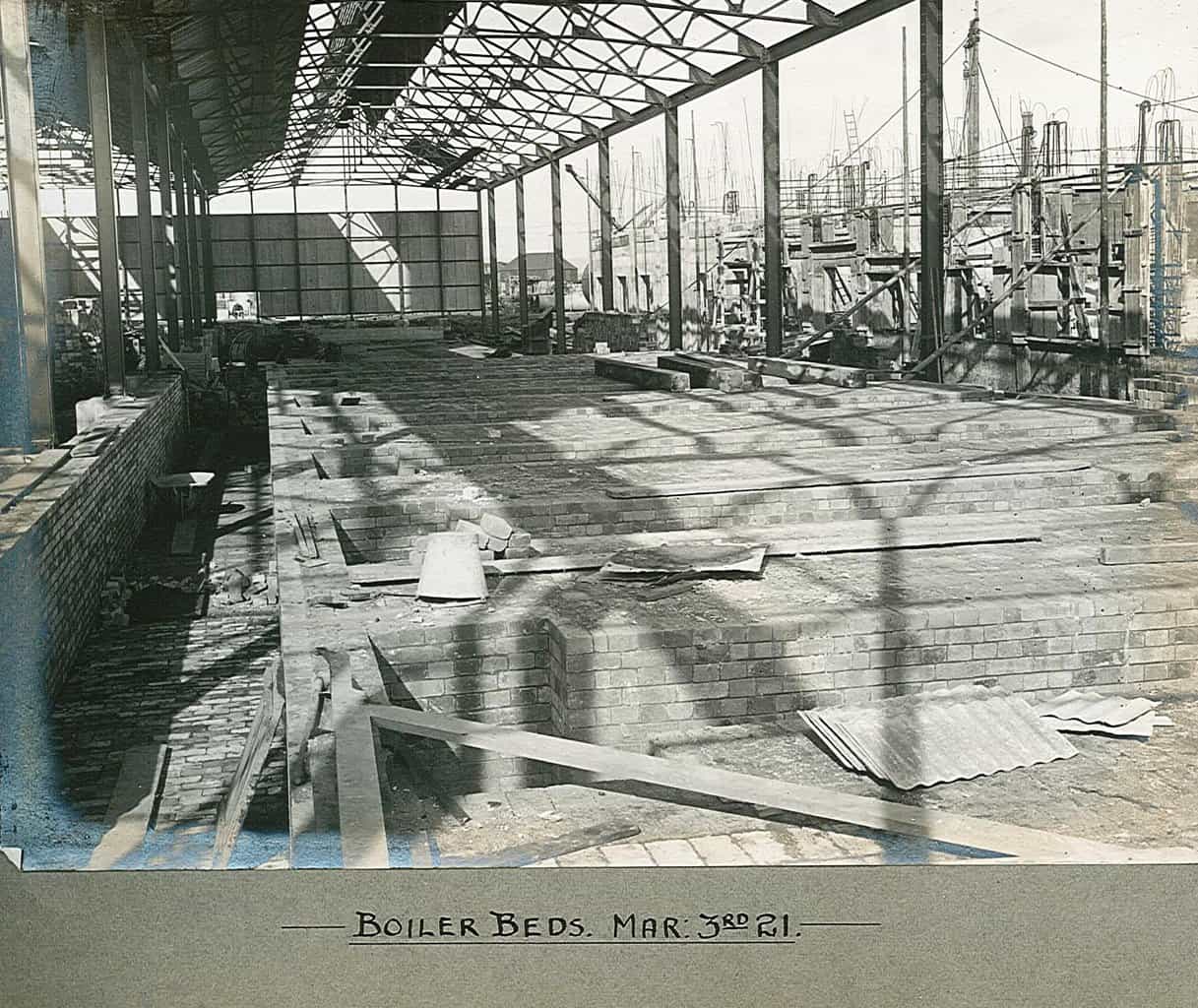
24th May 2021 at 10:56 #1235Participant39. Boiler beds.
You can just see the end of the Lancashire boiler, and the fire tubes, seen in views across the river earlier. It seems there were at least 2 boilers on site at this time. The black barn in the distance is the one alongside the wharf seen earlier on what became the Blackhorse site.
Attachments:
24th May 2021 at 11:01 #1237Participant40. Machine and power houses.
The photos are out of chronological order, this is a partner to 38.
Attachments:
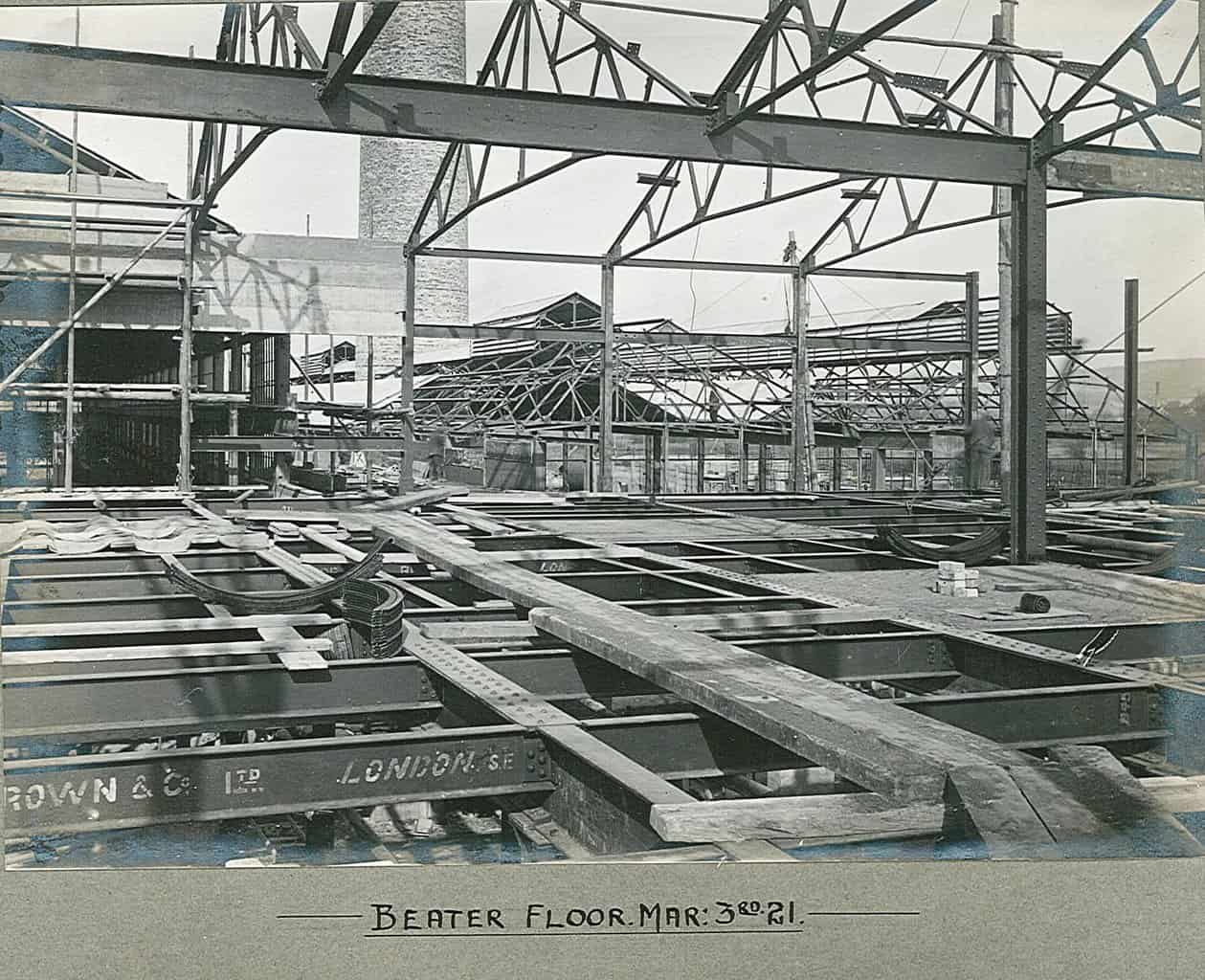
24th May 2021 at 11:06 #1239Participant41. Beaterfloor.
Upstairs on the beaterfloor, hi-rib sections stacked up ready to fill in the gaps between the joists and pour the concrete floor. Concrete wall panels have been poured in place up on the steelwork on the machine house end wall. Not much evidence of protection for the workers.
Attachments:
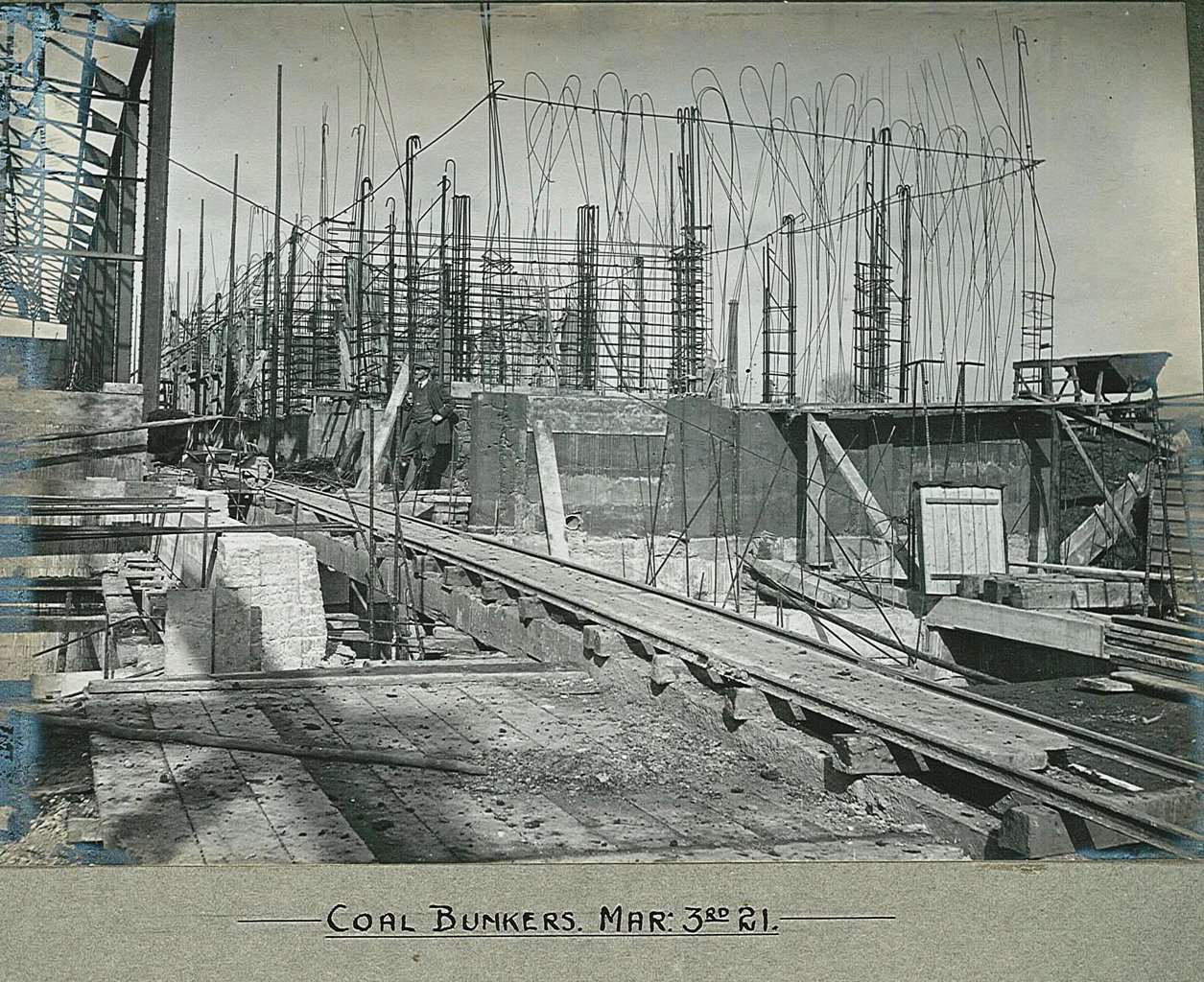
24th May 2021 at 11:11 #1241Participant42. Coal bunkers.
The NG track passing over the wet pit pump pit in the foreground.
Attachments:
24th May 2021 at 11:19 #1243Participant43. Boiler setting.
Two nice shiny (well the ends anyway) new boilers in situ, the makers name proudly displayed on the side. A third boiler, a bit scruffy looking, is visible behind with a ladder leaning against it, possibly the one seen in photo 37. Given the depth of some of the pits around this area (wet pit pump pit in the foreground), by modern standards the opportunity to fall in and get skewered by the abundance of reinforcing bars is a bit frightening.
Attachments:
24th May 2021 at 11:23 #1245Participant44. Boiler beds and coal bunkers.
Another one out of chronological sequence – this partners photo 37.
Attachments:
24th May 2021 at 11:29 #1247Participant45. Beaterhouse.
A derrick has been assembled on the upper floor to raise the roof truss steelwork, the small veranda for landing pulp bales from the conveyor is in place (later much extended around the pulp yard). Large steel trusses in the foreground may be for the conveyor structure. A boiler is just visible in the right rear.
Attachments:
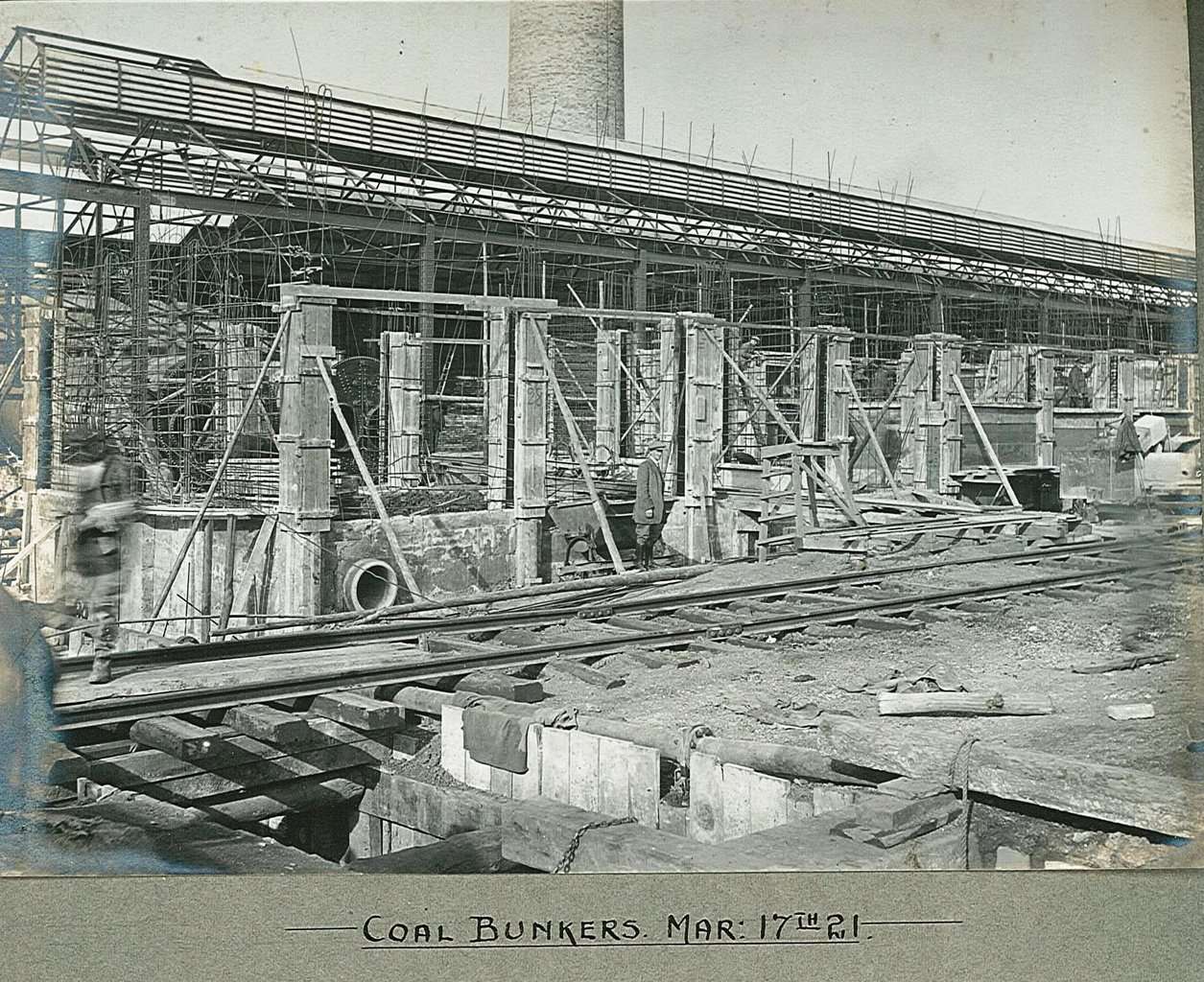
24th May 2021 at 12:24 #1249Participant46. Coal bunkers under construction.
Lots of interest here and some questions arise.
Standard gauge track across the foreground – were the Lancashire boilers brought in along this siding? Two are visible in situ in the boiler house to the left. These are big and presumably fairly heavy items but the access to the boiler beds seems quite restricted in these photos, as the re is already corrugated sheeting on the north end wall, beaterfloor construction going on at the south end and the bunkers along the river front (in case they were delivered by water).
As an aside, we used to have photographs in the family (now lost) of the delivery of a new Lancashire boiler to Allnutt’s lower Tovil mill. This was delivered by rail (the loco was numbered in the later SR scheme with 1000 added to the original SECR number, so post 1927 or thereabouts), the boiler was brought into Tovil goods yard (on the goods branch), rolled off the wagon and down the embankment before being dragged up onto a solid wheeled trailer and towed around to the mill entrance by a traction engine. From there it was probably moved into position by packing and jacking and use of rollers. So the APM boilers could have been moved in a similar fashion. The NG track might just have been able to carry one on several wagons, but would have been a bit precarious, though precarious sums up quite a lot of the scenes in these photos.
The deep excavation in the foreground may just (almost certainly, see drawing AX130) be part of the excavation for the turbine condenser cooling water intake / outfall which extended under the river bed (see sketch), which I have seem drawings of. At this time the river bank extended beyond the new wharf wall, and was later cut back extensively, hence most of the excavation and pipe installation could have been achieved on ‘dry land’ (given the waterlogged gravel under the site as a whole). The pipe under the railway track is either temporary for dewatering the diggings (seen earlier), or permanent for the wet pit sump, as there appears to be a valve installed in the line further back.
There is a derailed NG skip wagon behind the gaffer, to his right a short NG spur served at right angles from the line across the bunkers (on which a skip wagon chassis stands), by a turnplate.
Attachments:
24th May 2021 at 14:33 #1251Participant46A
Missing sketch of the wet pit pump arrangement as originally installed for the turbine condenser cooling water, drawn from memory of the drawing referred to above. The intakes in the river bed were arranged so that water was taken in with the tide, and discharged down flow, the valves allowing change over as the tide ebbed and flowed. This arrangement fell into disuse later, when new intakes were installed upstream in Medway Pumphouse, and the water was sent to the turbine house via a sump under no 1 conveyor, and later partly built over for the electrical dept workshop. I will later post photos of this sump when it was uncovered during the demolition of East Mill.
Referring to drawing Ax130, one of a few I have scans of (too big to post at over 5MB), this shows the circulating water mains for the turbine condensers, with some other detail, notably nos 1 & 2 Lancashire boilers (the two new ones mounted on their beds above), and in the pump pit under the soft water plant in the south end of the boiler house is a Lancashire boiler used as a hot water tank, labelled as having come from Horton Kirby mill, i.e. one of the second hand boilers speculated on in previous posts.
Attachments:
24th May 2021 at 14:52 #1253Participant46B
A correction to 48A – I’m rushing too much!
The Drawing AX130 is of the Arrangement of Steam and Blowout Pipes. This is the one with a cross section of the south end of the boiler house showing the wet pit etc (base -5′ OD so below river bed level), also the second hand Horton Kirby boiler used as a hot water tank.
The drawing showing the cooling water supply and return pipes is AX121, dated 3/2/1922. It does not show the rotary strainer which I believe was added later, but had been removed by the time I worked in the mill, the frame of it was still in existence.
24th May 2021 at 14:59 #1254ParticipantOn with the photos.
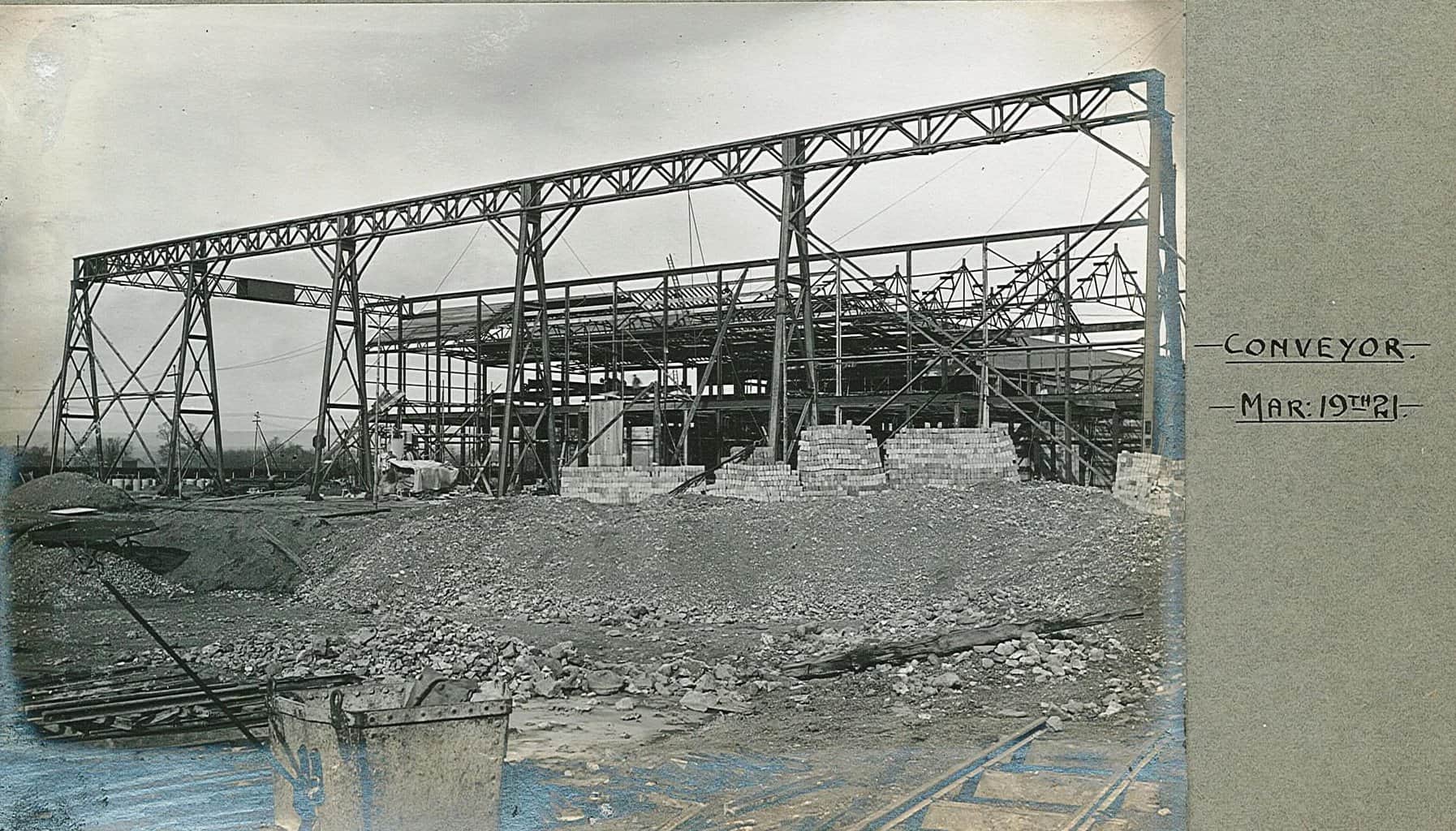
47. Conveyor under construction.
No 1, of eventually 5.
Attachments:
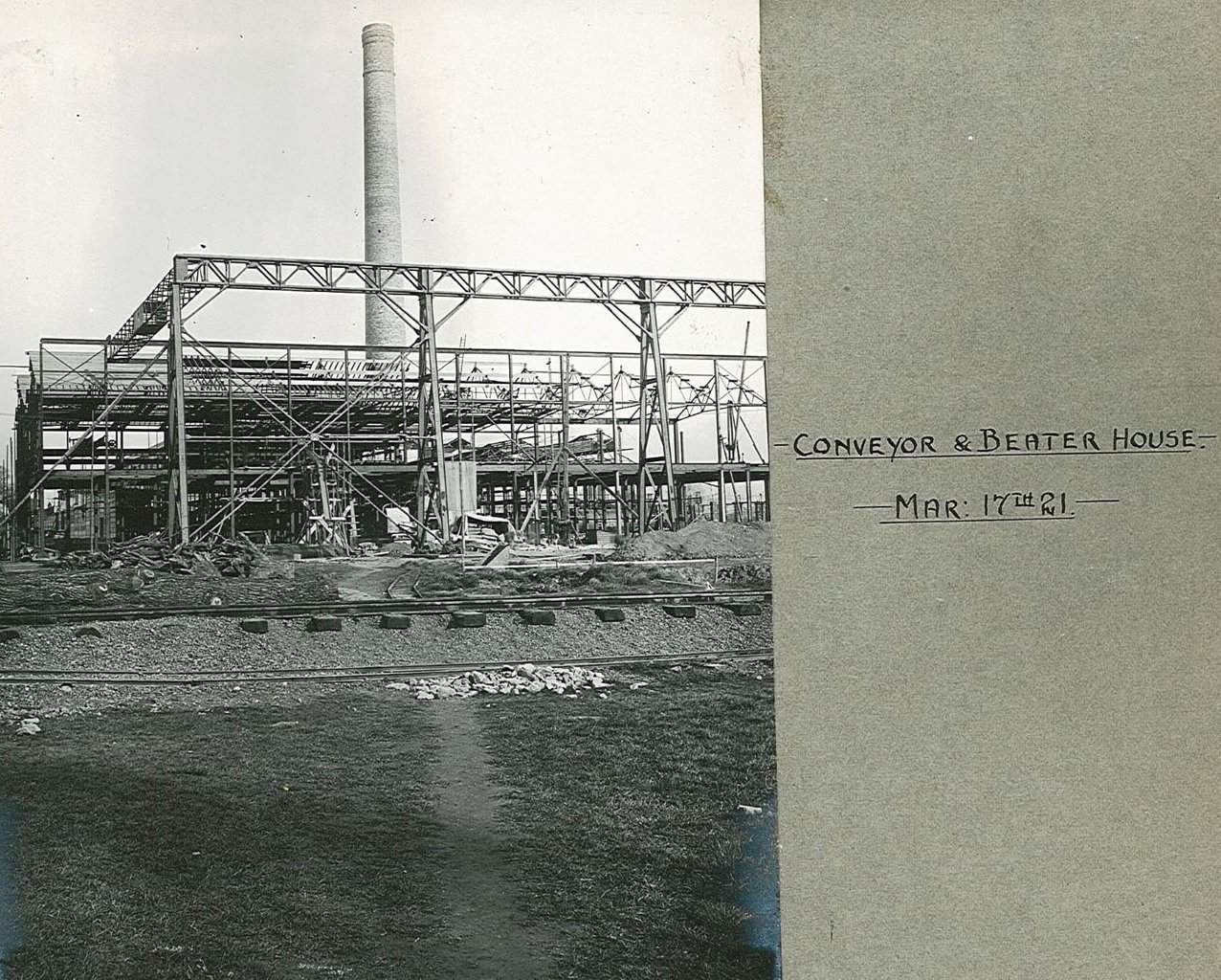
24th May 2021 at 15:05 #1256Participant48. Conveyor and beater house.
Showing the end of the conveyor as originally constructed with the transverse cross bracing in place – this was later moved when the conveyor was extended westwards to the veranda of the kraft beater floor. No 1 conveyor was later taken out of use when the silos for the Staper plant were erected, most of that section of the pulp yard had already been built over – electrical workshop and store, rectifier house etc.
-
This reply was modified 5 years, 4 months ago by
Artless Bodger.
Attachments:
-
AuthorPosts



- You must be logged in to reply to this topic.