Forum Replies Created
-
AuthorPosts
-
Artless Bodger
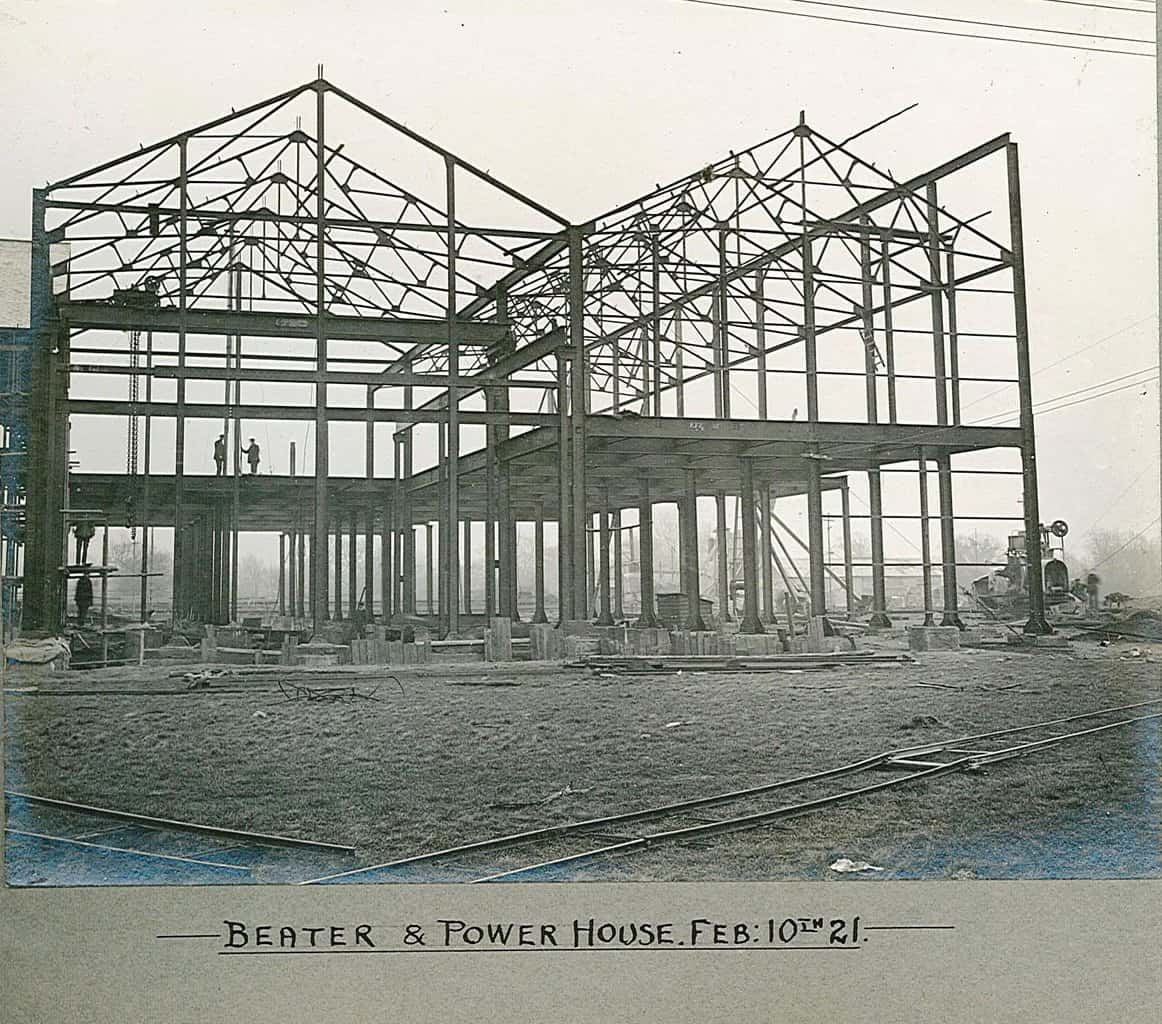
Participant35. Beater floor and powerhouse construction, looking towards the river. The section in which the bridge crane has been installed is the future turbine house – turbines 1 and 2. The beaterfloor is beyond and has not yet had all the first floor steelwork erected.
Attachments:
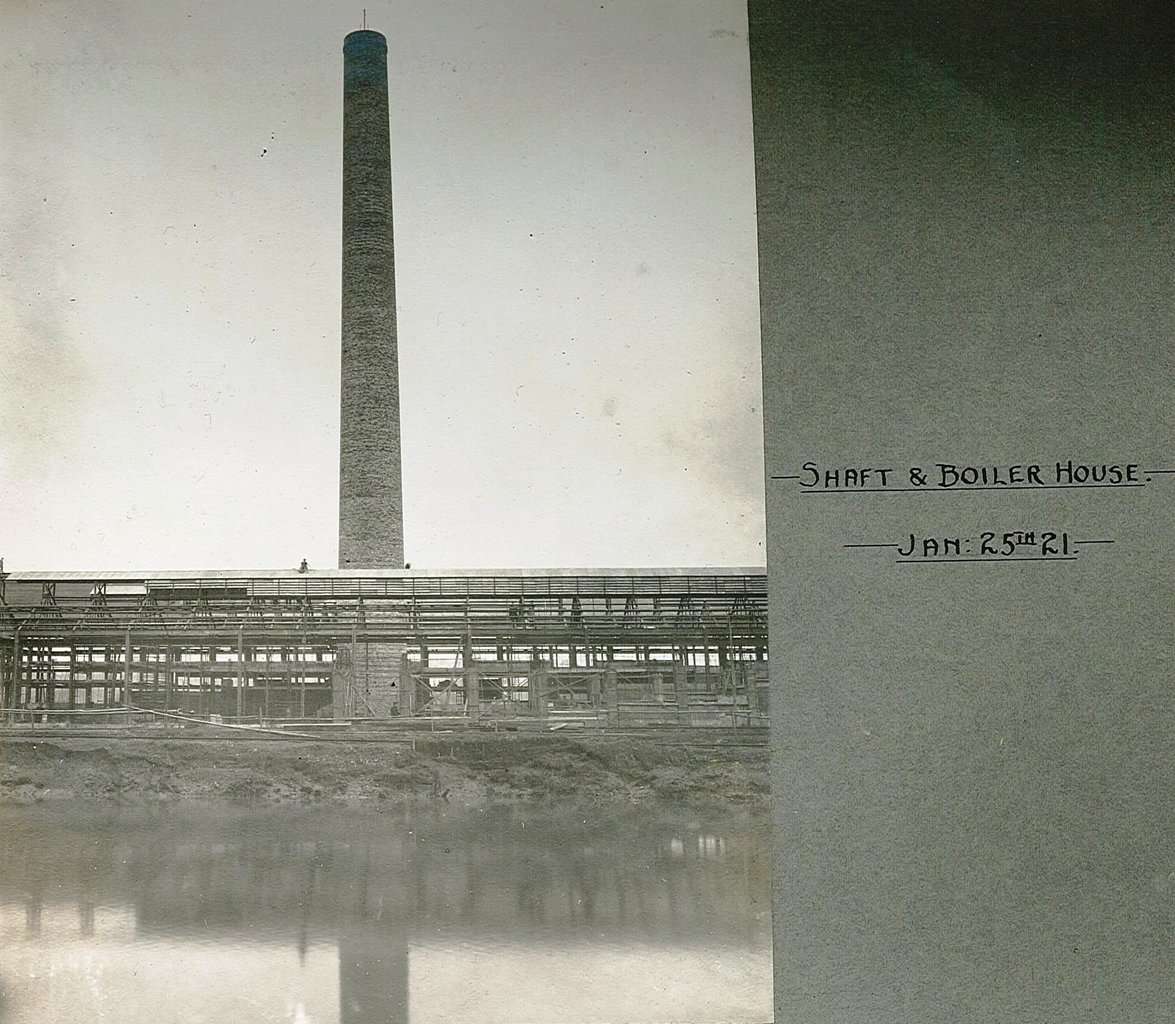
Participant34. Fixing the lightning conductor to the chimney, rather him than me! I believe the chimneys were i.r.o. 230 feet tall, can anyone confirm?
Attachments:
Participant33. A closer view of the Fitters’ shop and Salle foundation area seen in 31. Interesting items here include the Lancashire boiler parts – two fire tubes and a firehole plate, which suggest a second hand boiler being reused here (compare also the scruffy looking boiler in a previous shot), new boilers would normally be delivered complete (we had in the family a series of photos showing the delivery of a new boiler to Lower Tovil mill by rail, rolling off down the embankment and transfer onto a trolley pulled by a traction engine into the mill, unfortunately now lost) and often with the makers’ name emblazoned on them. Mixed SG and NG track along the wharf with the SG steam crane possibly loading spoil from the bank excavation into a V skip wagon for delivery to raise the ground level under the rather dodgy looking NG track within the salle area. Stacks of NG track panels and various track panels laying about including an upside down point on the SG track by the river – looks a bit like my layout under construction!
Attachments:
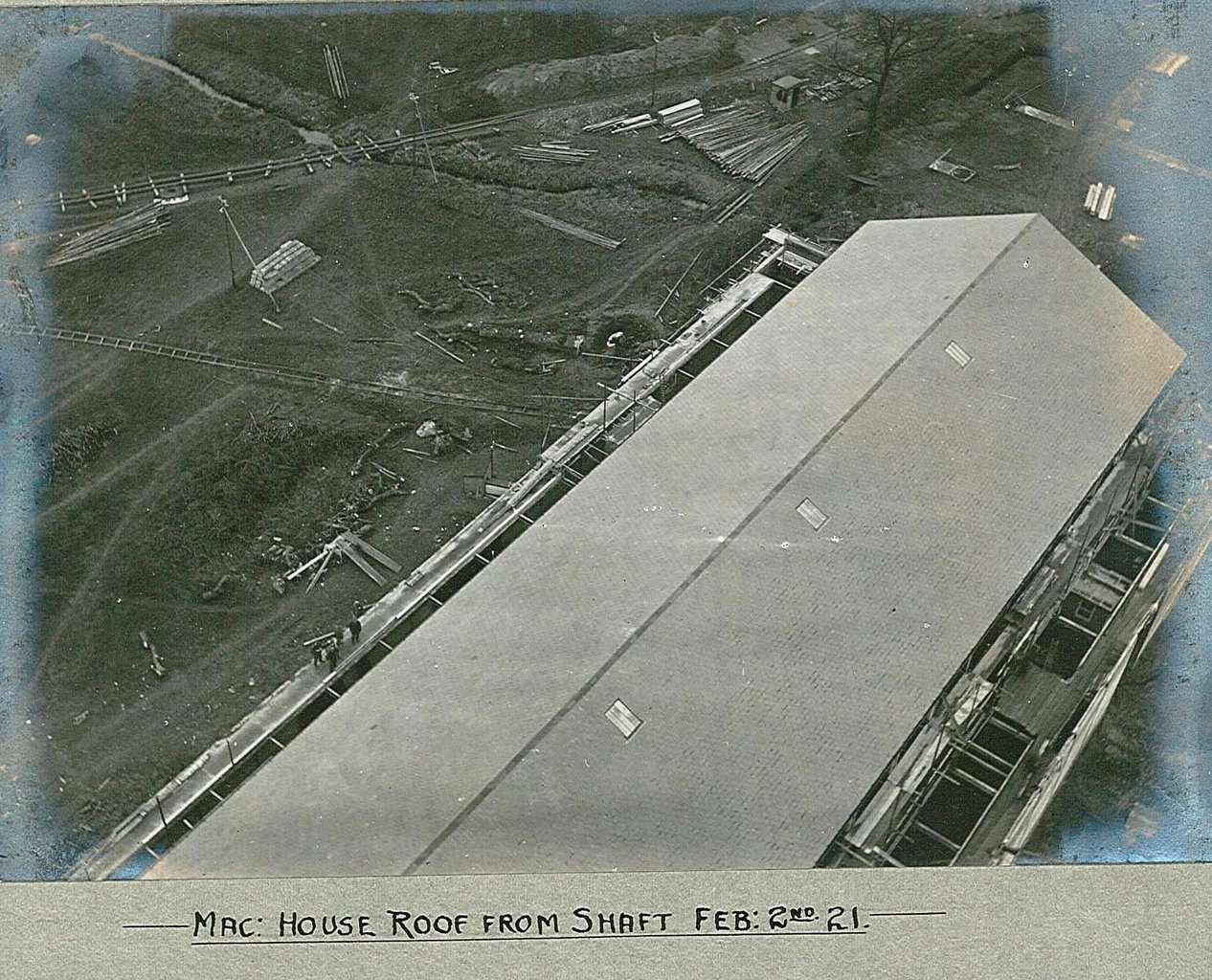
Participant32. Another view from the chimney top, this time a bit west of north, showing the machine house roof complete at this end, the annexe roof under construction (workmen standing on it) and NG railway lines, the further one may be connected across the bottom of New Hythe Lane to the barns and wharf visible in the previous shot, though it isn’t clear and the sleepering looks a bit dubious compared to the track in the foreground. The felled tree visible in earlier shots is still there.
Attachments:
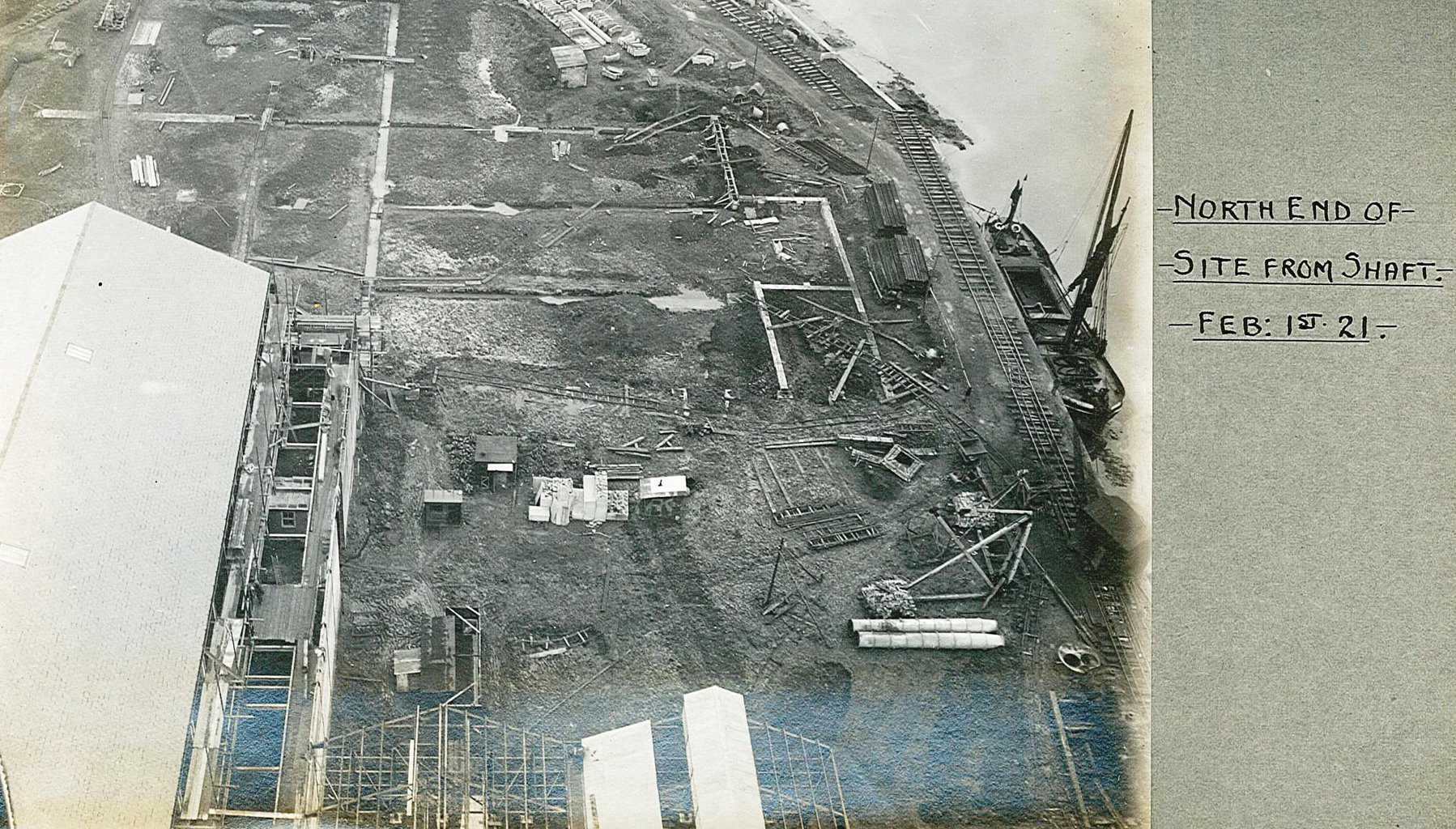
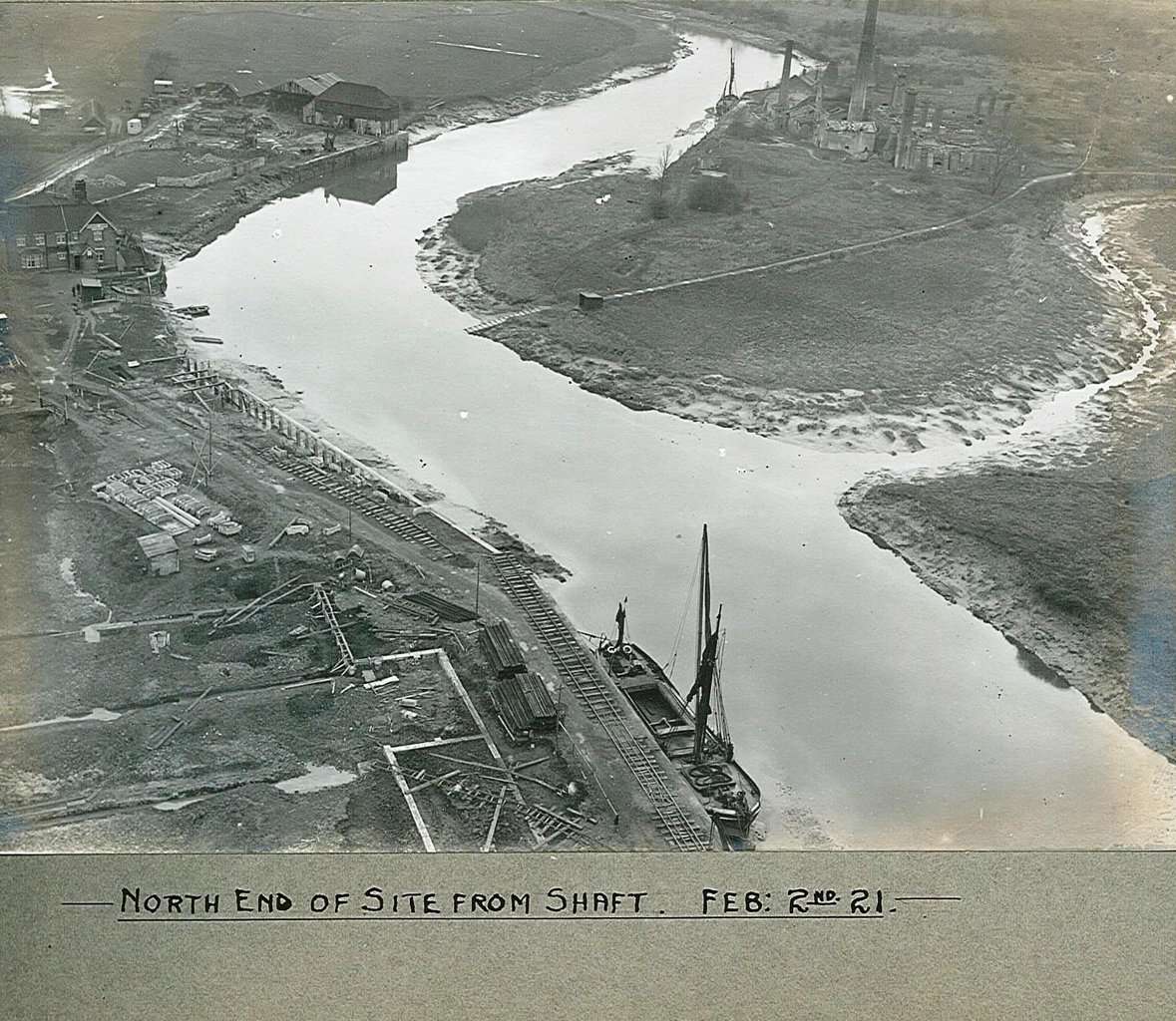
Participant31. North end of site from the chimney top. Visible below are the foundations for the fitters’ shop and salle, the Ferry Inn with the steps leading down to the water for the ferry. Across the river is the moribund brick and cement works of the erstwhile West Kent Portland Cement Co Ltd, formerly West Kent Gault Brick and Cement Co Ltd, which closed around 1905 (https://www.cementkilns.co.uk/cement_kiln_aylesford.html), the landing stage for the ferry and footpath leading away towards Eccles. The creek on the right is the downstream end of the original Medway meander, cut off by the Upper and Middle Cuts, along which APM was built. This isolated meander led to the existence of the Island site.
A sailing barge tied up against the new wharf seen under construction in photos 1 and 2, and beyond the piling across the bay in the river bank which will be filled in to extend the wharf along, behind the Ferry Inn. Beyond the Ferry Inn is a wharf and barns(?) which I have not been able to identify on old maps but which appear to be in use for the delivery of materials for the mill construction, note there is a steam crane on the wharf there. This area later became the building dept. stores and Blackhorse Yard, leading to the export shed just before the bend in the river.
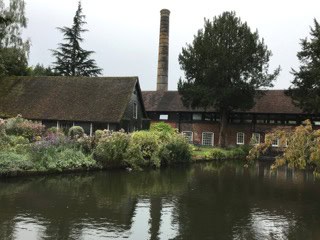
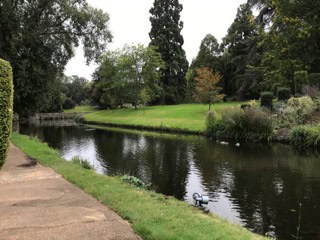
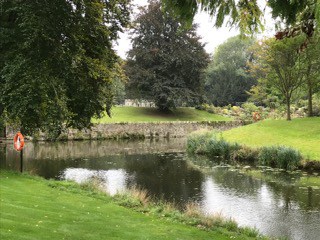
ParticipantThree photos taken of the mill, now a business park and wedding venue, in October 2019.
ParticipantThere were three mills in Tovil; Upper Tovil (Reeds), Lower Tovil (Allnutts, later part of Thomas and Green) and Bridge Mill (earlier Diamond Fibre) (Reeds).
As a family we would often go for Sunday walks including Tovil Hill, and so pass the front of Upper Tovil Mill, in summer the loading dock and 1-2 machine house doors would be open giving tantalising glimpses of the dry ends of the machines. Round the corner in Straw Mill Hill was the entry to the boiler house, several Lancashire boilers, coal fired. From what I’ve been able to ascertain, coal was brought by cart from the nearby goods yard at the end of the Tovil goods branch, which left the south end of Maidstone West goods yard and crossed the river on a lattice girder bridge, passed Bridge Mill and crossed the road at Tovil Green right by the entrance to Lower Tovil mill. In later years we would see a tractor shovel in the boiler house by the coal pile. Up the hill a bit further was a rear entrance to the mill (beater floor area?), and on the opposite side of the road a large green corrugated iron shed which housed the waste paper prep plant, often a Muir Hill dumper parked under the chute for contraries. Adjacent was the entry to the old quarries, used then as a waste paper store yard. Just a bit further on the left was the road to Bockingford and the Barcham Green Hayle Mill.
My maternal grandfather worked in Allnutts for most of his life, one family story related how his teenage decision to get work in the mill precipitated the eviction of his family from their tied farm cottage near Staplehurst, as all the family were expected to work on the farm. When we were children my mother would take us for walks in the afternoons, one typical being to walk down through the Palace Gardens, over Maidstone bridge, along the river bank through Smythe and Drayson’s wood yard, past the market and eventually to Lower Fant where the footbridge crossed to Tovil, we’d then walk into the mill to visit grandad who then ran the slitter. I remember collecting the trim from the slitter and winding it into small reels which I used as paper reels in the wagons on my train set. At the end of the mill yard was the rotary rag boiler. Grandad used to say that during the war, if there was an air raid the safest place to shelter would be under the rag boiler. It was only recently that I discovered that the Allnutt mill had been bought by Thomas and Green, though it retained its name, this explained what Mum had said about Grandad having to go to Bourne End on occasion, though I know not what for. I believe that Henry Allnutt originally came from the High Wycombe area.
Lower Tovil was, at any rate, at one time a rag mill, receiving damaged textiles during the war, including partly burned sheets form bombed hospitals.
Bridge Mill had a wharf on the river and took pulp shipments by lighter. We saw an empty lighter passing through Allington lock on one occasion, the extended lock (there were two sets of downstream gates) was just big enough to accomodate the lighter and the tug ‘Nudget’. The tug driver (if that is the right term, that’s what we knew him as) lived on Greenside at the end of Elm Grove.
Upper Tovil mill (which we always knew as just Tovil mill, the others being Allnutt’s and Bridge) contained 5 paper machines, I had the opportunity to have a look round on 2 occasions, firstly when on a management training course at APM; the older machines 1-3 were still driven by steam engine and line shafting at that time and made case materials, 4 and 5 were in a separate machine house and were either already converted to electric drive or due to be to improve the consistency of the speed control. The wet strength plant was also improved, as the machines were making paper for Kleenex Hi Dri towelling. The later visit was after the mill closed when we were looking to see if any plant might be salvageable for use at Aylesford, I got to look round the chemistry lab and up the steps to the ‘plateau’ where the effluent clarifier was.
The mill was fed with water from the Loose stream, via the mill pond (now the centre piece of a housing development), apparently the mill drains originally discharge into the stream under the mill and thence to the Medway (and the other down stream mills!), the old stream was later turned into a sump and the excess stream flow culverted past the mill. Effluent from the sump was pumped up to the plateau, clarified and both recovered fibre and clarified water returned by gravity to the mill, crossing Straw Mill Hill on a gantry, or to the prep plant on the same side below the plateau.
Plenty of aerial photos of the Tovil Mills on Britain From The Air.
Dennis Spain wrote a treatise on the mills of the Loose stream (where there were several paper mills), this is available at:
Participant30. View across the river of the nearly complete chimney.
Attachments:
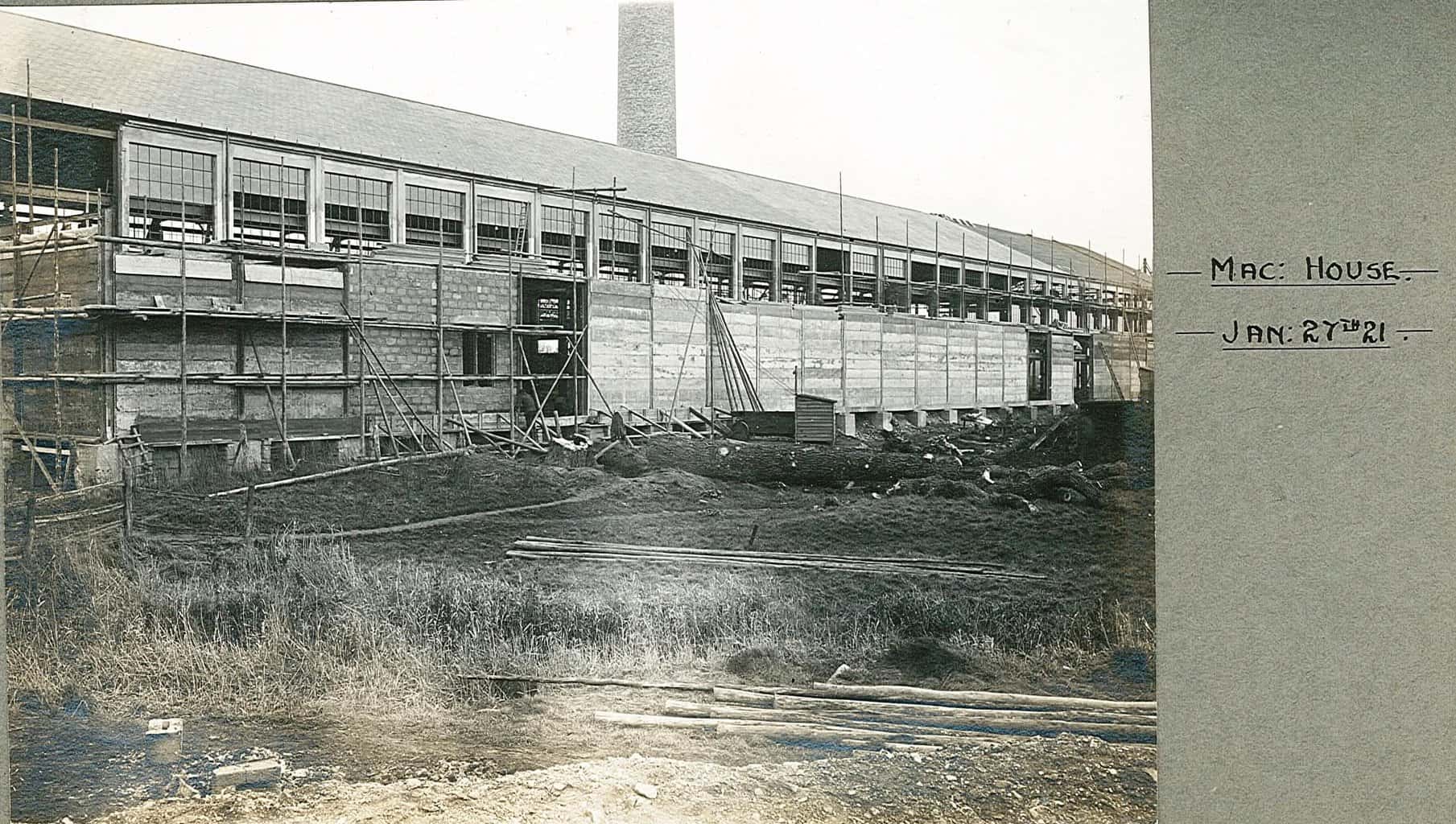
Participant29. Machine house, most of the window frames in place and glazing in progress. Most of the annexe walls are of poured concrete, the shuttering lines clearly visible. Other panels are of blockwork, to allow windows etc to be fitted. The blocks were possibly made on site as there are some in front of the Winget plant in photo 3. The low natural ground level can be seen in relation to the concrete beams at machine house floor level.
Attachments:
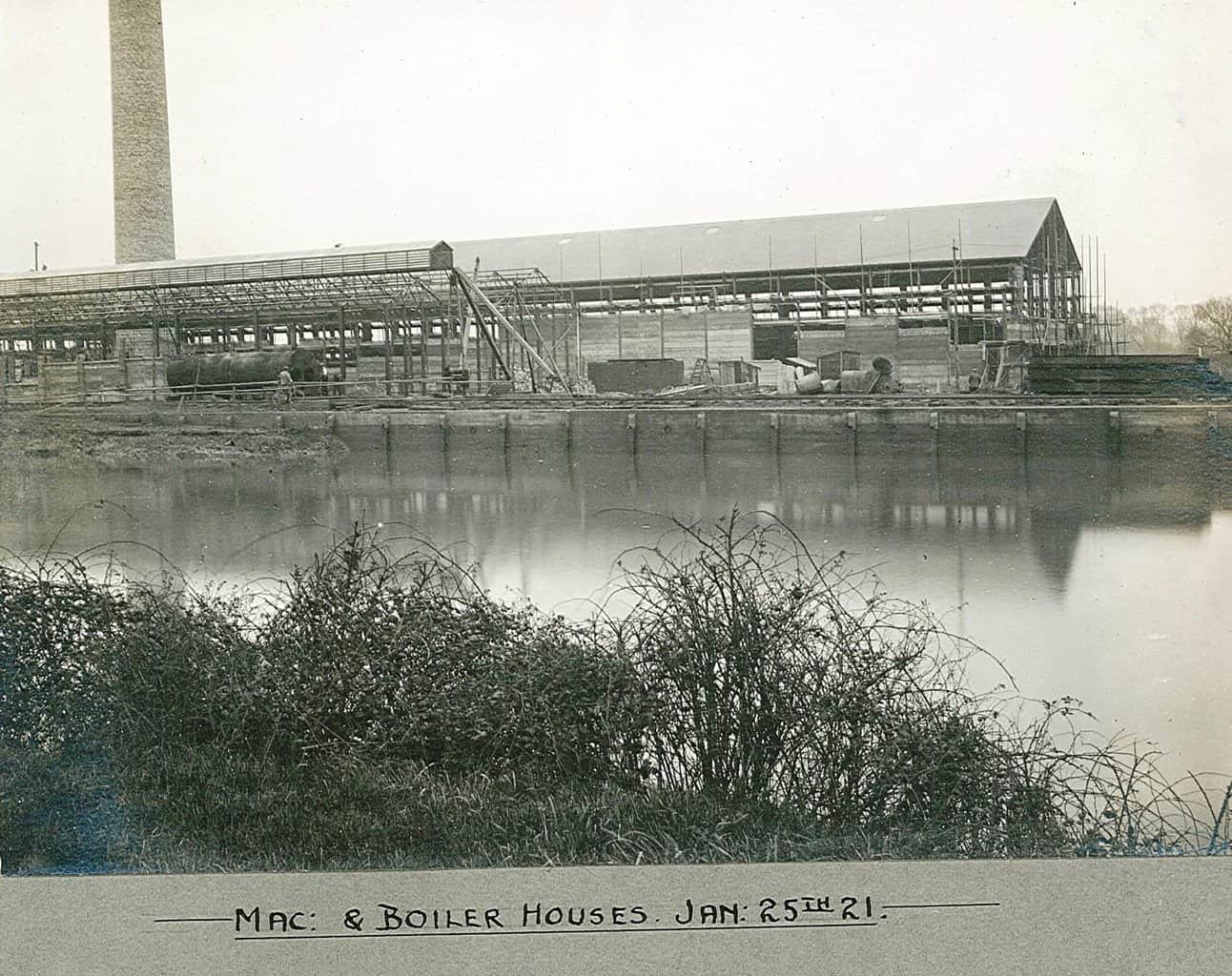
Participant28. Machine and Boiler houses seen from across the river. Notable in this view is a Lancashire boiler, looking far from pristine when compared with a later photo of newly delivered boilers from Danks, as posted by Kevin Harrild.
Attachments:
ParticipantI visited Retford Board Mill in the early 1980s with John Baker, Staper manager and interim APM East Mill technical manager. The single machine was making woodchip wallpaper. it was a twin wire machine – two separate fourdrinier wires, the upper one running contrary to the bottom one which I recall was set rather low down, almost level with the floor. A secondary flow box delivered the woodchip suspension onto the lower sheet (over the vacuum boxes?) before the sheet from the upper wire was couched and brought down on top of the lower layer and chips, the laminate then passed to the presses. Drive was by line shaft.
A curious feature of the stock prep area were the stock chests, deep tile lined tanks with an agitator resembling a 5 bar gate rotating on a horizontal axis. At one end of the agitator shaft a wheel with cups or buckets around the circumference scooped stuff out of the chest and discharged into a launder, a weir controlled forward flow to the machine and the excess returned to the chest. It resembled some sort of mediaeval irrigation system.
Steam was raised in a small package boiler, with an automatic stoker, fed by small coal held in a silo, controlled according to steam demand.
Participant27. Another view from the island, the bulk of the chimney can be appreciated. The river bank is still to be cut back to the wharf wall line.
Attachments:
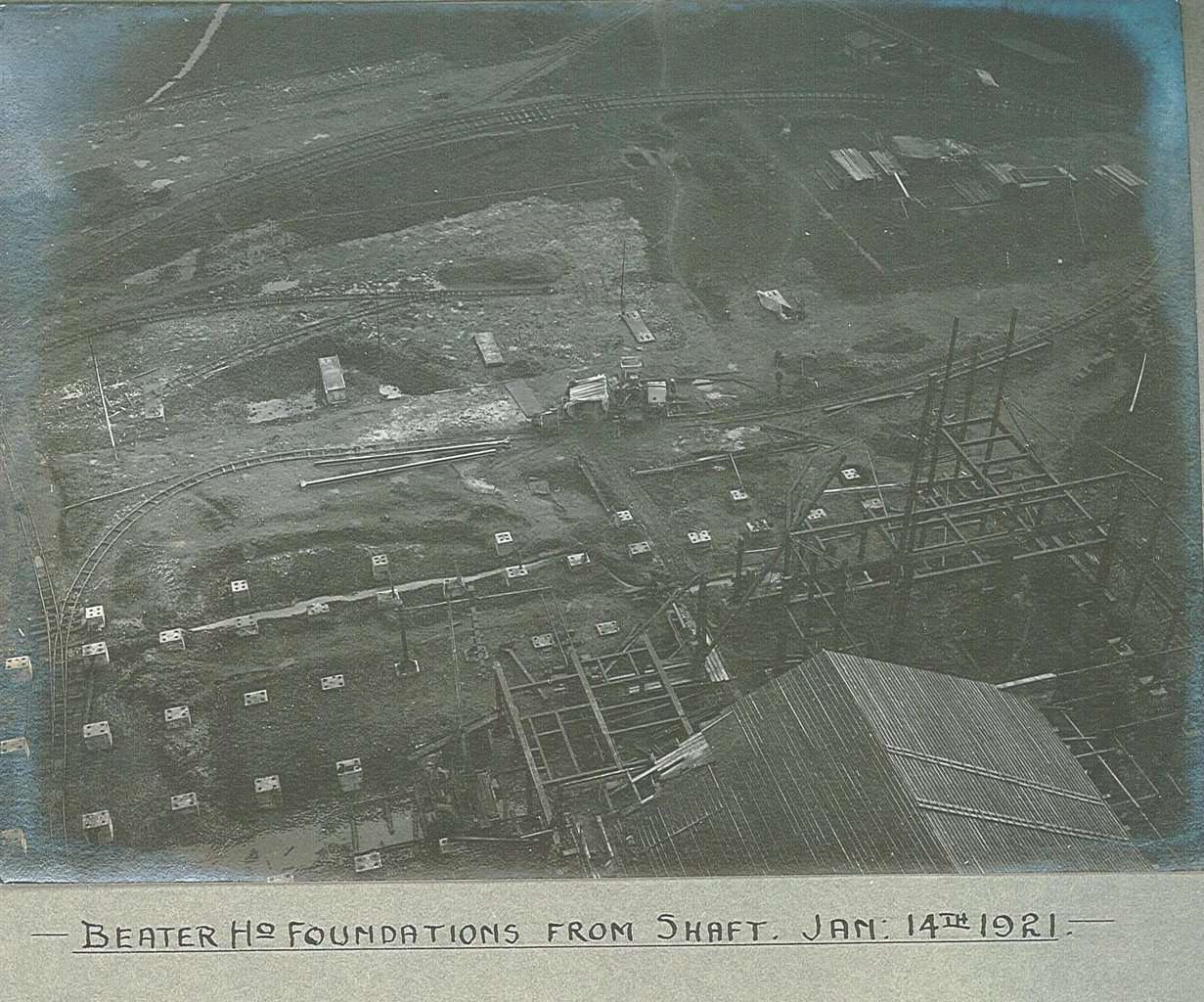
Participant26. View from the chimney top, the beater floor foundations and to their right those of the turbine house.
Attachments:
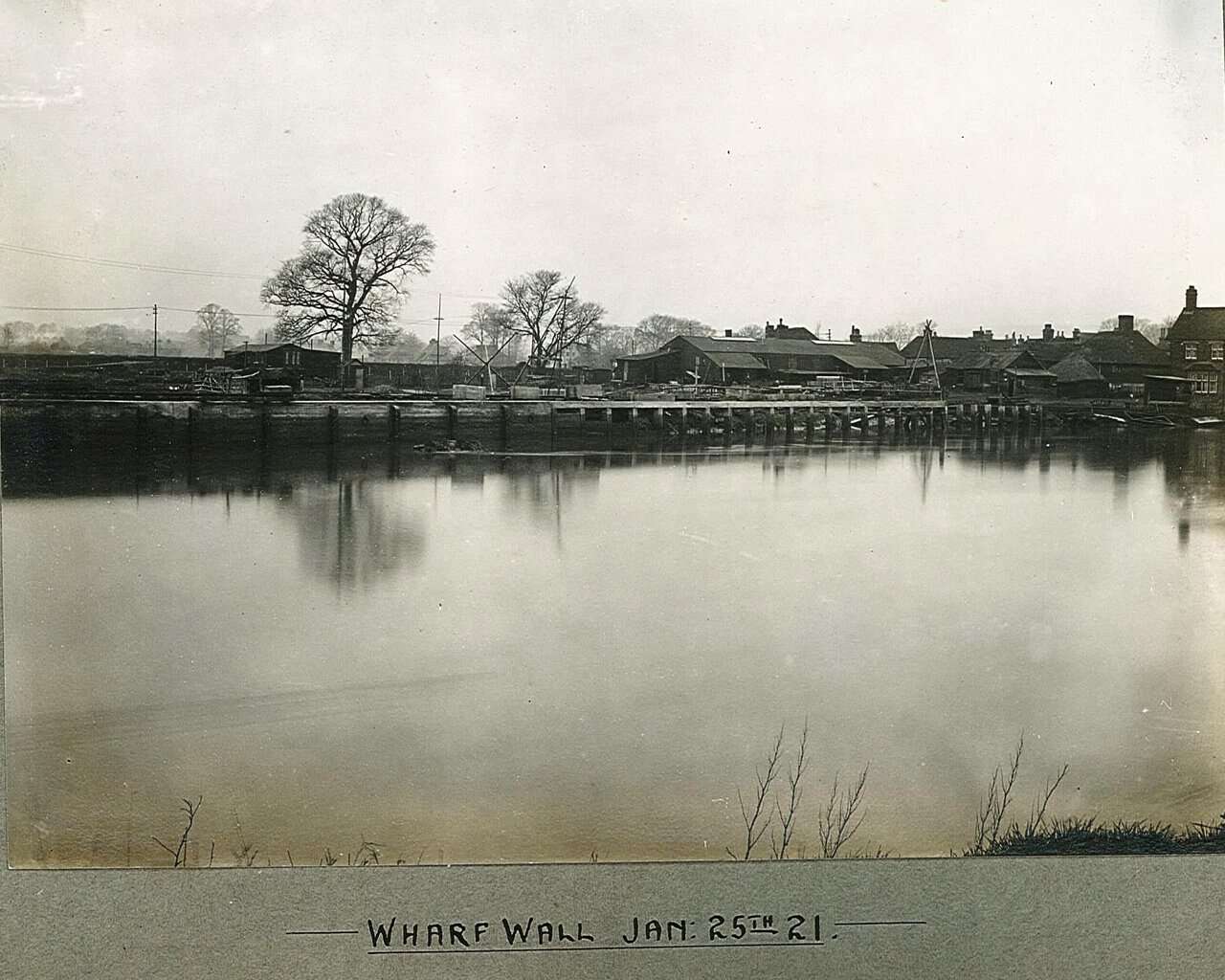
Participant25. The new wharf wall is visible in this view from the island, Ferry Inn to the extreme right, and piling in place in the river where the bank recedes at the point the original ferry operated, this will be back filled later with spoil from the bank excavation by the pulp yard. The SECR railway embankment and boundary fence can be seen and one or two of the ex-army huts which later contributed to the hutted encampment.
Attachments:
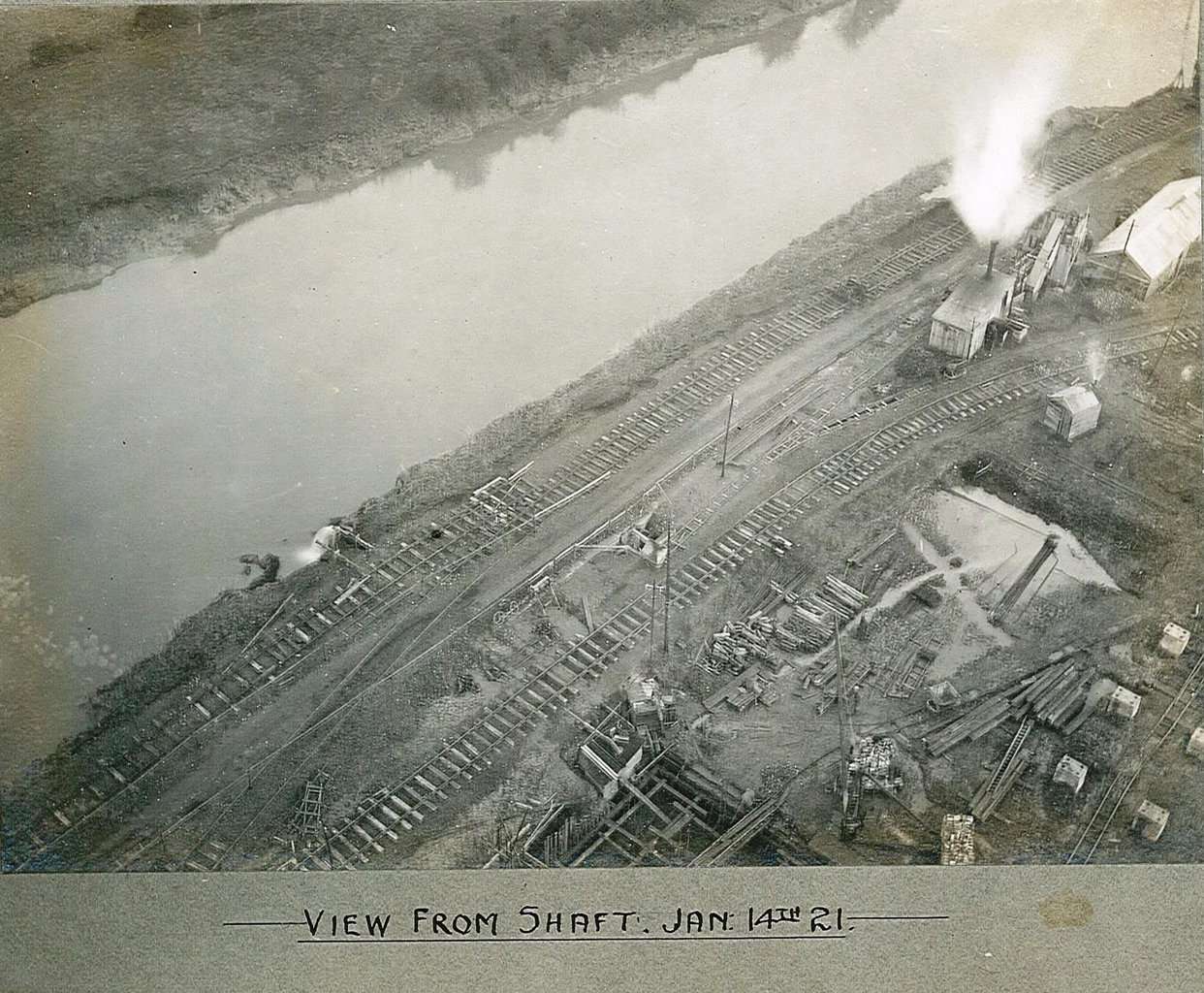
Participant24. View from the top of the chimney, looking south east. In the middle foreground is the wet pit excavation, with the NG track crossing it, the pipes from the pumps dewatering it discharging into the river. Foundation blocks for the beaterfloor are to the right bottom corner. The natural river bank (though this was already a straightened navigation cut avoiding the meander around what became the island site) will be cut back to the wharf wall later to provide space for the lighters to discharge cargoes of pulp.
Attachments:
-
AuthorPosts