
Home › Forums › SE England › Kent Mills O to Z › Tovil Paper Mills (Maidstone)
Tagged: Closed, Packaging Grades, Paper Mill
- This topic has 15 replies, 2 voices, and was last updated 4 years, 2 months ago by
Artless Bodger.
-
AuthorPosts
-
4th August 2016 at 16:45 #313
Chris Bennett
KeymasterMill Tovil Paper Mills Also known as Upper Tovil Mill; Tovil & Bridge Mills Address Tovil, Maidstone, Kent, Nat Grid Location TQ 754544 Companies Albert E. Reed English Mill Excise No 312 Status Shut during 1970 to 2015 Est. Papermaking Start Date 1899 Date Closed 1-Jul-1983 Links Link1 https://en.wikipedia.org/wiki/Loose_Stream Link2 https://millsarchive.org/explore/mills/entry/10937/upper-tovil-mill-maidstone#.V5zXVDWaW98 Britain from Above http://www.britainfromabove.org.uk/image/epw026075 28th April 2021 at 15:43 #1211Artless Bodger
ParticipantThere were three mills in Tovil; Upper Tovil (Reeds), Lower Tovil (Allnutts, later part of Thomas and Green) and Bridge Mill (earlier Diamond Fibre) (Reeds).
As a family we would often go for Sunday walks including Tovil Hill, and so pass the front of Upper Tovil Mill, in summer the loading dock and 1-2 machine house doors would be open giving tantalising glimpses of the dry ends of the machines. Round the corner in Straw Mill Hill was the entry to the boiler house, several Lancashire boilers, coal fired. From what I’ve been able to ascertain, coal was brought by cart from the nearby goods yard at the end of the Tovil goods branch, which left the south end of Maidstone West goods yard and crossed the river on a lattice girder bridge, passed Bridge Mill and crossed the road at Tovil Green right by the entrance to Lower Tovil mill. In later years we would see a tractor shovel in the boiler house by the coal pile. Up the hill a bit further was a rear entrance to the mill (beater floor area?), and on the opposite side of the road a large green corrugated iron shed which housed the waste paper prep plant, often a Muir Hill dumper parked under the chute for contraries. Adjacent was the entry to the old quarries, used then as a waste paper store yard. Just a bit further on the left was the road to Bockingford and the Barcham Green Hayle Mill.
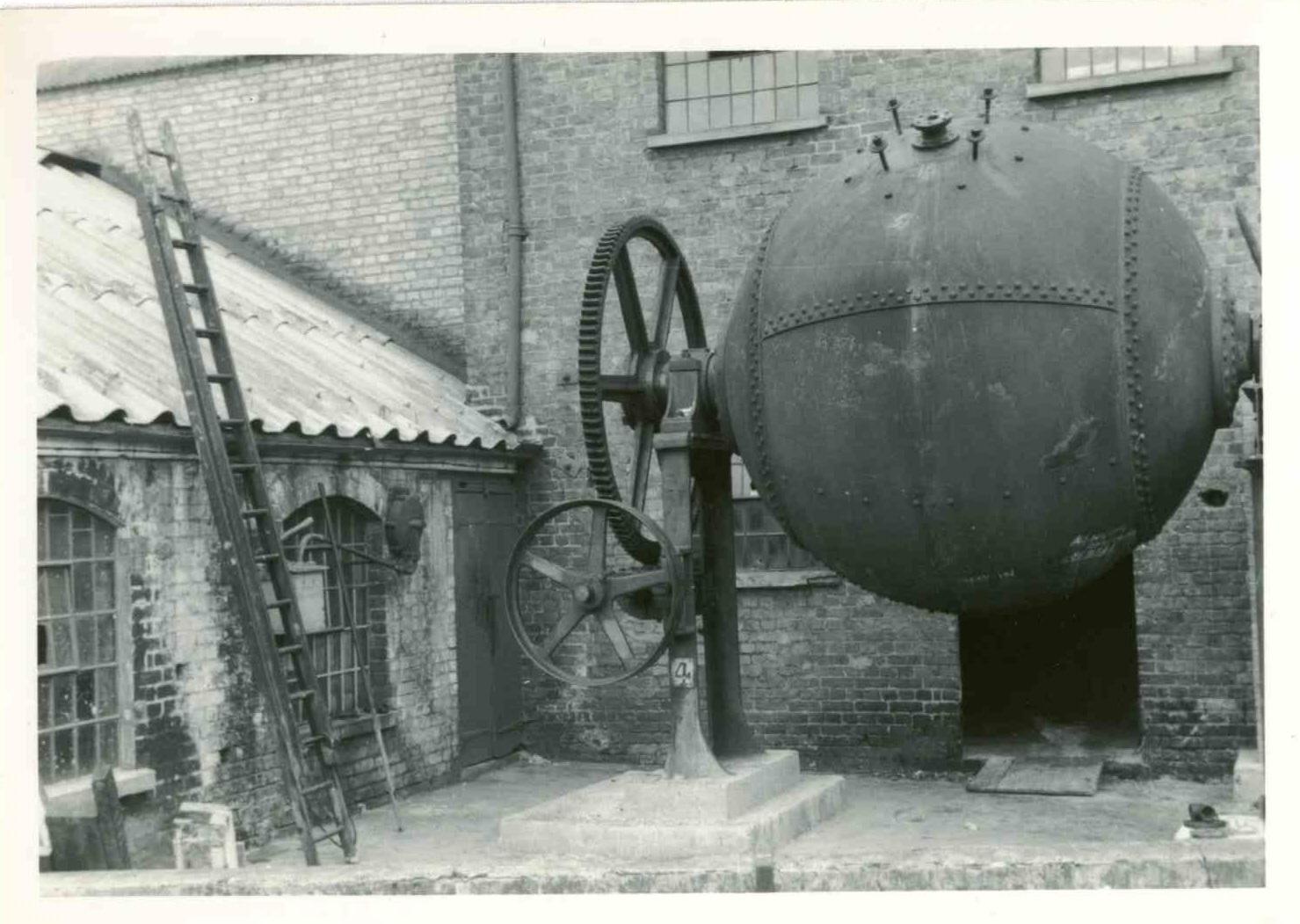
My maternal grandfather worked in Allnutts for most of his life, one family story related how his teenage decision to get work in the mill precipitated the eviction of his family from their tied farm cottage near Staplehurst, as all the family were expected to work on the farm. When we were children my mother would take us for walks in the afternoons, one typical being to walk down through the Palace Gardens, over Maidstone bridge, along the river bank through Smythe and Drayson’s wood yard, past the market and eventually to Lower Fant where the footbridge crossed to Tovil, we’d then walk into the mill to visit grandad who then ran the slitter. I remember collecting the trim from the slitter and winding it into small reels which I used as paper reels in the wagons on my train set. At the end of the mill yard was the rotary rag boiler. Grandad used to say that during the war, if there was an air raid the safest place to shelter would be under the rag boiler. It was only recently that I discovered that the Allnutt mill had been bought by Thomas and Green, though it retained its name, this explained what Mum had said about Grandad having to go to Bourne End on occasion, though I know not what for. I believe that Henry Allnutt originally came from the High Wycombe area.
Lower Tovil was, at any rate, at one time a rag mill, receiving damaged textiles during the war, including partly burned sheets form bombed hospitals.
Bridge Mill had a wharf on the river and took pulp shipments by lighter. We saw an empty lighter passing through Allington lock on one occasion, the extended lock (there were two sets of downstream gates) was just big enough to accomodate the lighter and the tug ‘Nudget’. The tug driver (if that is the right term, that’s what we knew him as) lived on Greenside at the end of Elm Grove.
Upper Tovil mill (which we always knew as just Tovil mill, the others being Allnutt’s and Bridge) contained 5 paper machines, I had the opportunity to have a look round on 2 occasions, firstly when on a management training course at APM; the older machines 1-3 were still driven by steam engine and line shafting at that time and made case materials, 4 and 5 were in a separate machine house and were either already converted to electric drive or due to be to improve the consistency of the speed control. The wet strength plant was also improved, as the machines were making paper for Kleenex Hi Dri towelling. The later visit was after the mill closed when we were looking to see if any plant might be salvageable for use at Aylesford, I got to look round the chemistry lab and up the steps to the ‘plateau’ where the effluent clarifier was.
The mill was fed with water from the Loose stream, via the mill pond (now the centre piece of a housing development), apparently the mill drains originally discharge into the stream under the mill and thence to the Medway (and the other down stream mills!), the old stream was later turned into a sump and the excess stream flow culverted past the mill. Effluent from the sump was pumped up to the plateau, clarified and both recovered fibre and clarified water returned by gravity to the mill, crossing Straw Mill Hill on a gantry, or to the prep plant on the same side below the plateau.
Plenty of aerial photos of the Tovil Mills on Britain From The Air.
Dennis Spain wrote a treatise on the mills of the Loose stream (where there were several paper mills), this is available at:
3rd May 2021 at 09:58 #1227KeymasterMany thanks for your contribution – just the kind of memories we like to preserve for the future.
Reminded me of evenings canoeing past the mill with the fishing rods lined-up in hopefulness.
11th July 2022 at 11:09 #1480ParticipantI have recently re-discovered some poor quality scans of family photographs recording the delivery of a new Lancashire boiler to Lower Tovil Mill – Allnutt’s.
The original photos were rather dark and the scans were hurriedly done (one dinnertime at work) with no attempt to adjust the settings. The photos went with other house contents after my mother’s death. I recall they had a stamp on the rear for the Maidstone photographer Sweatman Hedgeland who were down near the cannon.
I attach the photos for what they are worth. The new (maybe second hand?) boiler was delivered sometime in the 1930s – in the original photo it was just descernibe that the steam engine in one view had a 4 digit number beginning with 1 – so post 1931 Southern Railway renumbering scheme. I think I have got the order of the phots correct, the sequence shows the boiler, unloaded from rail transport (presumably rolled down the embankment from the goods yard), loading onto road trailer then drawn along the lane now called Allnutt Mill Close / Albert Reed Gardens. This move was only a short distance before the boiler was rolled off the trailer and winched in through the rear gate to the mill. The final photos show preparation of the boiler bed and it being dragged into position.
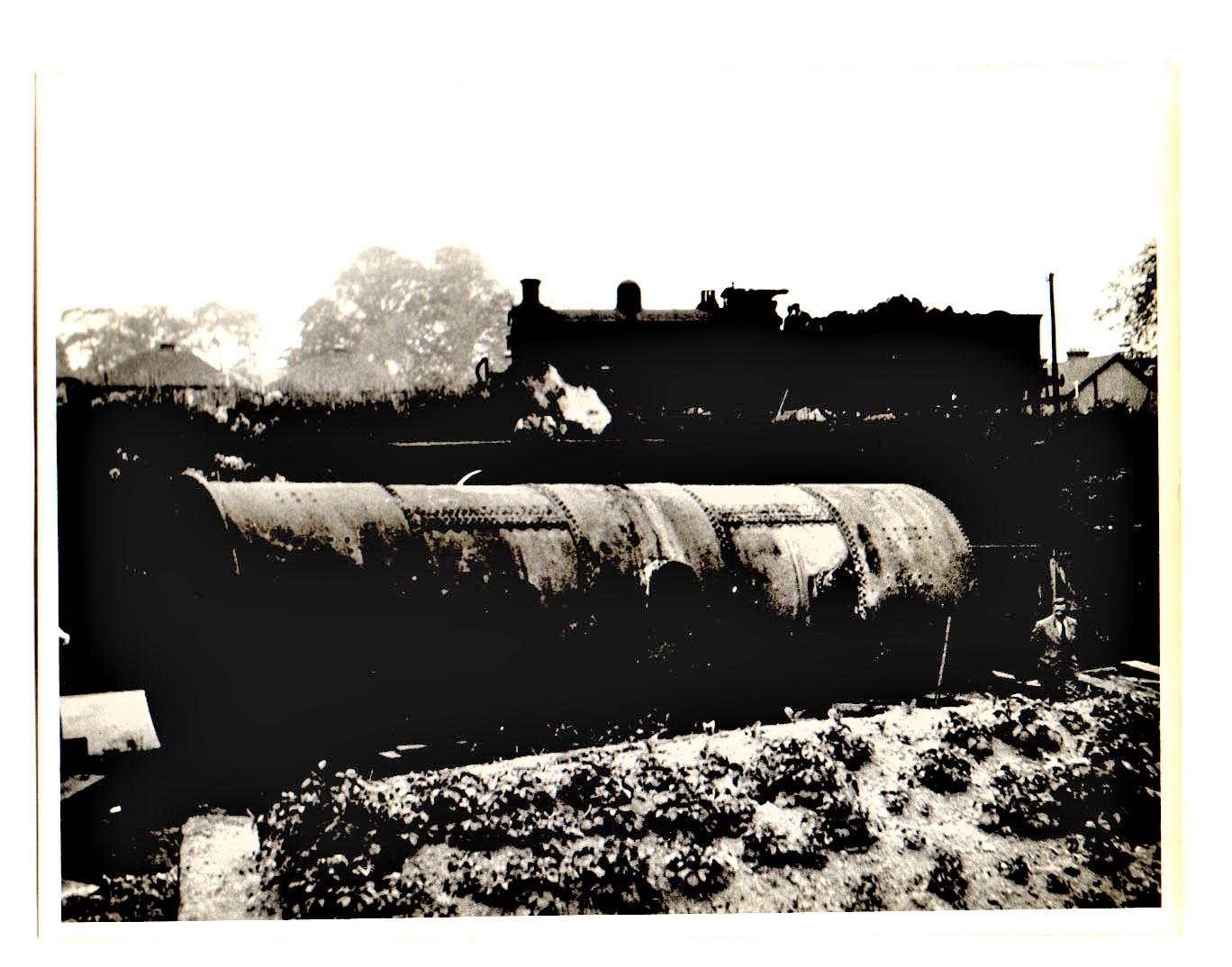
11th July 2022 at 11:19 #1481ParticipantNo 1. Boiler on the lane, ready to be loaded onto road transport, the Tovil goods branch embankment behind and allotments in the foreground.
-
This reply was modified 4 years, 2 months ago by
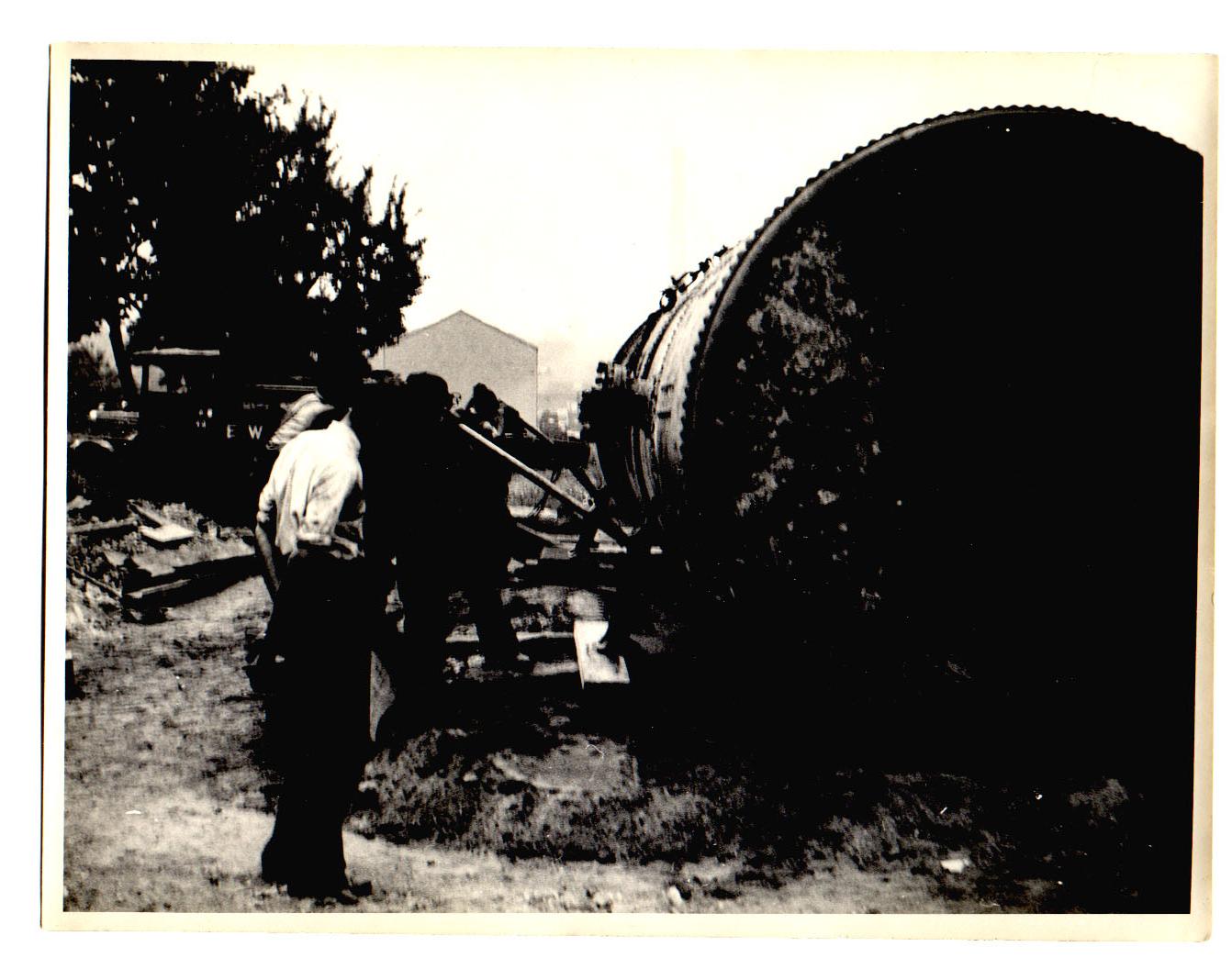
11th July 2022 at 11:26 #1483ParticipantNo 2. Winching and jacking the boiler onto the road trailer, shackles on the winch cables from the traction engine visible on the boiler shell, jacks and packing to the left. View is towards the bottom of Tovil Hill and Upper Tovil mill (Reeds). The corrugated iron shed visible is part of what was, or became RCC Tovil.
 11th July 2022 at 11:29 #1484Participant
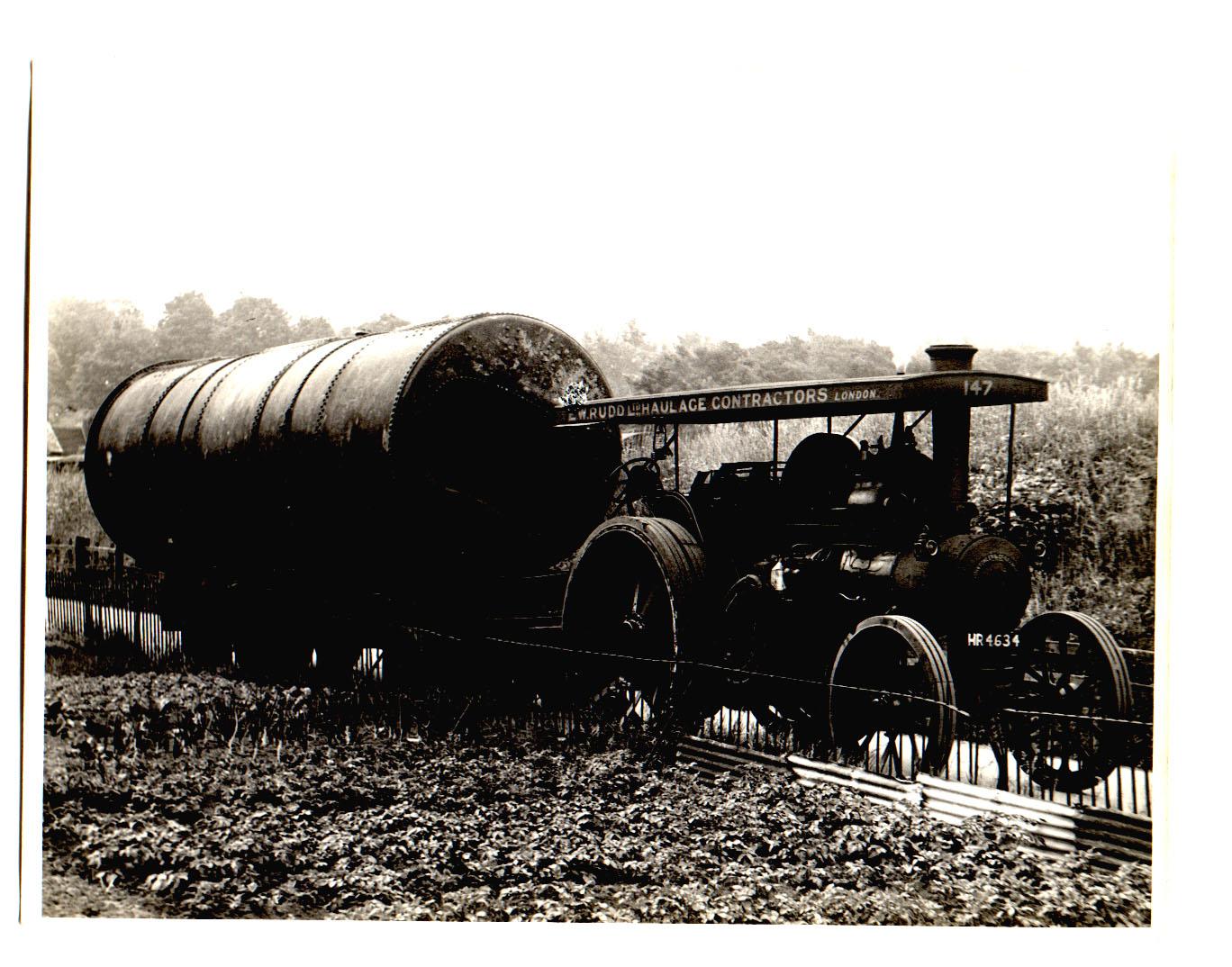
3. Ready to move down the lane.
 11th July 2022 at 11:30 #1485Participant
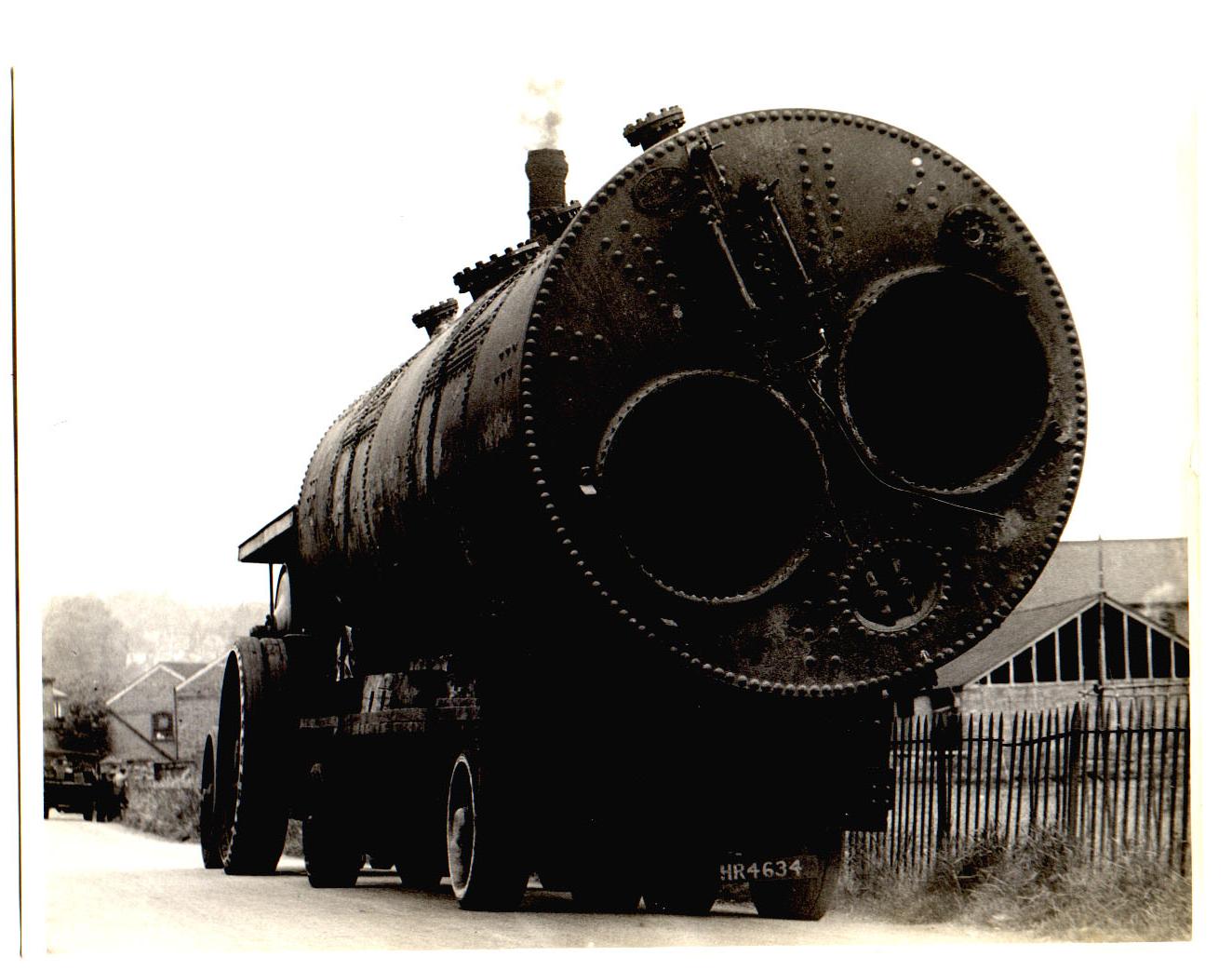
4. In transit, looking towards the river, buildings and chimney of Lower Tovil mill (Allnutt’s) behind the ensemble.
 11th July 2022 at 11:34 #1486Participant
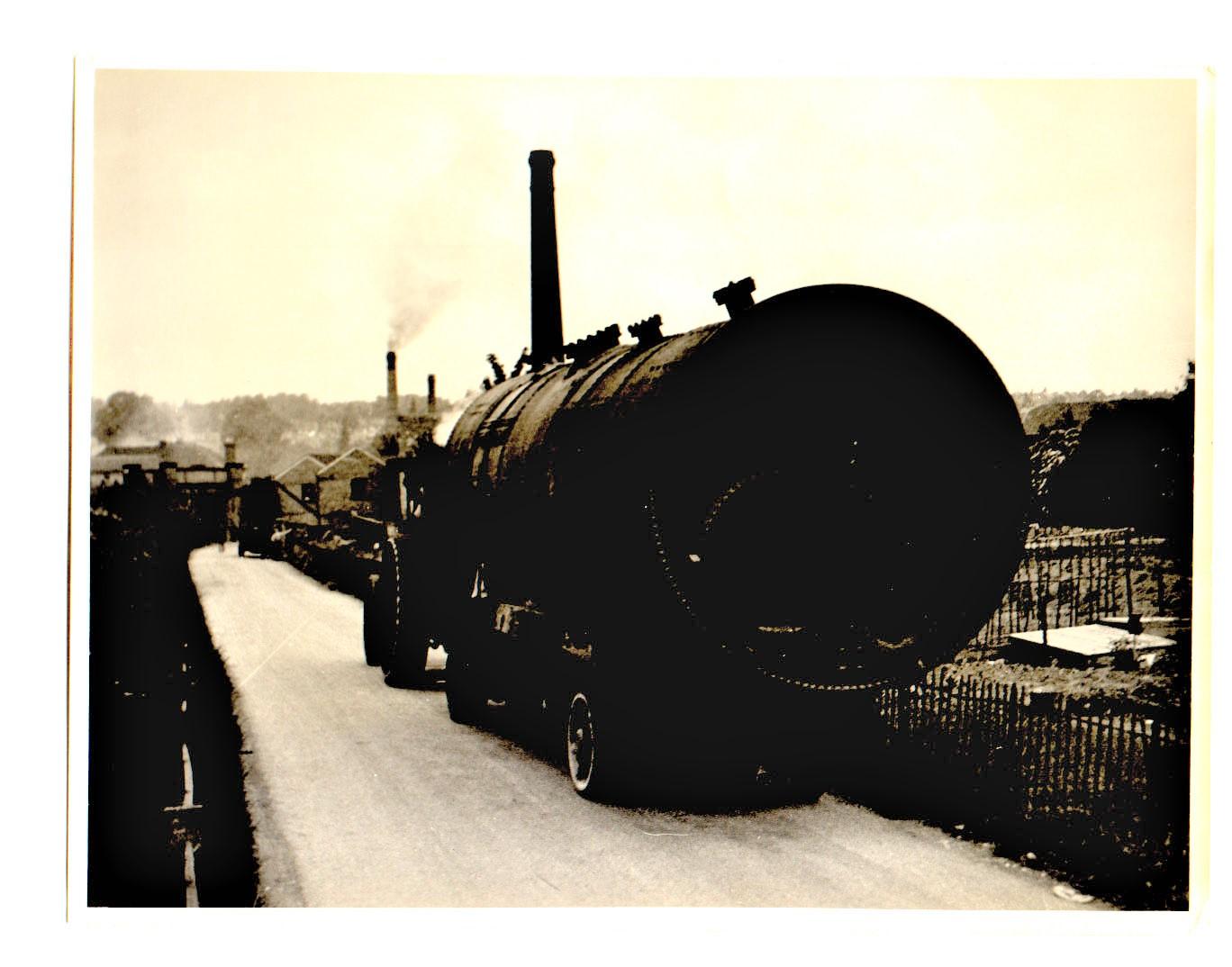
5. Another, wider, view of the boiler in transit, the smaller chimneys in the distance are Bridge Mill (Diamond Fibre, later Reed’s Bridge Mill), the houses visible beyond are the other side of the Medway in Fant, rising to the Tonbridge Road.
NB probably 4 and 5 should be transposed in sequence.
 11th July 2022 at 11:43 #1487Participant
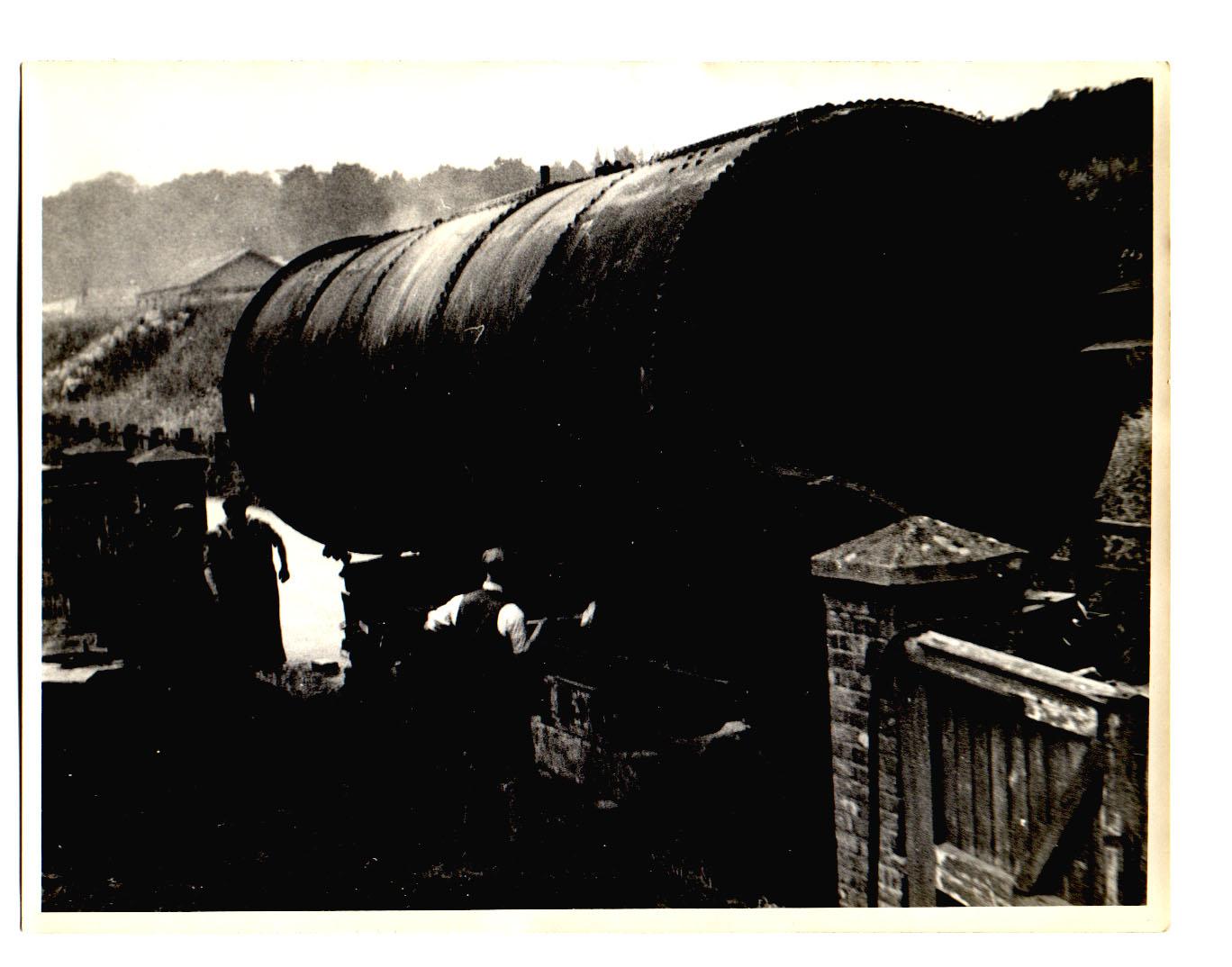
No 6. Arrived at the gate to the back of Lower Tovil mill (the main, front entrance was in Lower Tovil). The workmen are preparing to unload, knocking out wedges – looks a bit hazardous. The roof in the background is that of the goods shed (covered loading platform in fact) in Tovil Goods yard, terminus of the Tovil goods branch but at one time potentially an end on connection with the proposed Maidstone and Headcorn Railway which would have climbed the Loose Valley.
 11th July 2022 at 11:46 #1488Participant
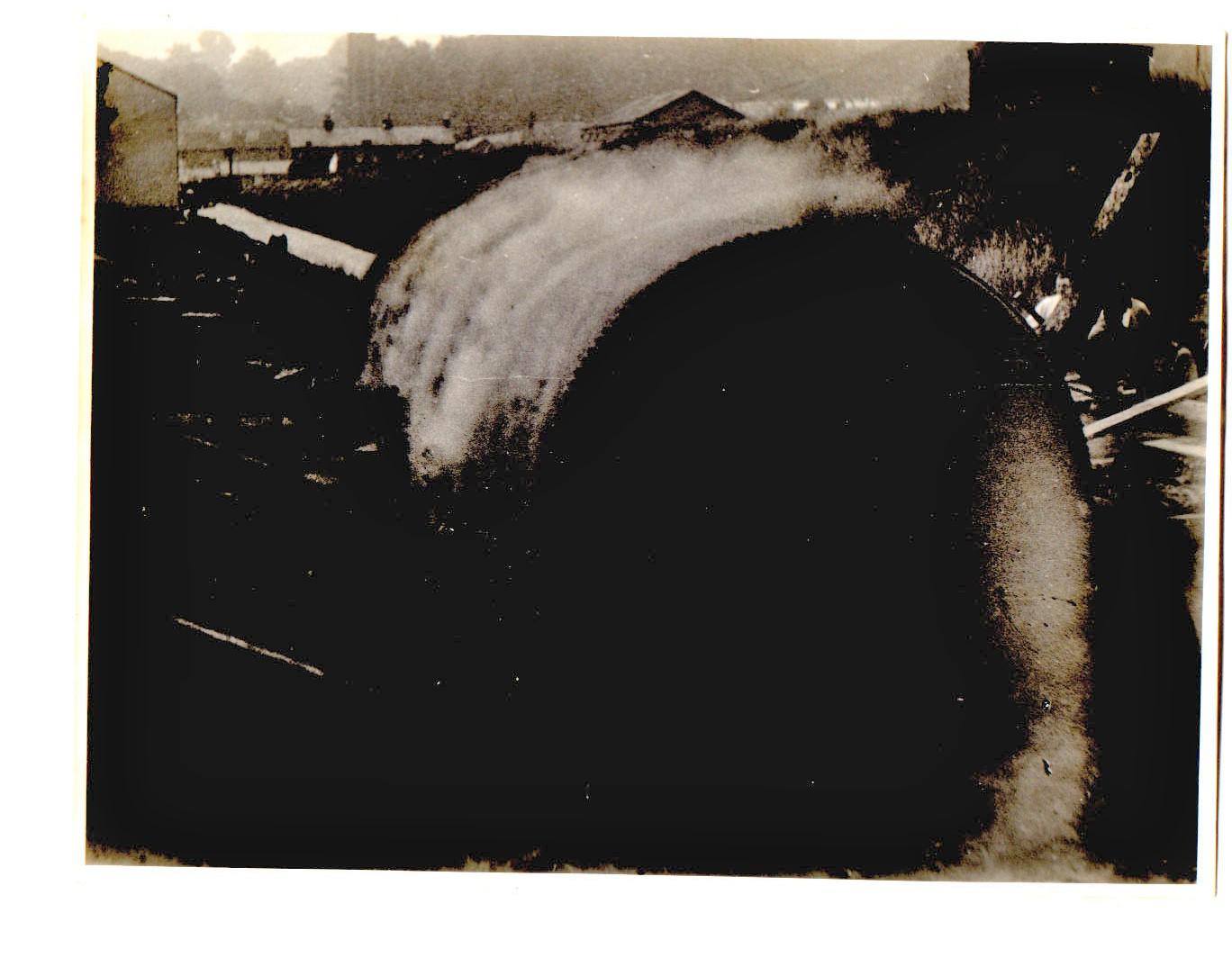
No 7. Over she goes! The boiler rolled off into the gateway.
View towards Upper Tovil mill and the foot of Tovil and Farleigh hills.
 11th July 2022 at 11:50 #1489Participant
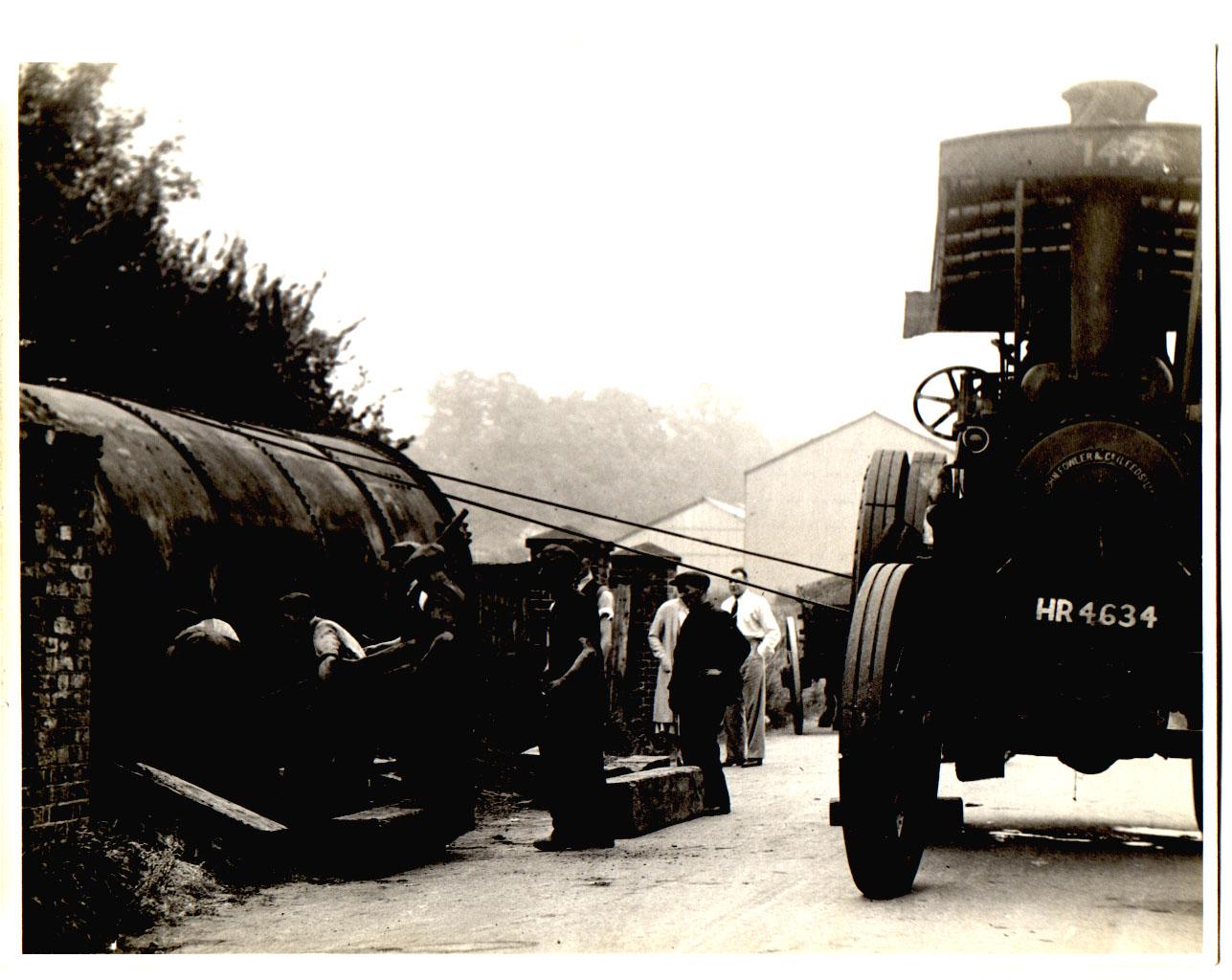
No 8. Moving the boiler into the mill – exactly how the winch cables are deployed isn’t clear, either via pulley blocks further in, or to control the rolling of the boiler down a slope. The man in the white shirt appeared previously in no 7.
 11th July 2022 at 11:52 #1490Participant
No 9. Building the boiler bed.
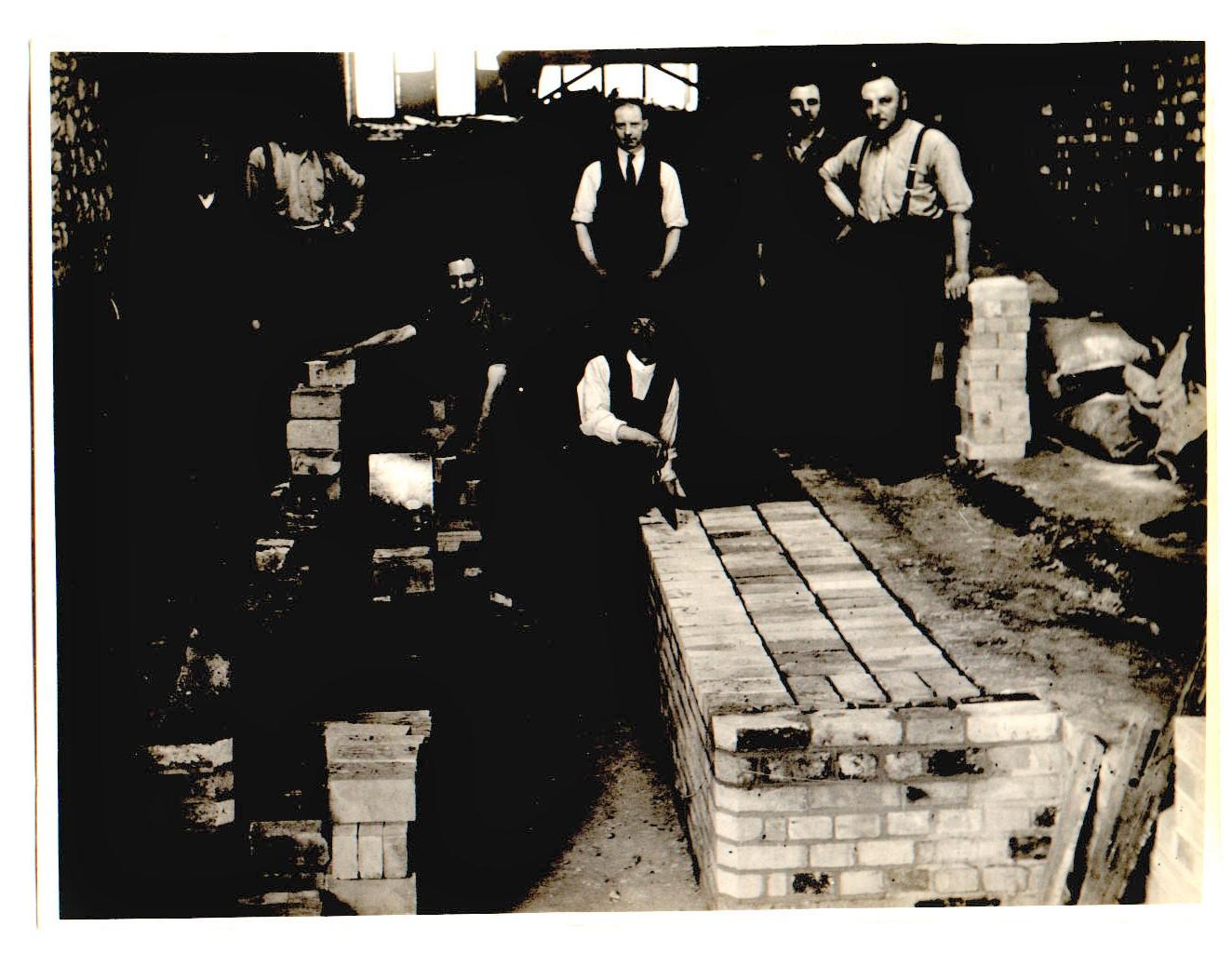 11th July 2022 at 12:00 #1491Participant
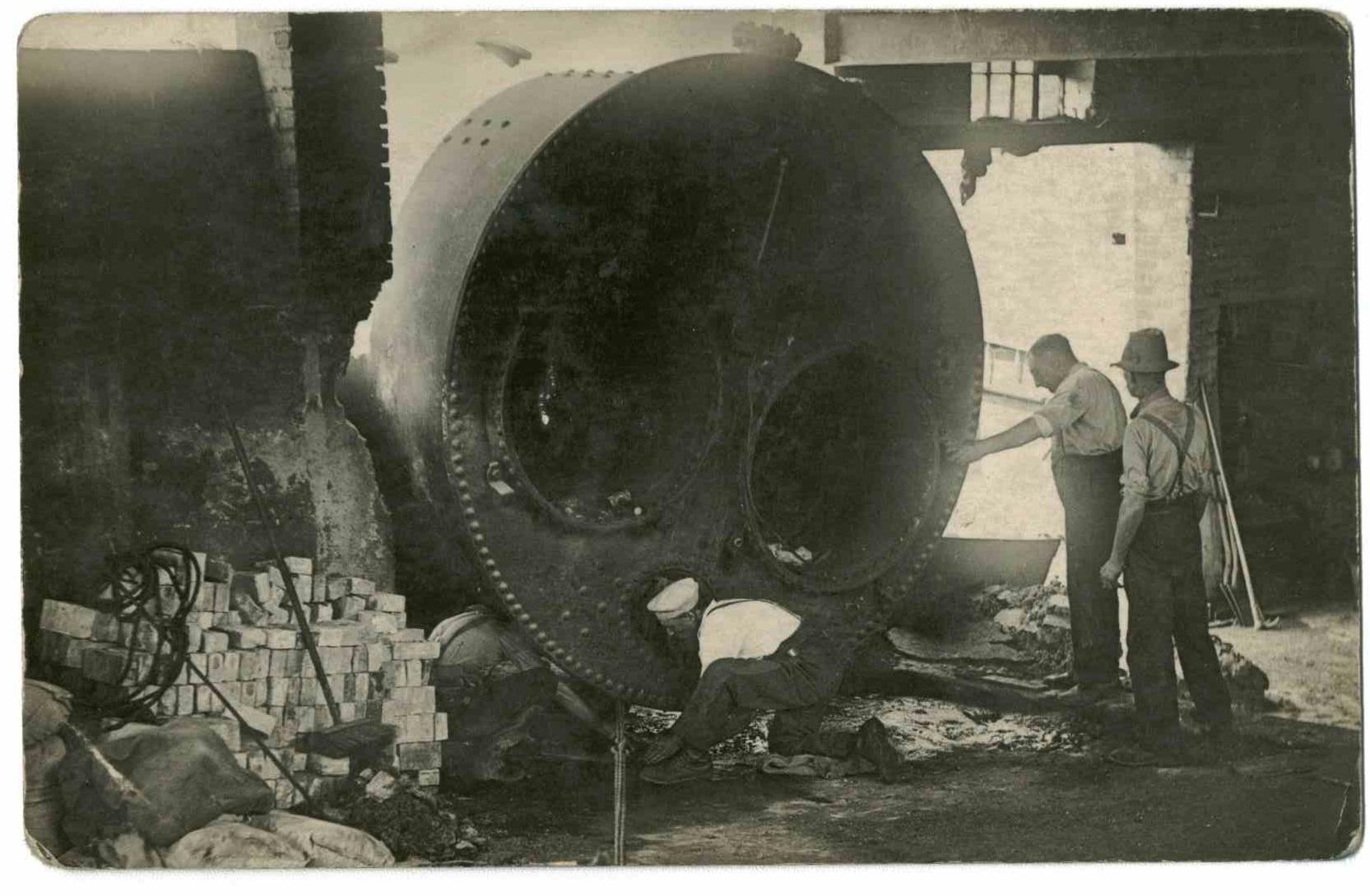
No 10. Winching the boiler into place (?)
This photo was not part of the set above but one of a few other photos and post cards in the family collection at the time, the building looks like it has been subject o some demolition to get the boiler in. New firebricks are stacked alongside. The two men rather precariously occupied under the end of the bloier appear to be adjusting packing to slide it over, the winch cable / chain leads towards the photographer.
Whether my grandfather was involved in this work I do now know, he is not recognisable in any of the photos, however we know he had duties associated with the boilerhouse as he suffered a scald injury at some time from steam escaping a safety valve. Mum remembers him going into work at 6pm on a Sunday to light up and raise steam overnight, ready for the mill to start up at 6 am Monday morning, when he would pick up his normal 12 hour day shift, she used to cycle down from their house off the Tonbridge Road to take him his dinner.
 11th July 2022 at 13:41 #1494Participant
Allnutt’s rag boiler.
-
This reply was modified 4 years, 2 months ago by
-
AuthorPosts
- You must be logged in to reply to this topic.