Forum Replies Created
-
AuthorPosts
-
Artless Bodger
Participant88. Conveyor 9/9/21.
An interesting view, taken from the east bank of the river on what would become the Island Site. This shows just how much the river bank was cut back to provide the berthing for pulp lighters. The piers in the river were cast in holes dug in the river bank, as were the wharf walls in a trench, and have putlog holes for the scaffolding used by the workmen to erect the A frames of the conveyor. The third A frame from the right is the one seen being raised into the vertical in photo 83. Steam crane extreme right is grabbing material from the river bank, to be dumped into the narrow gauge tipper skip wagons beyond, notably this photo also shows one of the small petrol locomotives used on the internal narrow gauge contractor’s railway, most probably a Motor Rail ‘Simplex’ 20 HP unit or a similar type overhauled from Government surplus machines by Kent Construction and Engineering Company in Ashford (https://www.irsociety.co.uk/Archives/14/Planet.htm), later known as the ‘Planet’ type.
Just how far back the bank was cut can be judged from the superb photo od the APM fire brigade during practice. Note the absence of the flood wall built after the 1953 flods (as far as I know since the mill basements were flooded at that time).
Attachments:
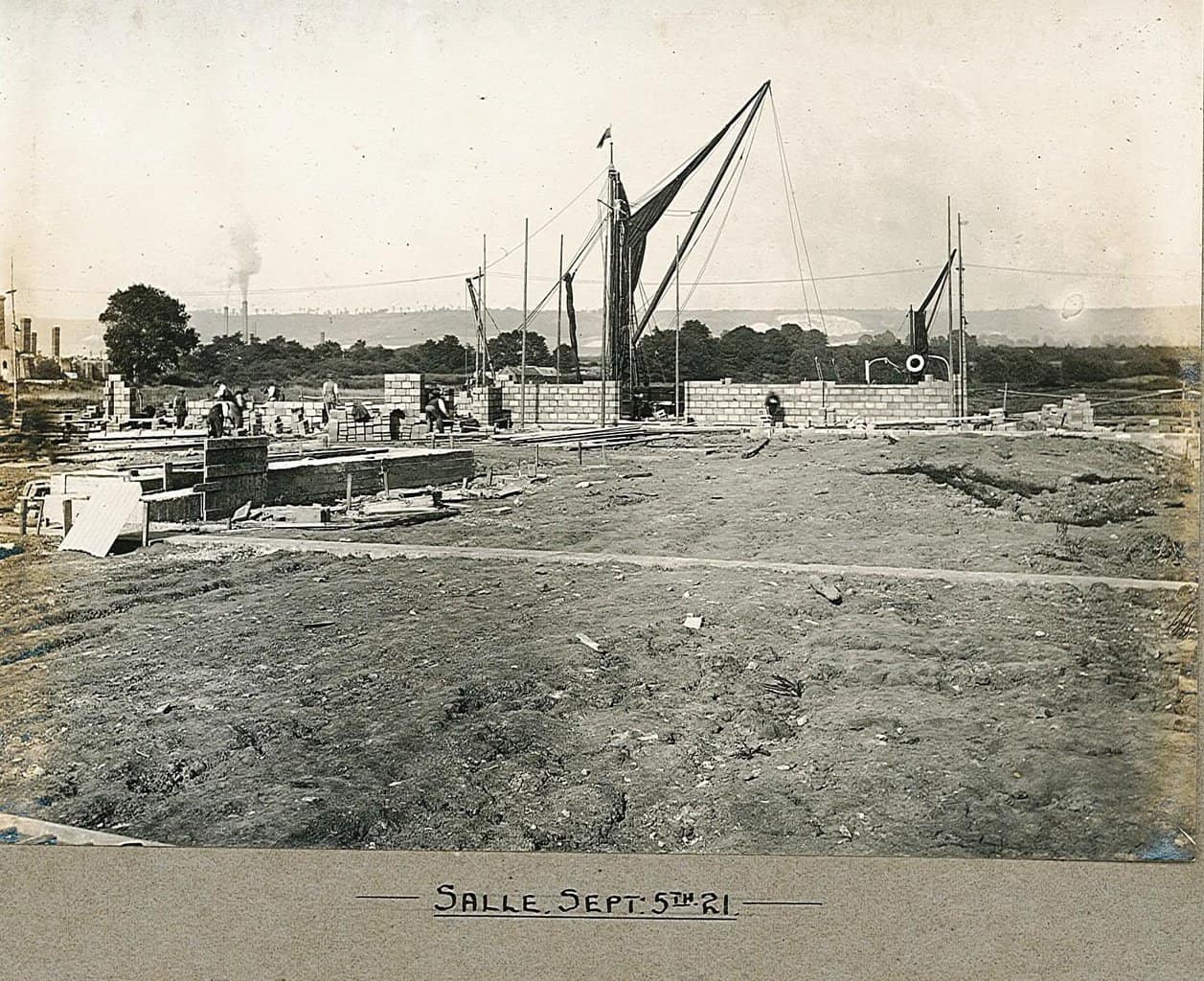
Participant87. Salle 5/9/21.
Looking towards and across the river, derelict brick and cemet works chimney just visible on left, further chimneys at another cement works (Burham) further downstream on a meander of the river, fed with chalk from Great Culand pit seen above the barge. Strange items on the crest of the downs in the distance – may be early electricity distribution lines.
Attachments:
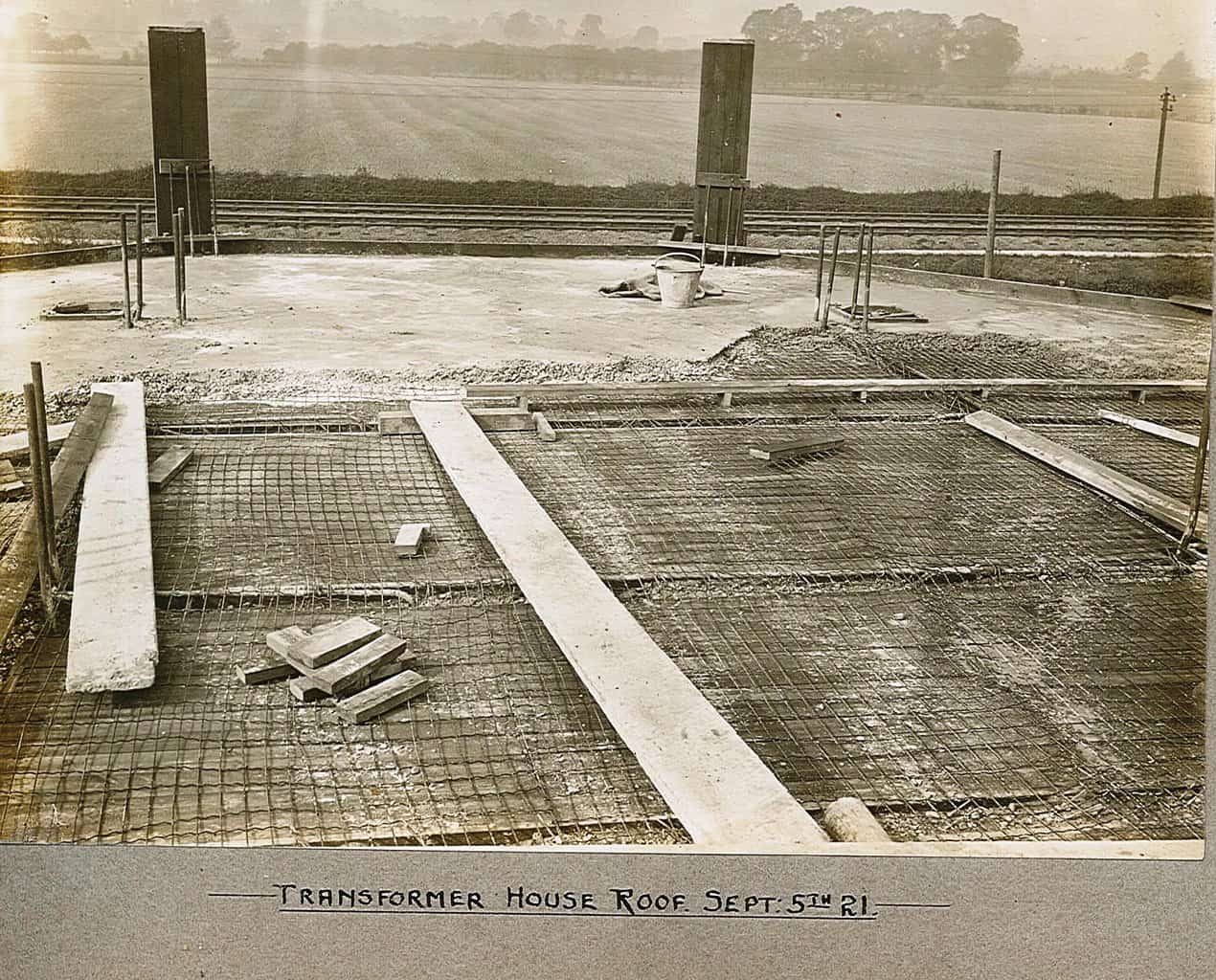
Participant86.
This photo is labelled Transformer House Roof 5/9/21. However it appears to be the floor of the watertower tank, it is octagonal and in the right place relative to the SECR mainline. I’m not aware there was a transformer house in the lower storey of the watertower as it appears open in other photos and would have been an incongrous place to have sited electrical equipment. As far as I know, the main power requirements of the mill were provided by the DC generators coupled to the steam turbines. Typically, variable speed drives at that time would be DC and indeed many still were in the ’70s, there being a rectifier house in east mill pulp yard under part of no 1 pulp conveyor as later extended to the kraft beaterfloor. I believe No 3 machine was converted to a Cortina (thyristor?) drive system around the later ’70s.
Attachments:
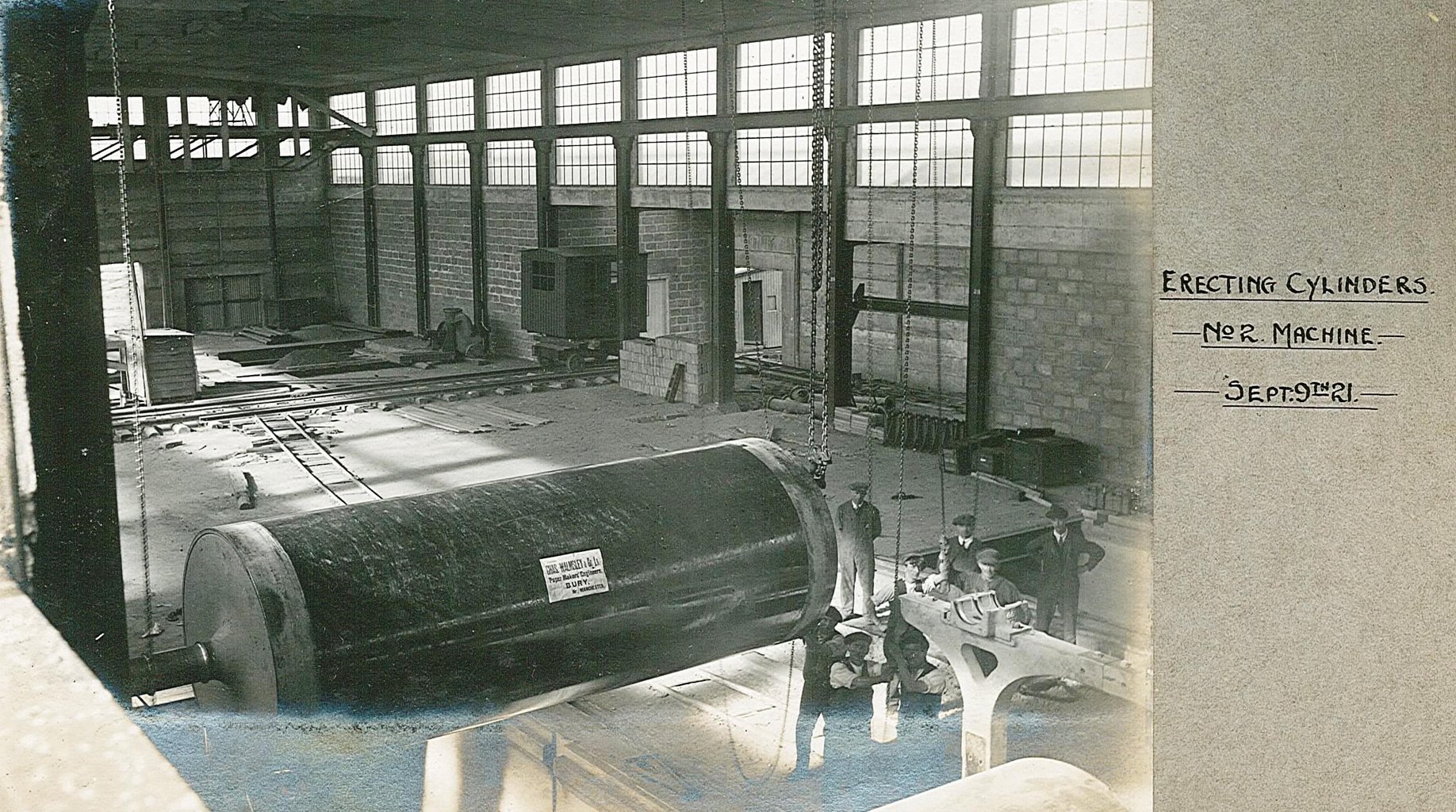
Participant85. Fitting Cylinders No 2 m/c, 9/9/21.
Cylinder lifted with manual chain block hoists (electric bridge crane not yet installed) by (presumably) Charles Walmsley’s erectors.
Temporary SG siding laid across machine house north end to bring in machine components, this siding turned off the main siding through 90 degrees and rose to machine floor level. Visible on the trolley is what appers to be the pulp conveyor hoist cabin (compare with photos of the completed pulp conveyor), why this should be in the machine house is not clear as it is too big to pass through the opening to the wharf side to be moved to the conveyor. Potentially it has been assembeld in the machine house from components brought in by rail and will be moved around on the SG trolley. NB that wooden trolley, either the same or a similar one to that seen earlier on the wharf, looks like one that still existed in the early ’80s and languished on the then derelict weighbridge siding by the base of the water tower (blow ups of photos taken during the departure of the last chlorine tanker from APM East, c. 1983/4).
Participant84. Resized image.
Attachments:
Participant84. 1 & 2 Machine House, 9/9/21.
A view taken from the doorway of the beaterfloor. The area for the screens (possibly Fulner Filters rather than Bird screens) still in a rough state, most of the machine house floor built up to final level but apparently still to be screeded. No 1’s dryer frame parts now stacked in the pit, and a start has been made on assembling the se on the soleplates. The NG track on waybeams over the incomplete service tunnel trench in the left bottom corner.
Flat belt pulley sheaves for parts of the machine drives and parts for the screens / filters (?), No 1’s fan pump in the wire pit – it will be installed in a pit in the annexe similar to no 2’s installation, see drawing Ax411 Arrangement Stuff Piping 1 & 2 m/c (uploaded separately as large file), and as a reduced, annotated jpeg.
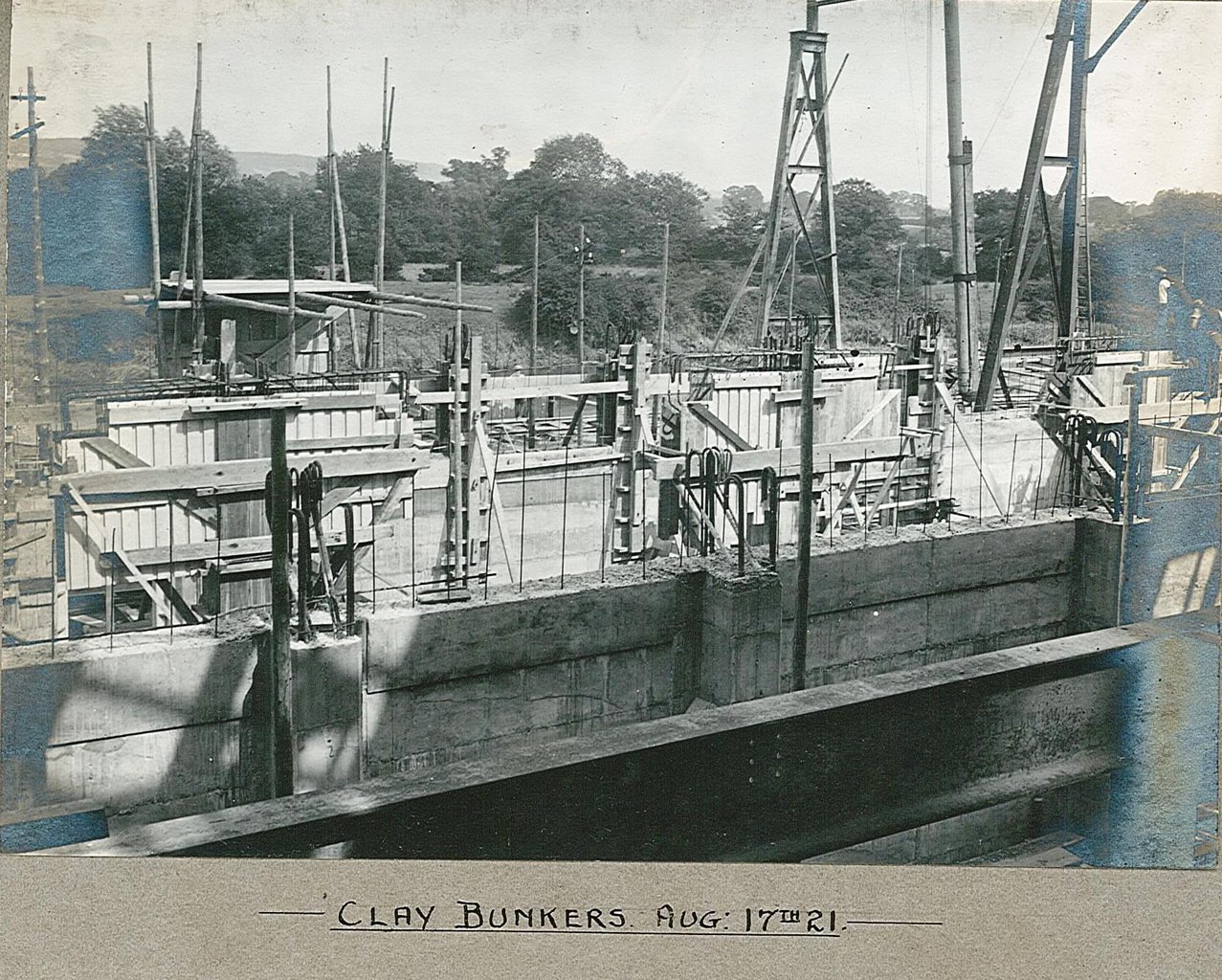
Participant83. Clay Bunkers, 17/8/21.
Substantial support work for the shuttering to cast the clay bunker walls. On the right one of the A frame legs of no 1 pulp conveyor is being erected, by means of the pole hoist visible just to its left.
Attachments:
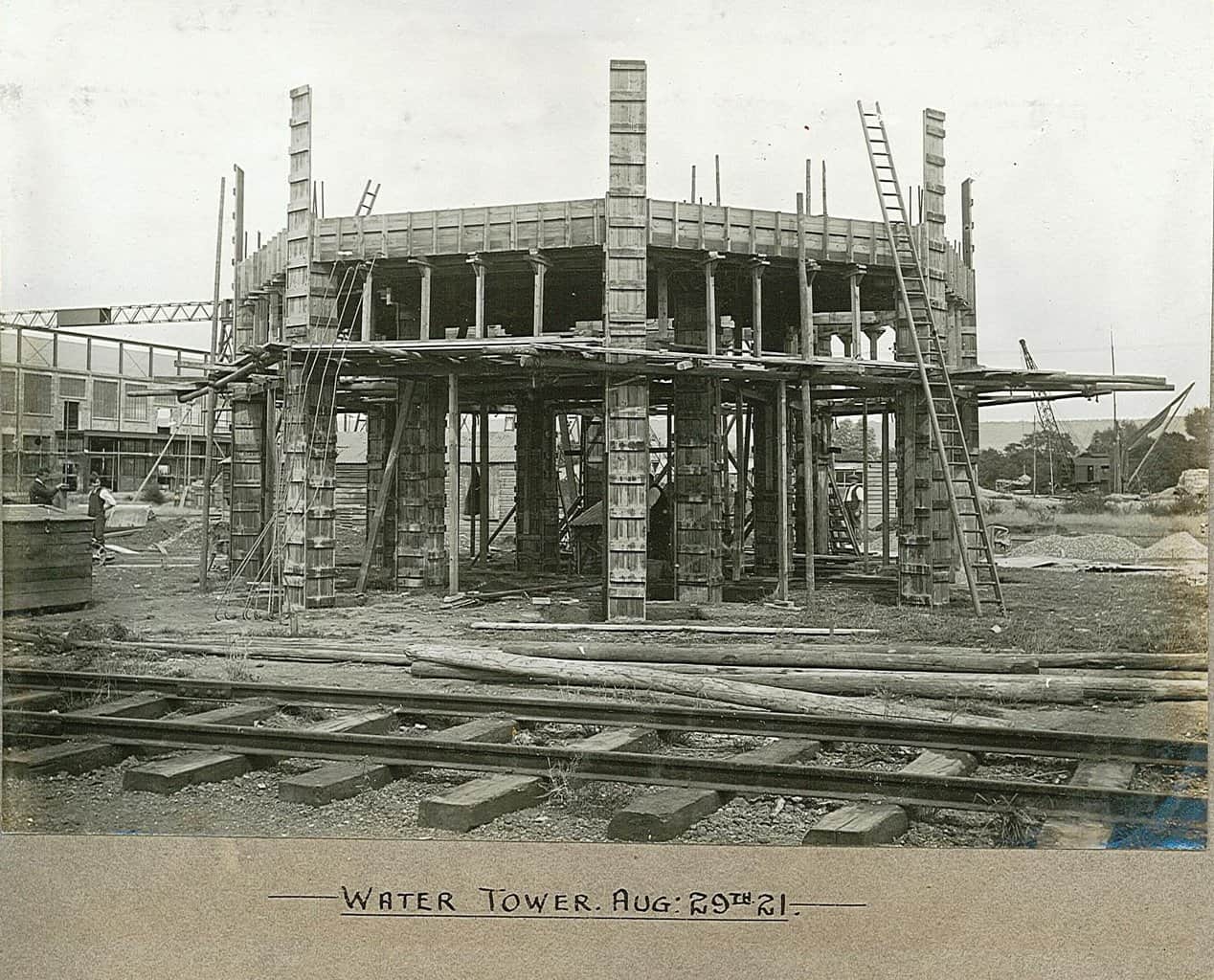
Participant82. Water Tower, 29/8/21.
This is the original octagonal watertower, built close to where the later tall tower with ‘REEDS’ on it was built. Old plans in the W&E dept files showed a ‘well’ close to this water tower, how this worked in relation to the later reservoir pumps was not clear. However if process water for the early machines was all that was required then a well tapping the 1 or 2 aquifers under the mill site may have sufficed. The later water tower would have provided greater head to supply the much greater water demand of the East, West, No3 and Wadding (KC) mills.
In the foreground is the standard gauge mill siding, connecting to the main line. Left background is the beaterhouse, with the view through the open door showing the end wall still to be constructed. Right background is a rather more substantial steam crane than previously seen, at work excavating the river bank for the wharf.
Attachments:
Participant81. Beaterfloor 17/8/21.
Another view of the breaker tubs.
Attachments:
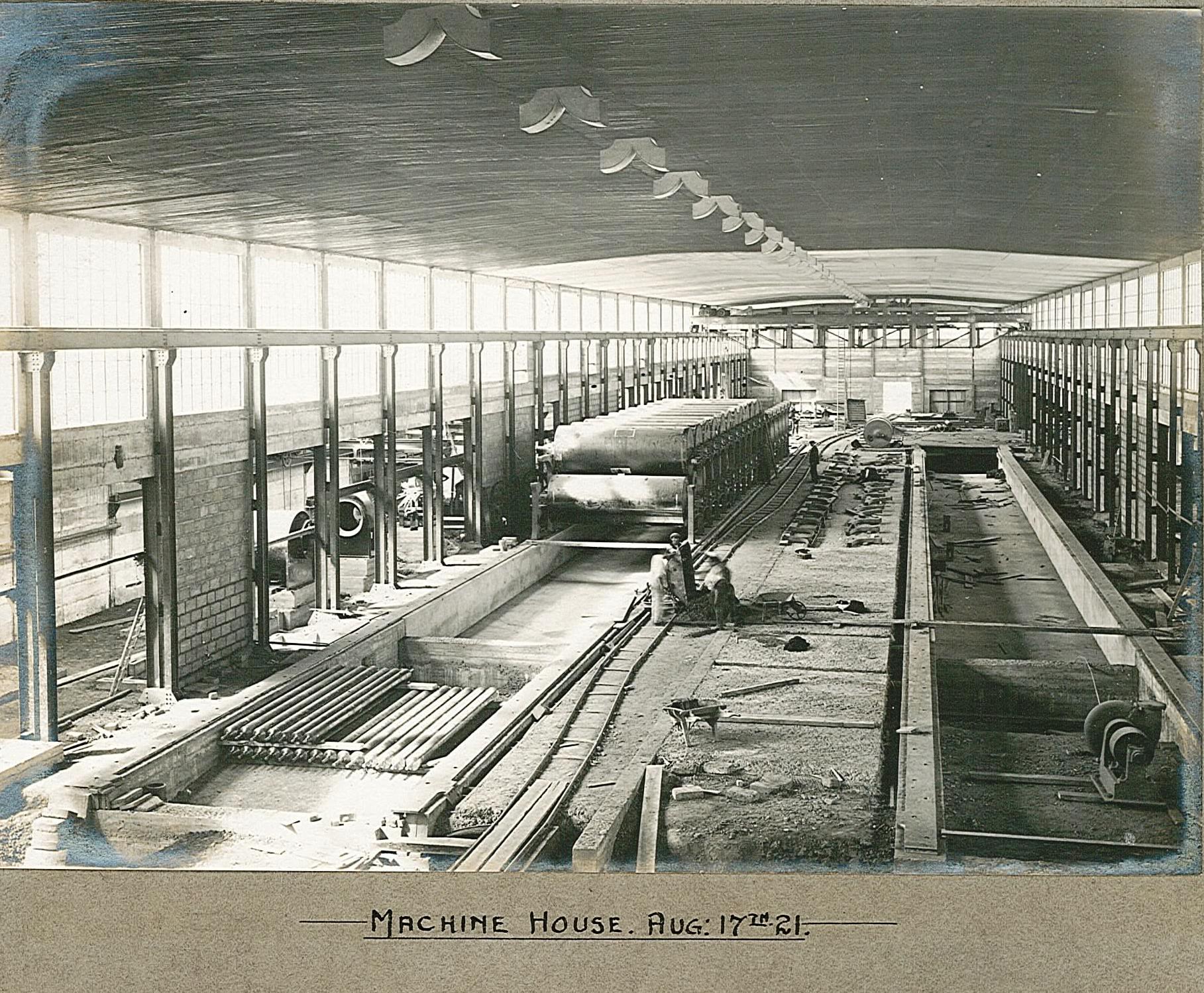
Participant80. Machine house 17/8/21.
This actually appears to be taken at a similar time to the previous one though dated much later. The NG railway used to bring in concrete evident in both photos for finishing off the machine house floor. The state of no 2 machine erection is the same in both.
Centrifugal pump in no 1 m/c pit, may be for either machine (but probably no 1 m/c, see photo of centrifugal pump in situ in photo 72).
Felt guide rolls or possibly table rolls stacked in no 2 m/c wire pit.
The end of the concrete and hi-rib roof over the service tunnel is just visible in the foreground, with the NG track carried over the void on beams with plank walkway in the 2 foot for the workmen to push the tipper skip wagons.
Attachments:
Participant79. No 2 Machine 8/8/21.
Rapid progress since 21/7/21, with much of the dryer framework erected, and many drying cylinders emplaced. Drive gears stacked along the annexe wall.
The trussed structure in the upper machine house appears to be some sort of movable scaffolding and may be associated with the construction of the ceiling as it is not the electric bridge crane that later ran in the machine house. The manual hoist bridge crane appears in other photos to be the one used for erecting the machine.
Attachments:
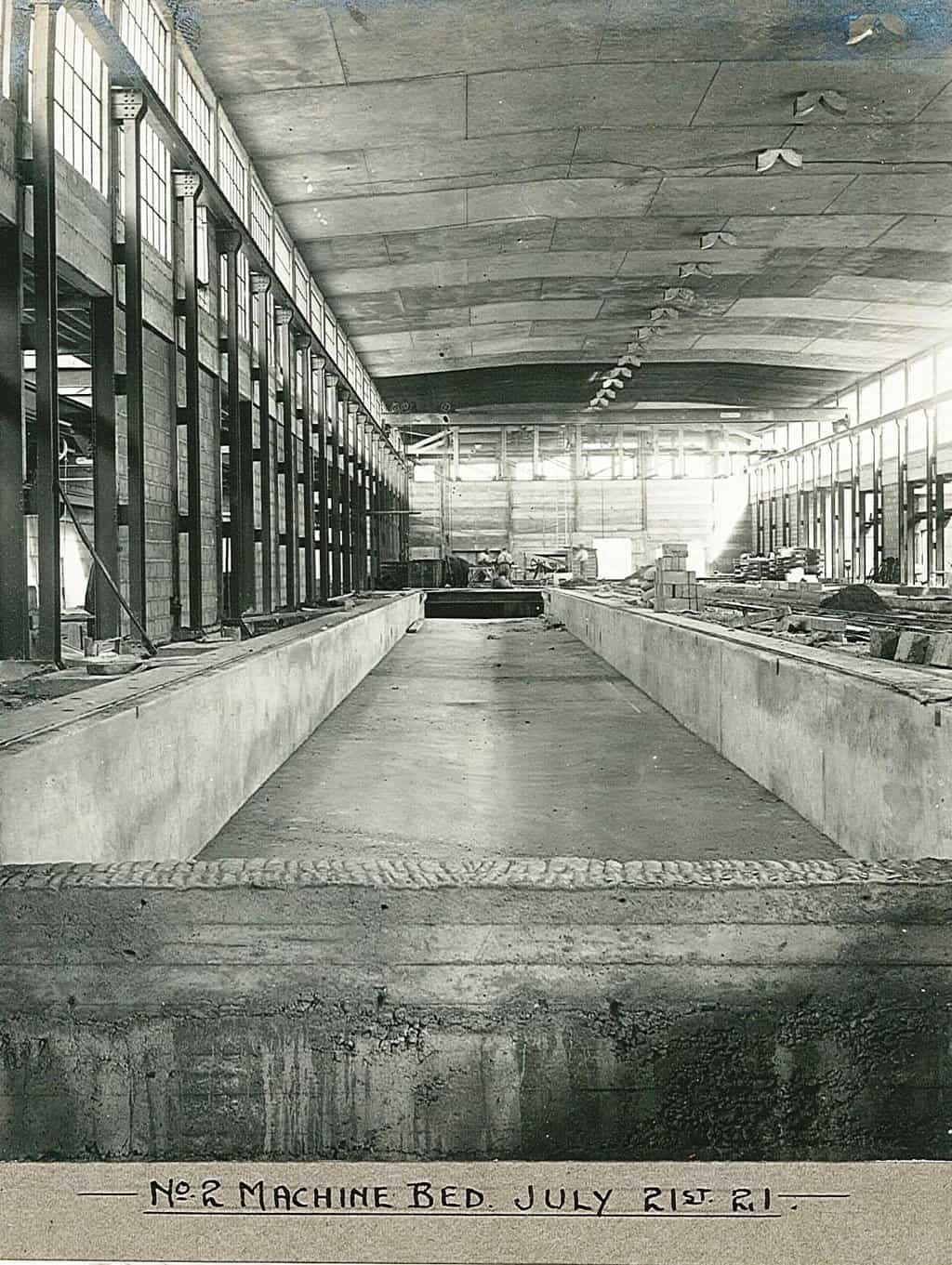
Participant78. No 2 Machine Bed, 21/7/21.
Attachments:
Participant77. Clay bunkers 14/7/21.
In the foreground are concrete blocks used to support the staging, these also appear in photo 3 of the Winget concrete plant. Other references in drawings refer to the blockwork in the buildings being ‘Wingate blocks’ so it appears that not only was the mass concrete made from ballast extracted on site (hence the reservoir named the ballast pit) but the blockwork was also cast on site.
Attachments:
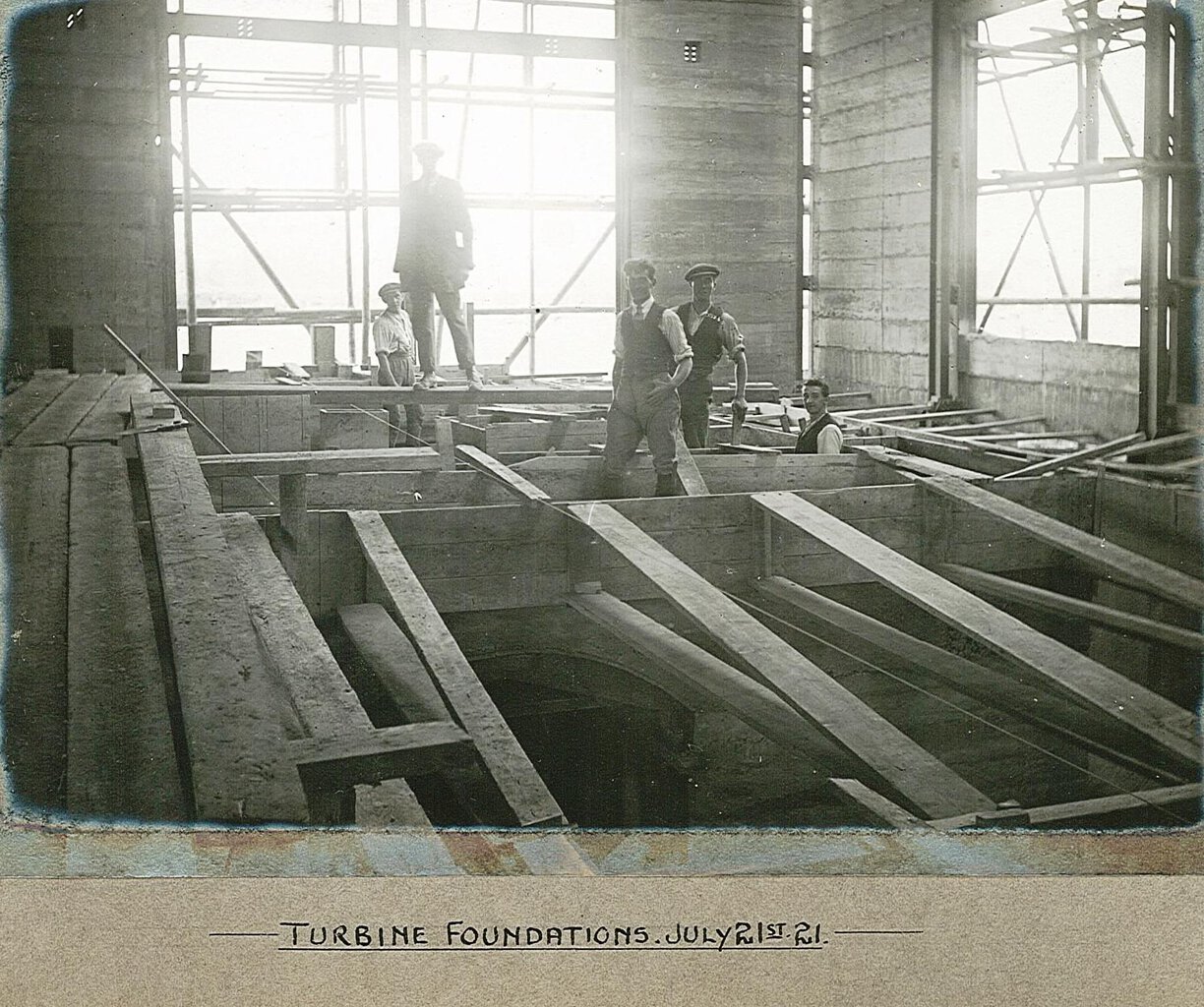
Participant76. Turbine foundations, 21/7/21.
Attachments:
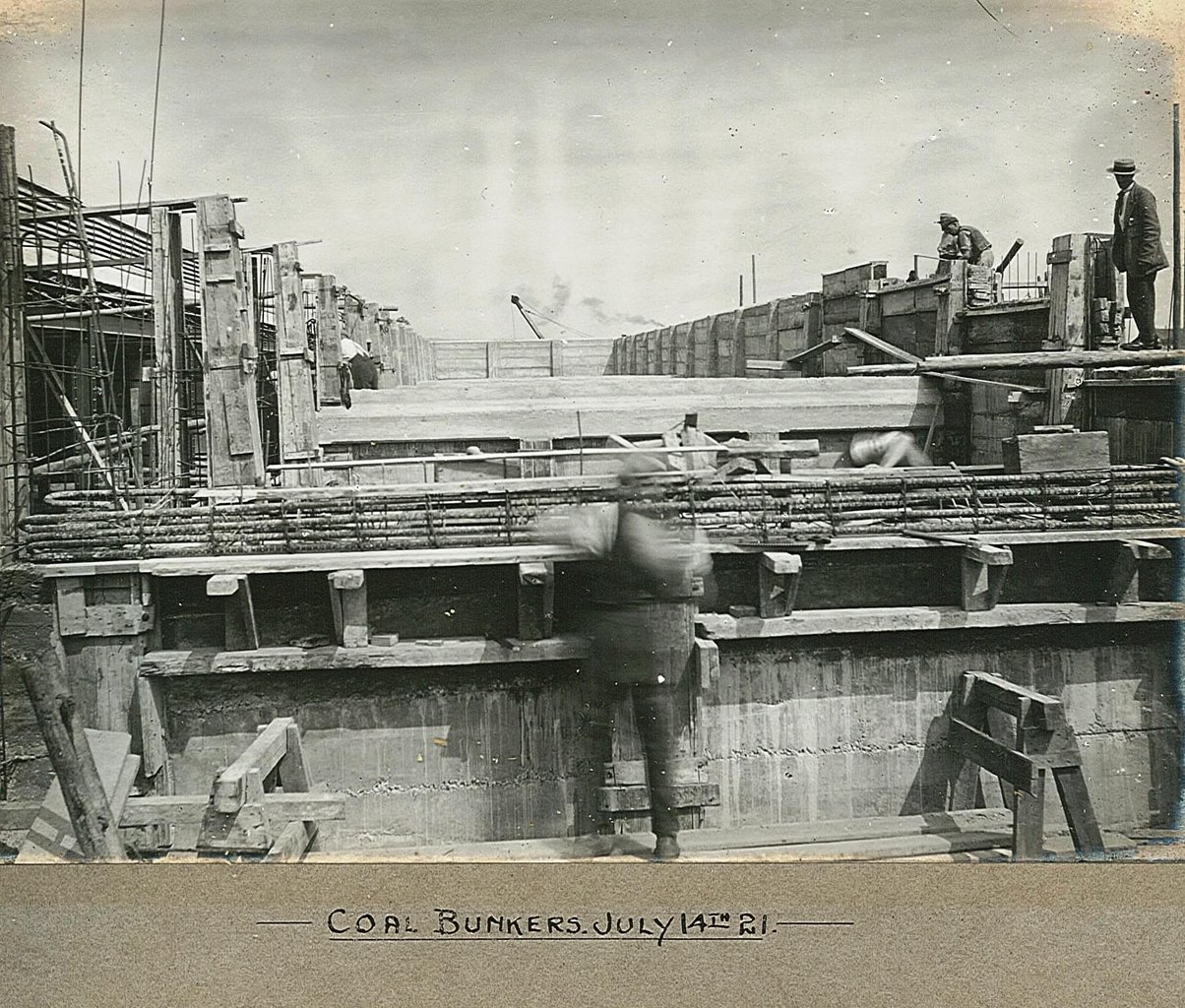
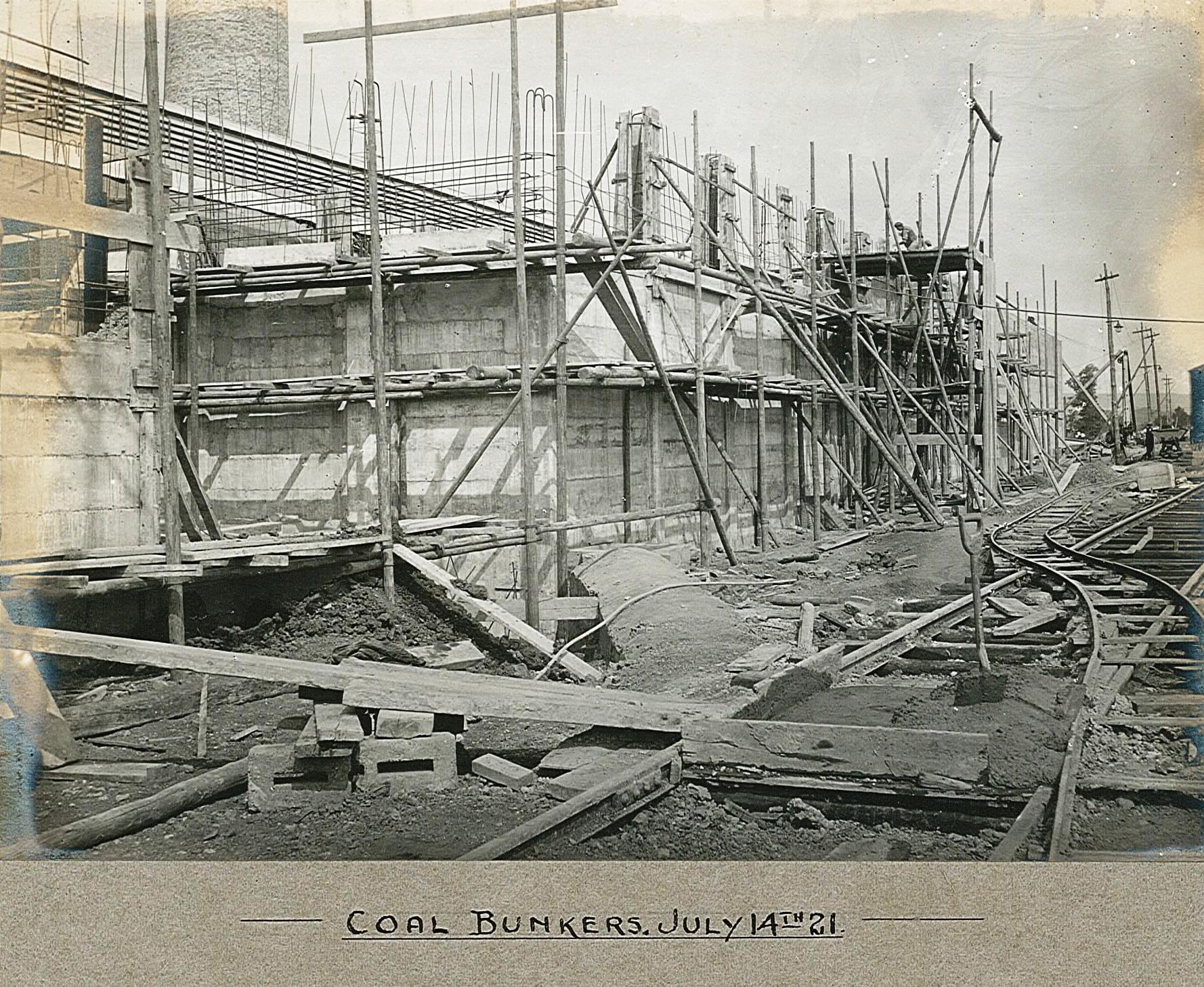
Participant74, 75. Coal Bunkers, 14/7/21.
-
AuthorPosts